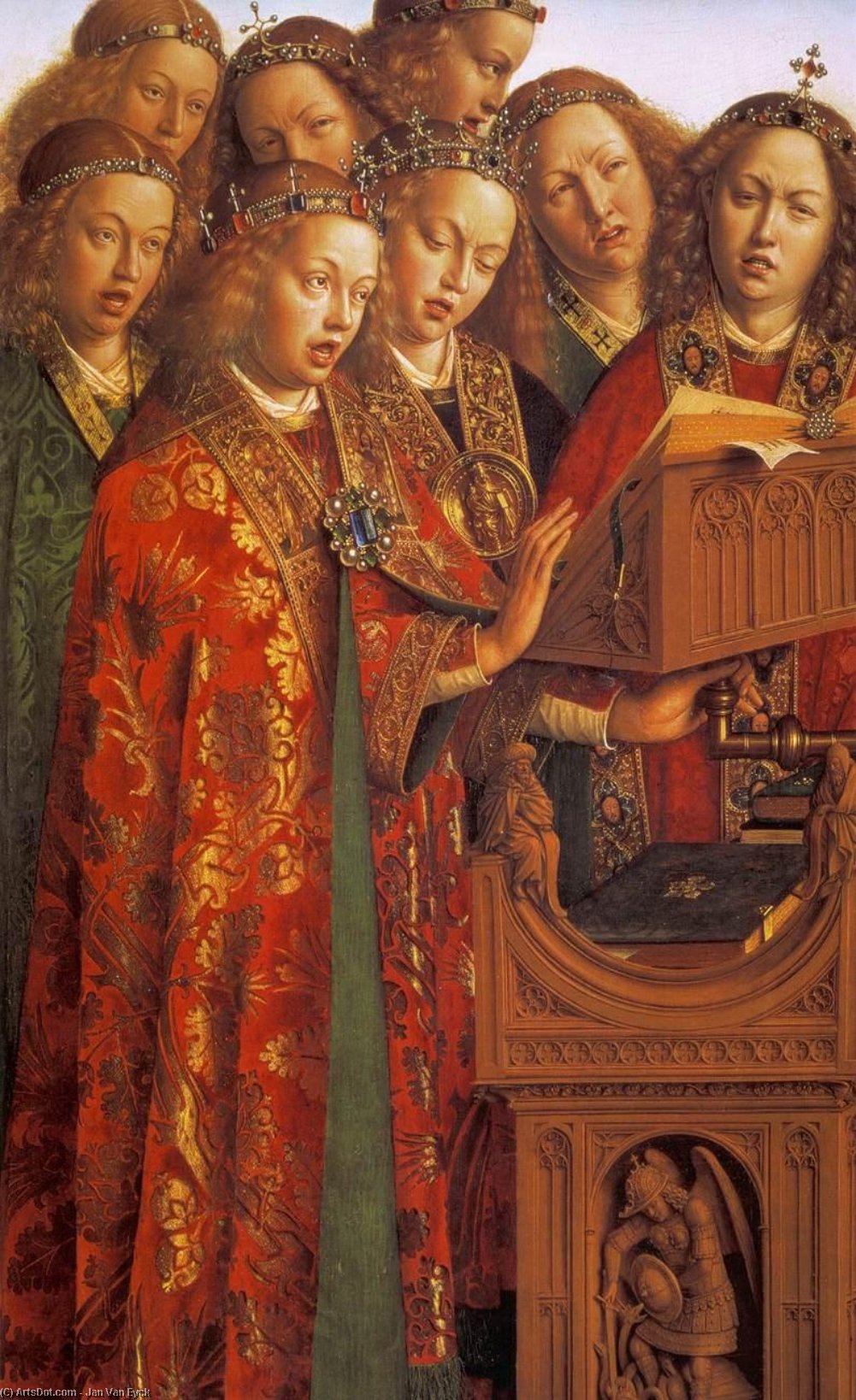
The Singing Angels: A Window into 15th-Century Devotion
Within the majestic Cathedral of St Bavo in Ghent, Belgium, resides a masterpiece that transcends mere paint and panel – the Ghent Altarpiece, specifically its captivating detail depicting “Singing Angels.” Created by the visionary Jan van Eyck around 1427, this section of the larger altarpiece offers an intimate glimpse into the heart of Northern Renaissance religious art. It’s not simply a depiction of angels; it's a carefully constructed tableau designed to evoke reverence, inspire contemplation, and communicate profound spiritual truths. Van Eyck masterfully blends realism with symbolic richness, utilizing his revolutionary oil painting technique to achieve an unprecedented level of detail and luminosity – qualities that continue to enthrall viewers centuries later.
The scene itself is a vibrant celebration of heavenly harmony. A group of angels, adorned with shimmering crowns signifying their divine status, gather around a magnificent church organ. The instruments are not merely decorative; they represent the very music of heaven, a chorus of praise directed towards God. Notice the meticulous rendering of each angel’s expression – a blend of joyous participation and solemn devotion. Van Eyck's attention to individual features—the delicate folds of their robes, the subtle play of light on their faces—is astonishing. The composition is carefully balanced, drawing the eye from the central group towards the background, where a grand church organ dominates the space. This wasn’t just an artistic choice; the inclusion of such a prominent organ reflects the importance of music in religious life during that period – it served as a conduit for spiritual experience and a means of connecting with the divine.
A book rests nearby, likely containing hymns or psalms intended for the angels' songs. This detail underscores the altarpiece’s function as a devotional object, designed to facilitate prayer and worship. The overall atmosphere is one of profound reverence – a tangible sense of being in the presence of something greater than oneself. Van Eyck skillfully employs color to enhance this effect; rich reds, blues, and golds create a sumptuous visual experience, while subtle gradations of light and shadow add depth and dimensionality to the scene. The use of oil paint allowed for incredible detail and layering, creating textures that invite close inspection – a testament to Van Eyck’s mastery of his medium.
Jan van Eyck: A Pioneer of Realism
Jan van Eyck stands as one of the most pivotal figures in the history of art. Born around 1390 in Maastricht, Netherlands, he emerged as a master painter by 1422, establishing a workshop and quickly gaining renown for his innovative techniques and unparalleled attention to detail. His work represents a radical departure from the stylized conventions of the International Gothic style, embracing instead a commitment to naturalism and realism that would profoundly influence generations of artists. Van Eyck’s journey began with service to the Burgundian court under John III the Pitiless and later Philip the Good, providing him with both patronage and access to valuable resources.
His diplomatic missions, particularly his visit to Lisbon in 1428, demonstrate not only his artistic talent but also his intelligence and diplomatic skills. This experience undoubtedly broadened his perspective and informed his understanding of the world – qualities that are reflected in the complexity and sophistication of his art. Van Eyck’s dedication to realism extended beyond mere representation; he meticulously studied anatomy, light, and color, striving to capture the essence of his subjects with astonishing accuracy. His pioneering use of oil paint—a technique previously unknown in Northern Europe—allowed him to achieve unprecedented levels of detail, luminosity, and textural richness.
Symbolism and Context: A Window into 15th-Century Flanders
The “Singing Angels” section is deeply rooted in the religious and cultural values of 15th-century Flanders. The altarpiece as a whole served as a focal point for worship, inviting contemplation and fostering a sense of connection with the divine. The depiction of angels singing represents the eternal praise of God – a concept central to Christian theology. The crowns they wear symbolize their elevated status within the heavenly realm, while the instruments of music evoke the joy and harmony of creation.
Beyond its religious significance, the altarpiece also reflects the economic prosperity and artistic flourishing of Flanders during this period. The use of expensive materials—gold leaf, precious stones, and vibrant pigments—demonstrates the wealth and sophistication of the region. The intricate detail and technical virtuosity of the painting are a testament to the skill and craftsmanship of Van Eyck and his workshop. It’s important to remember that such elaborate works were commissioned by wealthy patrons – merchants and civic leaders who sought to demonstrate their piety and status through art.
Reproductions and Preservation: Bringing Masterpiece to Life
For those captivated by the beauty and historical significance of “Singing Angels,” handmade oil painting reproductions are now available at ArtsDot, meticulously crafted by skilled artists who have dedicated themselves to capturing the essence and intricate details of Van Eyck’s original. These reproductions offer a tangible connection to this extraordinary work of art, allowing you to experience its beauty and symbolism in your own home or studio.
To delve deeper into the life and works of Jan van Eyck, we invite you to explore Jan Van Eyck: The Ghent Altarpiece: Singing Angels (detail) on ArtsDot, where you’ll find further insights into the artist's techniques, symbolism, and historical context. And for a comprehensive understanding of the Cathedral of St Bavo and its remarkable collection of artworks, we encourage you to visit The Museum Cathedral of St Bavo (Ghent, Belgium) and its Artworks.