A Window into 15th-Century Devotion: The Donor of the Ghent Altarpiece
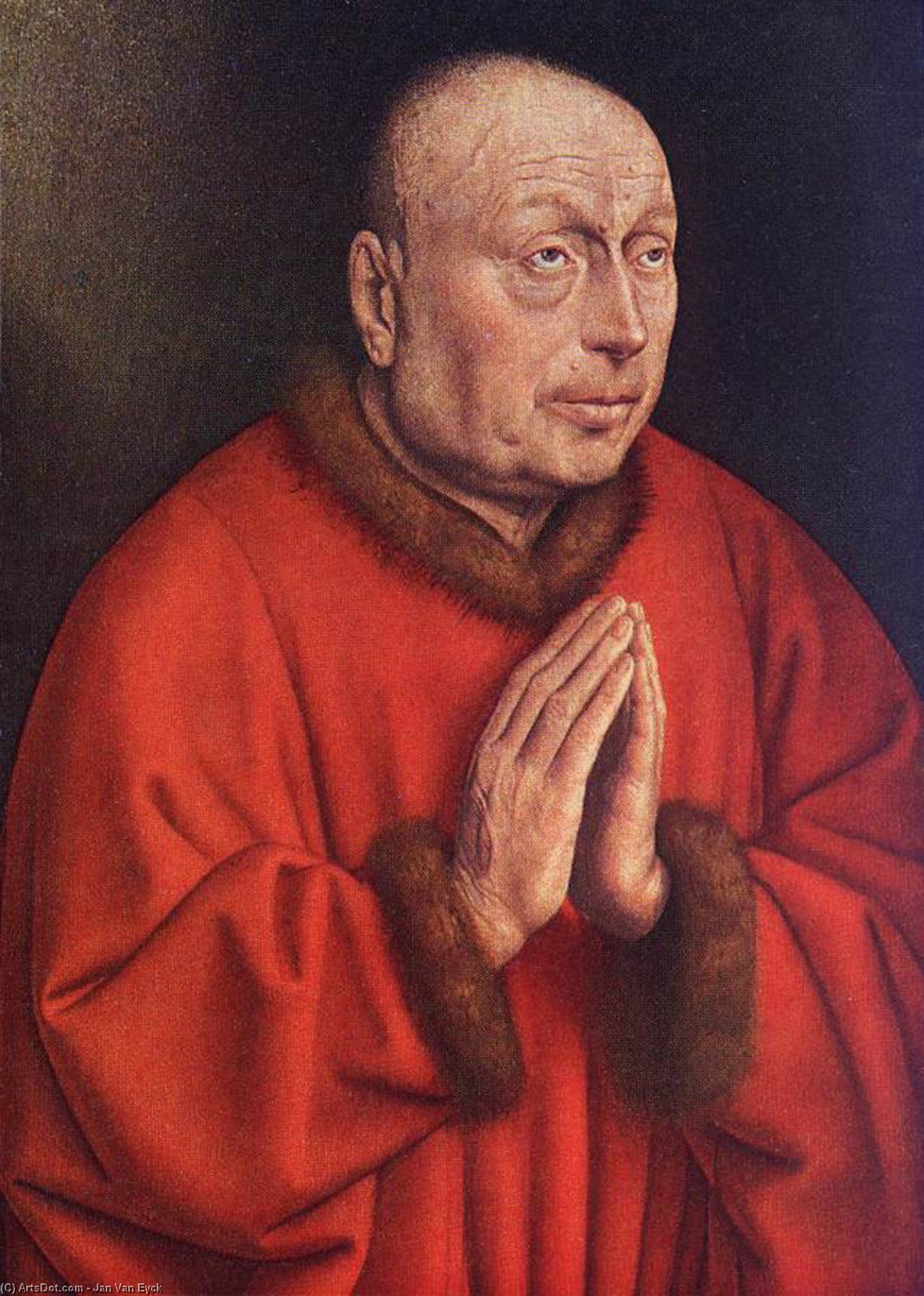
This captivating detail from Jan van Eyck’s monumental *Ghent Altarpiece* offers a profound glimpse into both artistic innovation and the deeply personal faith of the early Renaissance. Completed in 1432, this fragment – depicting Jodocus Vijd, one of the altarpiece's commissioners – is far more than just a portrait; it’s a testament to patronage, piety, and the burgeoning realism that would define Northern European painting for centuries.
Masterful Technique & Artistic Style
Van Eyck’s skill is immediately apparent in the meticulous detail rendered through his pioneering use of oil paint. Unlike tempera, oil allowed for rich layering, luminous colors, and an unprecedented level of realism. Observe the subtle play of light on the donor's face, the luxurious texture of the fur lining his crimson robe, and the intricate folds of his garments. This isn’t simply representation; it’s a near-photographic capturing of reality – revolutionary for its time. The style bridges the gap between the International Gothic period with its elegant lines and rich ornamentation, and the emerging Renaissance focus on naturalism and individual characterization.
Historical Context & Commission
The *Ghent Altarpiece* was commissioned by Jodocus Vijd, a wealthy merchant and mayor of Ghent, and his wife Lysbette Borluut for the Saint Bavo Cathedral. It wasn’t merely an artistic endeavor; it was a public declaration of their faith and status. The installation in May 1432 was a grand civic event. Van Eyck's appointment as court painter to Philip the Good, Duke of Burgundy, afforded him access to resources and patronage that enabled such ambitious projects. This detail, therefore, isn’t isolated; it exists within a larger narrative of power, wealth, and religious fervor.
Symbolism & Meaning
The donor's pose is laden with symbolism. His clasped hands and upward gaze convey deep reverence and prayerful contemplation. He appears to be presenting himself – and his wealth – before the divine figures depicted on the central panels of the altarpiece (now separated). The rich materials—the velvet, fur, and elaborate hat—are not merely displays of affluence but also symbolic offerings.
His presence within the artwork itself elevates him to a position of spiritual significance, blurring the lines between earthly patron and heavenly participant.
Emotional Impact & Lasting Legacy
The portrait evokes a sense of quiet dignity and sincere devotion. Van Eyck doesn’t shy away from portraying Vijd as an aging man, with wrinkles and subtle imperfections that lend him a remarkable humanity.
This realism fosters a powerful connection between the viewer and the subject, inviting contemplation on themes of faith, mortality, and legacy. The *Ghent Altarpiece*, and this detail in particular, remains one of the most influential works in art history, inspiring generations of artists and continuing to captivate audiences with its beauty, complexity, and enduring spiritual power.
Considerations for Collectors & Designers
- A Statement Piece: A reproduction of this detail would serve as a sophisticated focal point in any interior.
- Historical Resonance: Its rich history and artistic significance add depth and intellectual appeal to a space.
- Color Palette: The deep reds, browns, and blacks offer versatility, complementing both traditional and contemporary décor.
- Texture & Detail: The intricate details are best appreciated in high-quality reproductions that capture the nuances of Van Eyck’s brushwork.