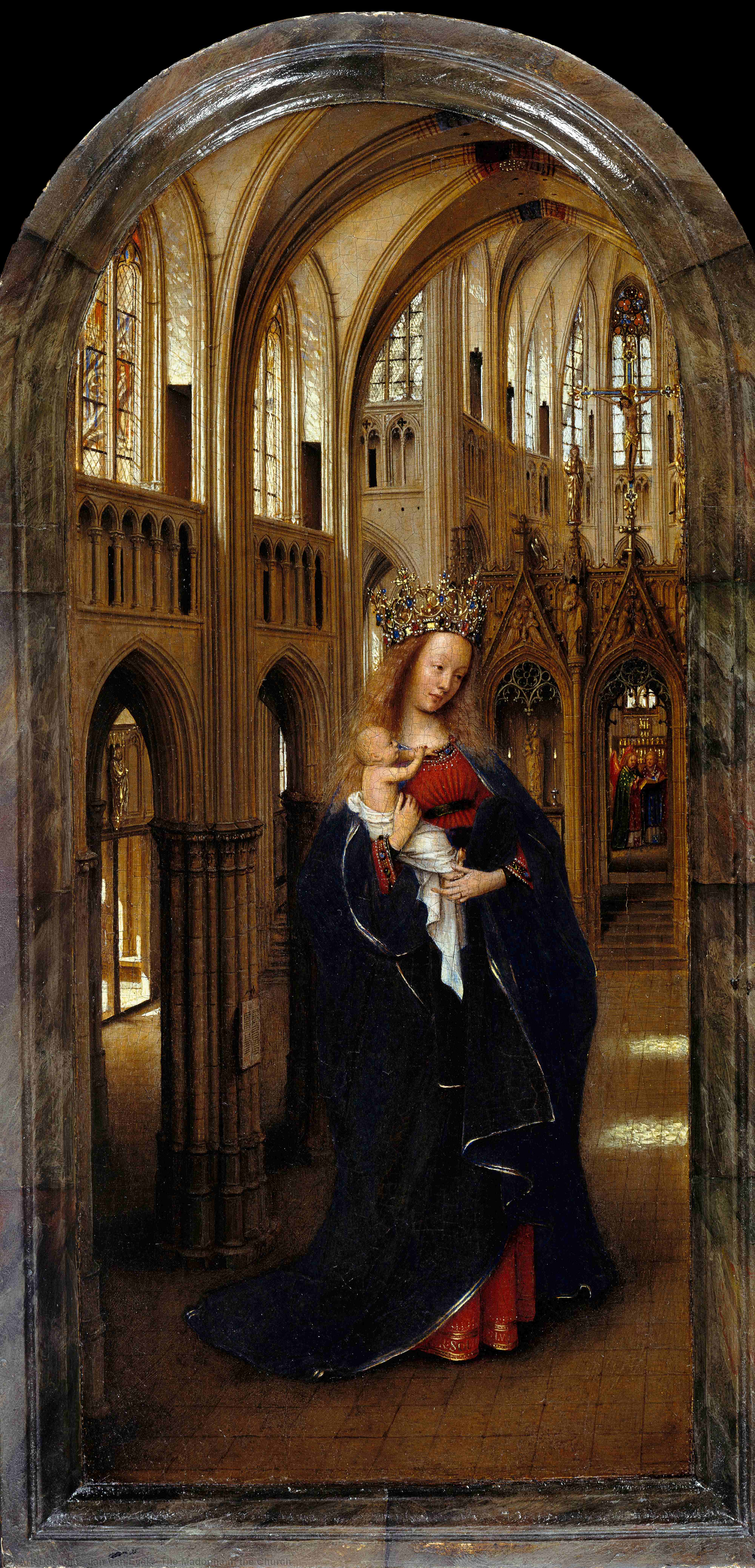
The Madonna in the Church by Jan van Eyck
Jan van Eyck’s “Madonna in the Church,” completed around 1438-1440, stands as an unparalleled achievement of Early Netherlandish painting and a cornerstone of Western art history. More than just a depiction of religious iconography, it embodies a revolutionary approach to artistic representation—one that cemented Van Eyck's legacy as a pioneer of oil paint technique and profoundly influenced subsequent generations of artists.
The painting portrays Mary cradling the infant Jesus within a Gothic cathedral interior, meticulously rendered with astonishing realism. This wasn’t merely about capturing likeness; it was about conveying an ethereal sense of presence—a feat accomplished through Van Eyck's masterful manipulation of light and color. The cathedral itself serves as more than just a backdrop; it’s a carefully constructed symbol reflecting medieval spiritual beliefs.
- Composition & Perspective: Van Eyck employed innovative compositional strategies, subtly suggesting sculptural depth—a technique that foreshadowed the Renaissance obsession with perspective. Two angels sing psalms from a doorway to the right, creating an illusion of space and enhancing the dramatic effect.
- Light & Atmosphere: The cathedral windows bathe the interior in radiant light, illuminating the figures and architectural elements alike. This deliberate use of chiaroscuro—the interplay between light and shadow—was groundbreaking for its time, imbuing the scene with an otherworldly glow and conveying a profound sense of spirituality.
- Symbolism: The painting is replete with symbolic references to Christian theology. Mary wears a jeweled crown signifying her royal status as Queen of Heaven, while Christ grips the neckline of her dress—a gesture echoing depictions of the Virgin Mary in Byzantine art. The tracery of the arch and the sculptural depiction of Mary’s life episodes reinforce these themes.
Beyond its artistic brilliance, “Madonna in the Church” offers a glimpse into the intellectual and cultural milieu of Bruges during Philip the Good's reign—a period marked by burgeoning patronage and artistic innovation. Van Eyck’s exceptional skill as a diplomat and his elevated social standing reflected the prestige accorded to artists within the Burgundian court.
The painting’s enduring fascination stems from its ability to transcend time, captivating viewers with its luminous beauty and profound spiritual resonance. Its meticulous detail—from the textures of Mary's robe to the reflective surfaces of the cathedral windows—continues to inspire admiration and serves as a testament to Van Eyck’s unparalleled mastery of oil paint technique. Today housed in the Gemäldegalerie, Staatliche Museen zu Berlin, it remains an iconic masterpiece, inviting contemplation on themes of faith, devotion, and artistic genius.