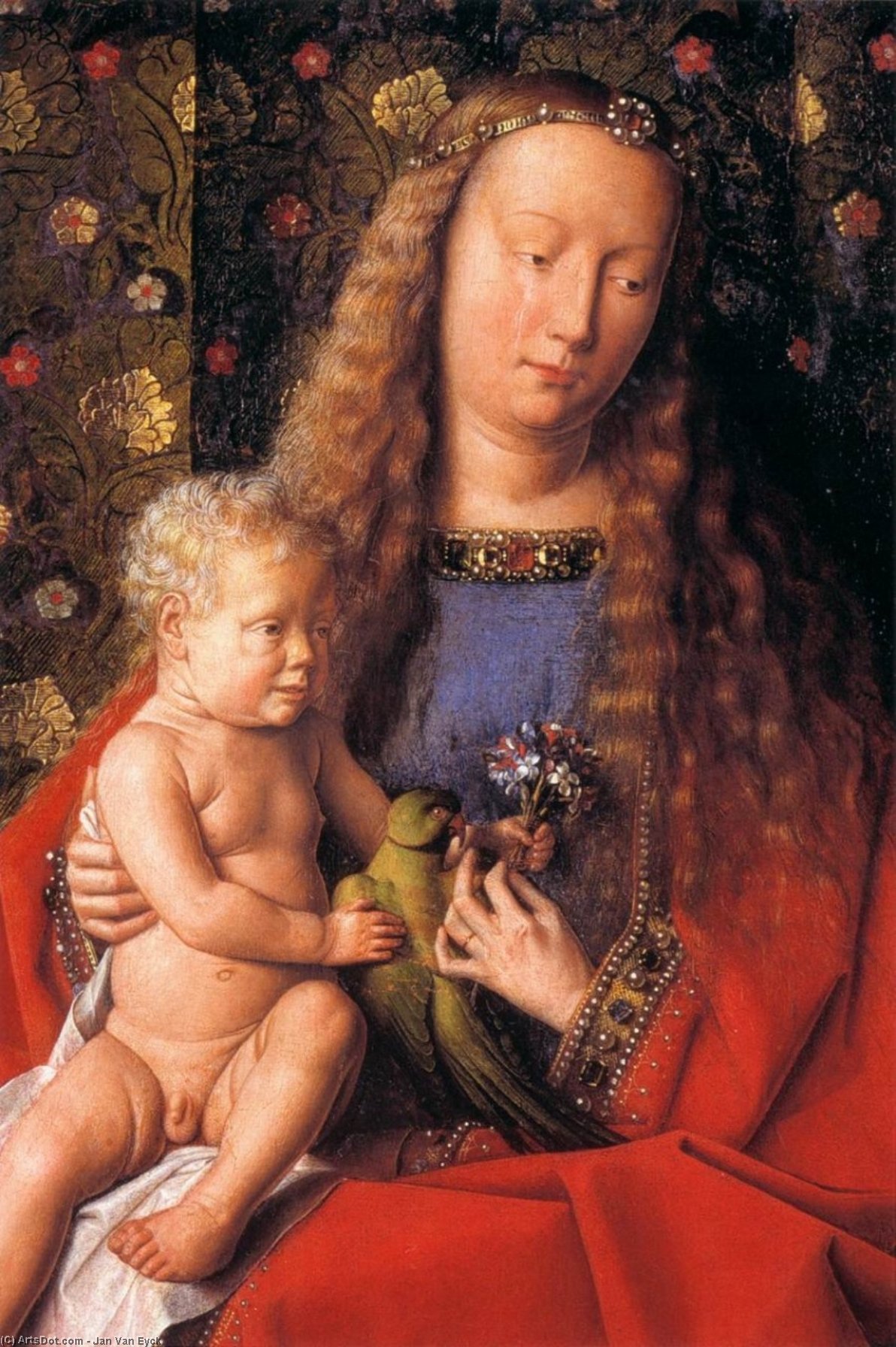
Jan van Eyck’s ‘Madonna with Canon van der Paele,’ completed around 1436, showcases his revolutionary oil technique and profound understanding of religious iconography. Commissioned by Joris van der Paele as a memorial altar piece for St Donatian's Cathedral, Bruges, it exemplifies humanist ideals and masterful spatial illusionism.
The Madonna with Canon van der Paele (detail)
Jan Van Eyck’s
The Madonna with Canon van der Paele (detail) (13) is a captivating oil painting that showcases the artist’s exceptional skill and attention to detail. Created in 1436, this masterpiece is housed at the renowned
Groeninge Museum in Bruges, Belgium.
This remarkable panel depicts Mary cradling the Christ child while simultaneously holding a bird—a gesture laden with symbolic significance that speaks to themes of divine protection and fertility. The painting’s vibrant palette—dominated by blues, reds, yellows, and greens—immediately draws the eye, reflecting the meticulous layering of glazes characteristic of Van Eyck's revolutionary technique. Unlike earlier artists who relied on tempera paint, Van Eyck pioneered the use of oil pigments, allowing for unprecedented luminosity and depth of color that continues to inspire awe today.
Artistic Significance
Jan Van Eyck was a pivotal figure in the Early Netherlandish painting movement, and his works are celebrated for their realism and symbolism. He elevated artistic standards by meticulously observing nature and translating its intricacies onto canvas—a practice that profoundly influenced subsequent generations of painters. The Madonna with Canon van der Paele exemplifies this dedication to observation and embodies the humanist ideals prevalent during the Renaissance. Its compositional complexity—the carefully arranged figures, drapery folds, and architectural elements—demonstrates Van Eyck’s mastery of perspective and spatial illusionism.
Symbolism and Composition
The painting's symbolism extends beyond its immediate depiction of Mary and Christ. The bird held by Mary is interpreted as representing the Holy Spirit—a potent emblem of divine grace and spiritual renewal. Furthermore, the inclusion of Saint Donatian and Saint George adds layers of religious iconography, reflecting the artist’s engagement with medieval theological concepts. Notice how Van Eyck skillfully renders the textures of fabric and skin, capturing the subtle nuances of light and shadow to create a palpable sense of presence—a testament to his unparalleled technical prowess.
Historical Context
The
Groeninge Museum, where this painting resides, is a treasure trove of Belgian visual arts spanning six centuries. It boasts an impressive collection of works by Flemish primitives, including Jan Van Eyck, Hans Memling, and Gerard David. This museum serves as a crucial site for understanding the artistic legacy of the Early Netherlandish Renaissance—a period marked by intellectual ferment and artistic innovation that reshaped European culture. The patronage of wealthy individuals like Joris van der Paele fueled this creative outpouring, ensuring that masterpieces such as “The Madonna with Canon van der Paele” would endure through time.
Relevance to Art Enthusiasts
For art enthusiasts and collectors,
Jan Van Eyck's The Madonna with Canon van der Paele (detail) (13) is a significant piece that offers insights into the artistic techniques and religious themes of the 15th century. Its luminous colors, meticulous detail, and masterful composition continue to captivate viewers today—a timeless reminder of Van Eyck’s genius and the enduring power of art to inspire contemplation and wonder. Acquiring a reproduction allows you to experience this iconic artwork firsthand, bringing its beauty and symbolism into your home.