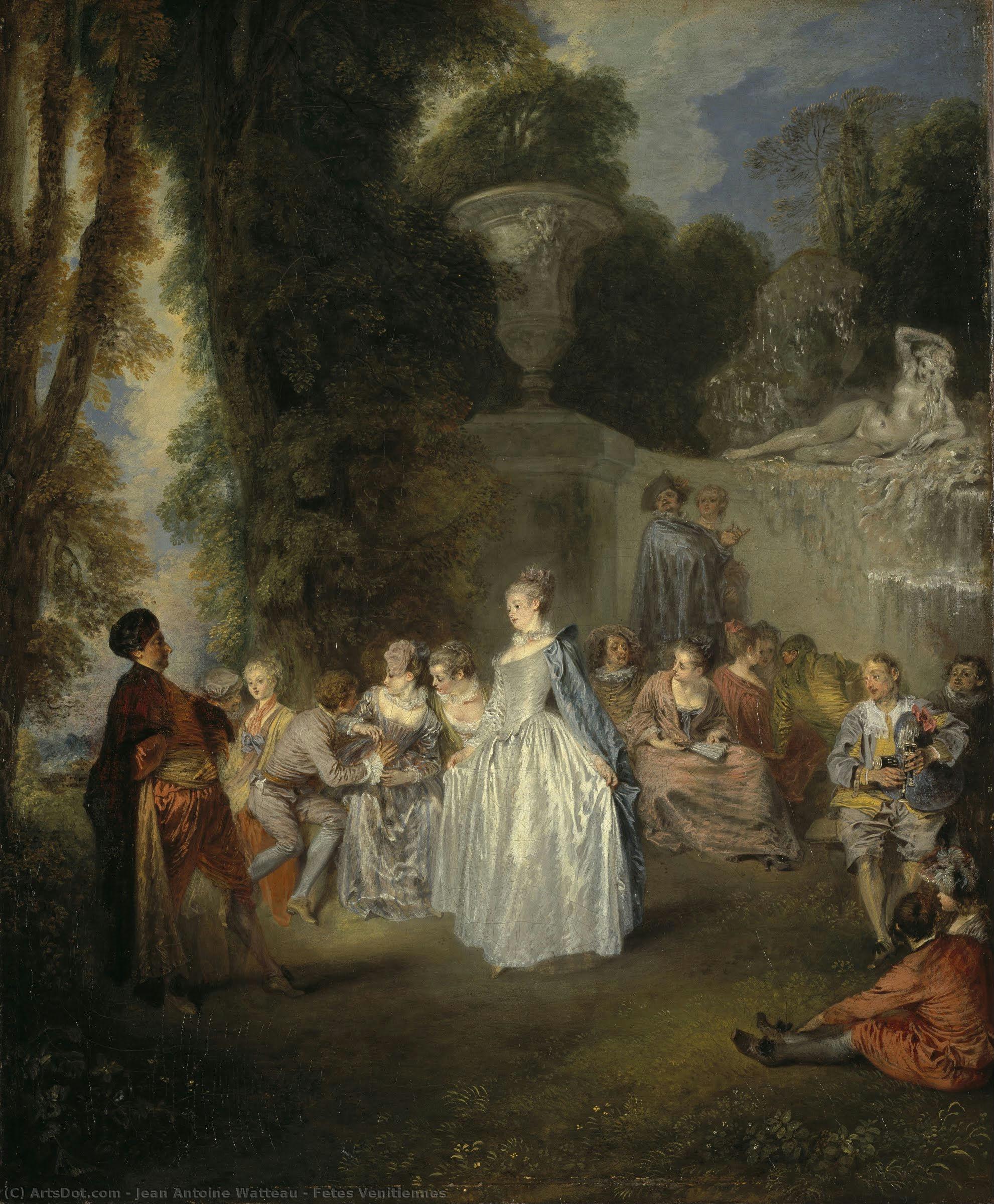
Explore Jean-Antoine Watteau’s ‘Fetes Venitiennes’! A stunning Rococo oil painting showcasing aristocratic leisure & exquisite detail. Discover its elegance and symbolism.
Discover Jean-Antoine Watteau (1684-1721), the French Rococo master! Explore his idyllic 'fêtes galantes,' theatrical scenes, & influence on 18th-century art. View masterpieces like 'The Country Dance' & learn about his legacy.
Explore Scottish art at the National Gallery of Scotland! Discover masterpieces by renowned artists like Titian & Monet in a stunning neoclassical building on Edinburgh's Mound.
A Glimpse into Aristocratic Leisure: Decoding *Fêtes Vénitiennes*
Jean-Antoine Watteau’s *Fêtes Vénitiennes*, painted in 1719, is a quintessential example of the Rococo style – a celebration of elegance, pleasure, and refined society. This captivating oil painting transports us to an idyllic outdoor setting, likely a lush garden or park, brimming with elegantly dressed figures engaged in leisurely pursuits. It’s not merely a depiction of a social gathering; it's a window into the values and pastimes of the French aristocracy on the cusp of significant societal change.
Subject & Narrative
The scene unfolds as a complex interplay of groupings, creating a sense of dynamic activity within a harmonious composition. A central focus rests upon a woman in a striking light blue gown, deeply engrossed in conversation with a gentleman beside her – perhaps hinting at courtship or playful flirtation. To the right, we observe a more contemplative group: a man absorbed in reading and a woman diligently writing, suggesting intellectual pursuits alongside social graces. The backdrop is equally enchanting, featuring classical elements like an ornate urn and a sculpture of a reclining nude female figure, seamlessly integrated into the natural landscape.
Style & Technique
Watteau’s mastery lies in his ability to blend Baroque grandeur with the emerging Rococo sensibility. The painting is characterized by its luminous, dreamlike quality, achieved through a delicate palette and diffused lighting that casts soft shadows and highlights key features. His brushwork is meticulous yet appears effortless, creating painterly textures that add depth and realism. Lines are predominantly organic, mirroring the curves of figures and foliage, contributing to the overall softness and grace. While perspective isn’t strictly realistic – a hallmark of Rococo painting – Watteau skillfully employs layering and atmospheric perspective (paler tones in the distance) to create an illusion of depth.
Historical Context & Innovation
Watteau is credited with inventing the *fête galante* genre, and *Fêtes Vénitiennes* perfectly embodies this innovation. These paintings departed from traditional historical or mythological subjects, instead focusing on scenes of aristocratic leisure and amorous encounters set in idyllic landscapes. This shift reflected a changing social climate – a move away from the formality of Louis XIV’s court towards a more intimate and pleasure-seeking lifestyle. Watteau's work bridged the gap between the Baroque and Rococo periods, influencing generations of artists with his unique style. His early training included time spent as a scene painter, which informed his theatrical compositions and attention to detail.
Symbolism & Emotional Impact
Beyond its aesthetic appeal, *Fêtes Vénitiennes* carries symbolic weight. The garden setting itself represents a paradise – a secluded space for love, conversation, and refined enjoyment. The inclusion of classical sculptures alludes to the aristocracy’s appreciation for art and culture. The overall emotional impact is one of gentle joy, elegance, and wistful romance. It evokes a sense of longing for an idealized past or a desire for a more carefree existence.
For Collectors & Designers
*Fêtes Vénitiennes* offers timeless appeal for both art collectors and interior designers. Its sophisticated palette and graceful composition make it a stunning focal point in any space, lending an air of refinement and historical depth. A high-quality reproduction captures the essence of Watteau’s artistry, bringing a touch of 18th-century elegance to modern interiors. The painting's themes of social interaction and idyllic beauty resonate across time, making it a truly enduring masterpiece.