Discover Jean-Antoine Watteau (1684-1721), the French Rococo master! Explore his idyllic 'fêtes galantes,' theatrical scenes, & influence on 18th-century art. View masterpieces like 'The Country Dance' & learn about his legacy.
Explore The Metropolitan Museum of Art: 5,000 years of art from around the world! Discover masterpieces, ancient artifacts & immersive exhibitions – a global art destination awaits.
A Moment Frozen in Rococo Elegance: Exploring Jean Antoine Watteau’s Mezzetin
Jean-Antoine Watteau, a name that whispers of Parisian salons and moonlit gardens, remains one of the most elusive figures in eighteenth-century art. Born in Valenciennes in 1684, his artistic trajectory defied convention, beginning with humble beginnings as a craftsman's son before capturing the imagination of critics and connoisseurs alike. Watteau’s brief but brilliant career fundamentally reshaped artistic sensibilities, steering them away from the weighty pronouncements of Baroque grandeur toward an atmosphere of refined leisure and delicately expressed emotion—a hallmark of the Rococo movement. His early training honed his observational skills amidst the vibrant tapestry of provincial life, equipping him with a unique perspective that would inform his groundbreaking compositions.
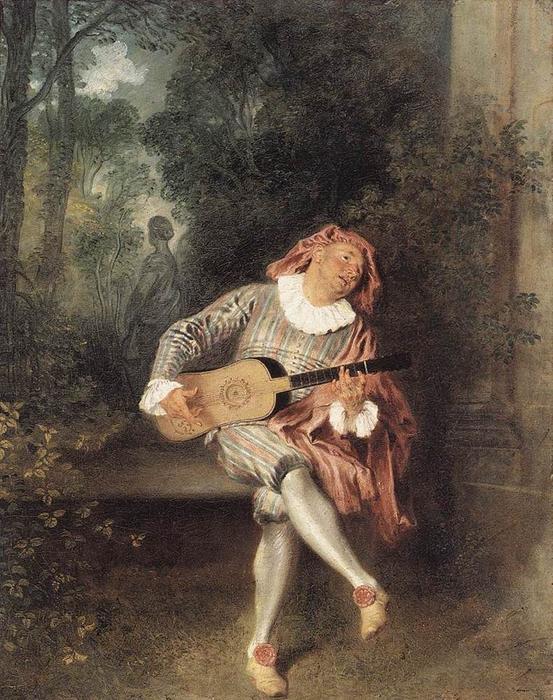
- Subject Matter: Watteau’s Mezzetin depicts a solitary man seated on a bench, absorbed in playing the guitar. This seemingly simple tableau is imbued with profound significance—a deliberate departure from the heroic narratives favored by earlier eras. The figure's posture exudes quiet contemplation, suggesting an inner world untouched by external pressures.
- Style and Technique: Watteau’s signature style embodies the Rococo ethos: ethereal beauty achieved through subtle brushstrokes and masterful use of color palettes. He eschewed dramatic chiaroscuro—the stark contrasts of light and shadow characteristic of Baroque painting—opting instead for diffused illumination that softens contours and enhances atmospheric perspective. This technique lends an air of dreamlike serenity to Mezzetin, transporting the viewer into a realm of idealized fantasy.
Historical Context: The Birth of the Fête Galante
Painted in 1720, Mezzetin exists within the burgeoning context of the fête galante—a theatrical genre that sought to recreate aristocratic pleasure amidst carefully orchestrated landscapes and musical performances. Watteau’s intention wasn't merely to depict a scene; he aimed to evoke an emotional response, capturing the elusive spirit of refined society. The painting reflects the prevailing fascination with pastoral idylls and the celebration of beauty as a form of moral elevation—values deeply rooted in Enlightenment ideals. Its placement within the Metropolitan Museum of Art underscores its enduring relevance to art historical scholarship.
- Symbolism: The guitar itself serves as a potent symbol, representing musical contemplation and artistic expression. Watteau’s masterful depiction of the man's closed eyes emphasizes this inward focus, suggesting an escape from worldly concerns into realms of imagination and emotion.
- Influence on Later Artists: Watteau’s influence extends far beyond his own time, resonating in movements like Expressionism decades later. Artists such as Michael Hafftka recognize the power of Watteau's luminous color harmonies and expansive compositions—elements that continue to inspire contemporary artistic endeavors.
Emotional Resonance: Capturing Transient Beauty
Ultimately, Mezzetin transcends mere visual representation; it communicates a profound sense of melancholy beauty—a characteristic hallmark of Watteau’s oeuvre. The painting's muted tones and hazy atmosphere convey an exquisite vulnerability, inviting viewers to contemplate the fleeting nature of pleasure and the bittersweet contemplation of solitude. It stands as a poignant reminder that true artistry lies not in proclaiming grand narratives but in capturing ephemeral moments of grace and emotion—a legacy that continues to captivate audiences worldwide.