The Artist and His Work
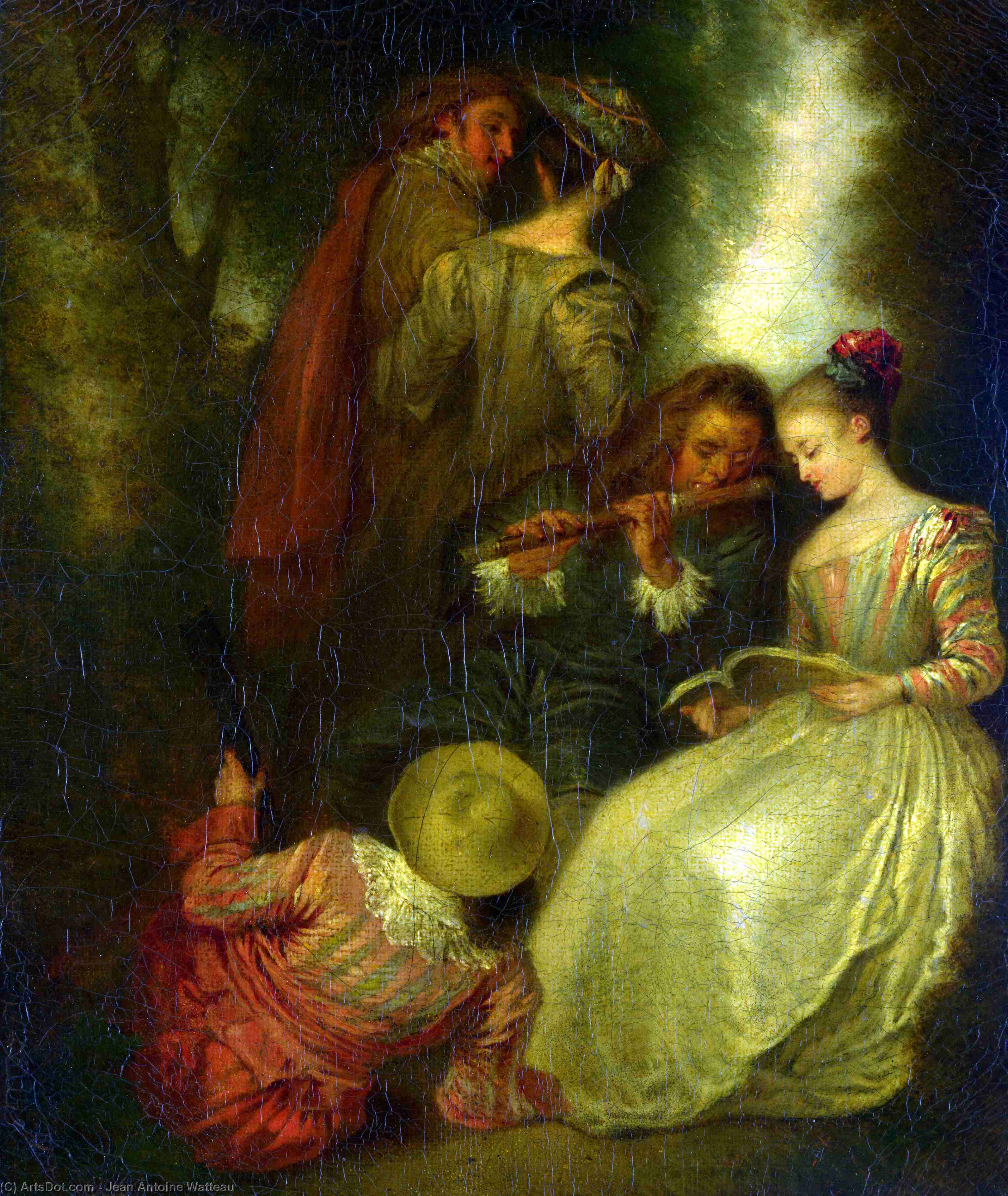
Jean Antoine Watteau, a renowned French painter, is celebrated for his captivating works that blend elements of the Rococo style with a unique sense of harmony. One of his notable paintings,
Perfect Harmony, exemplifies his mastery in capturing social gatherings and the essence of human interaction.
The Painting: A Social Gathering
The painting depicts a group of people gathered in what appears to be a forest or wooded area. The scene is lively, with some individuals standing while others sit on the ground. The presence of a violin lying on the ground near one of the figures suggests that music might have been played during this gathering, adding a musical element to the scene.
Artistic Techniques and Style
Watteau's use of light and shadow creates a sense of depth in the painting. His technique, known as
chiaroscuro, emphasizes contrasts between light and dark areas, which adds volume and dimensionality to the figures. This style is reminiscent of the Baroque period, where artists like Caravaggio used similar techniques to create dramatic effects.
Historical Context
Watteau's work falls within the broader context of Western painting, which has a rich history spanning from antiquity to contemporary art. The Renaissance and Baroque periods saw significant advancements in painting techniques, including the use of perspective and chiaroscuro. Watteau's contribution to this tradition is notable for his ability to capture the essence of social gatherings with elegance and harmony.
Relevance to Modern Art
The concept of light in painting, as seen in
Perfect Harmony, continues to influence modern art movements. The emphasis on capturing light and its effects has been a recurring theme throughout the history of painting, from Renaissance artists like Leonardo da Vinci to contemporary artists who experiment with new mediums and techniques.
Conclusion
Jean Antoine Watteau's Perfect Harmony is a testament to his skill in capturing the essence of human interaction and social gatherings. The painting's use of light, shadow, and composition creates a sense of harmony that continues to captivate art lovers today. For more information on Jean Antoine Watteau and other artists, visit
Jean Antoine Watteau: Seated Young Woman at ArtsDot. Explore the history of painting and its evolution through various styles and techniques on
Wikipedia's History of Painting.