Discover Jean-Antoine Watteau (1684-1721), the French Rococo master! Explore his idyllic 'fêtes galantes,' theatrical scenes, & influence on 18th-century art. View masterpieces like 'The Country Dance' & learn about his legacy.
The Enchanting World of Pierrot Content by Jean Antoine Watteau
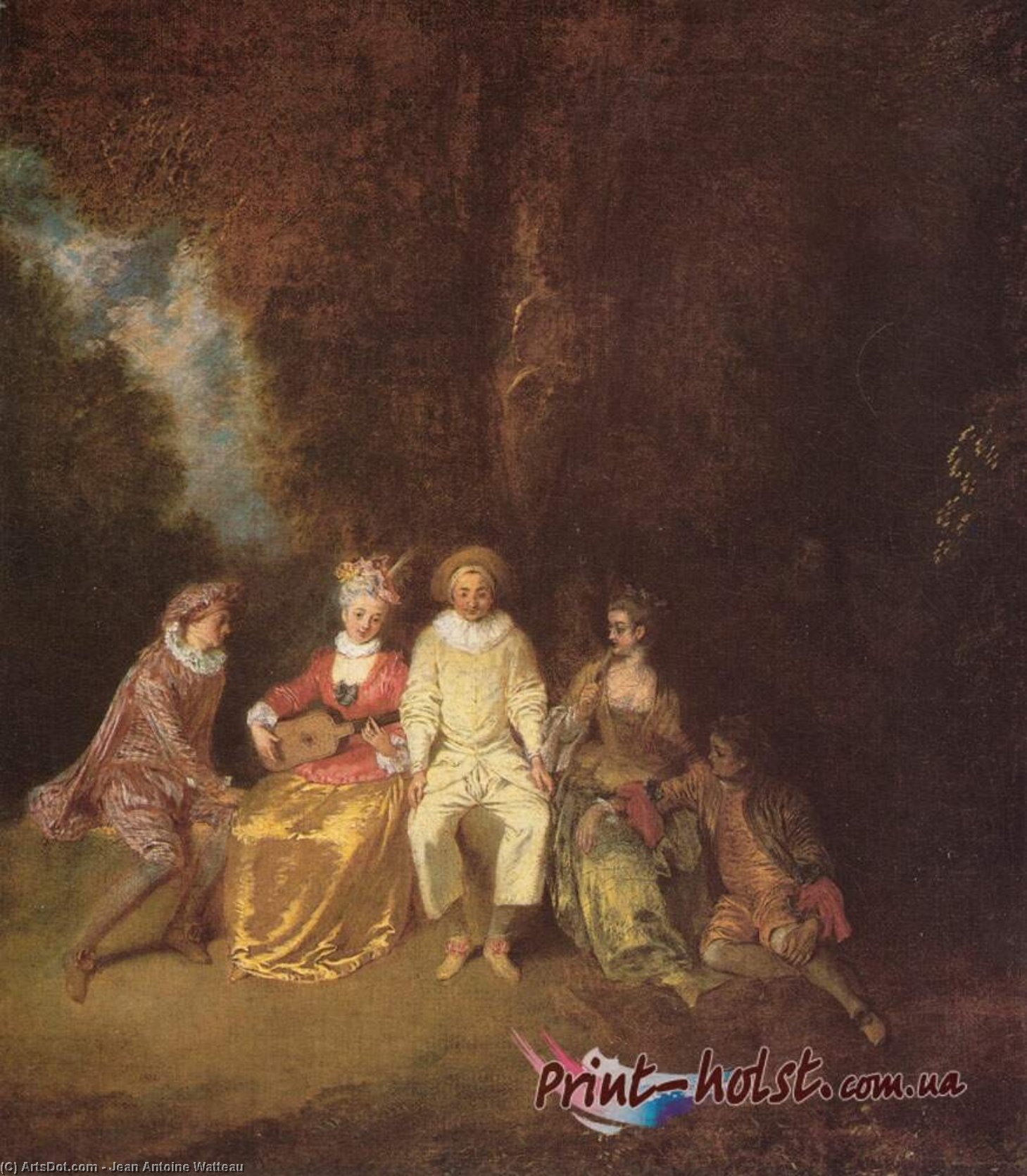
Jean Antoine Watteau’s “Pierrot Content,” completed around 1718-1719, stands as an emblem of Rococo artistry—a movement that prioritized elegance, delicacy, and fleeting emotion over the grandeur of Baroque formalism. This captivating oil painting resides within the Museo Nacional Thyssen-Bornemisza in Madrid, Spain, offering visitors a glimpse into Watteau’s masterful vision of aristocratic leisure and romantic contemplation.
### The Artist and His Style: A Rococo Revelation
Jean Antoine Watteau (1684–1721) revolutionized French painting by rejecting the weighty seriousness of his predecessors and embracing the airy optimism characteristic of the Rococo style. Trained initially in Valenciennes, Watteau swiftly ascended to Parisian prominence thanks to collaborations with Claude Gillot and Julien, immersing himself in the theatrical conventions of *fêtes galantes*. These outdoor celebrations—inspired by Venetian masked balls—became Watteau’s signature subject matter, capturing idealized scenes of aristocratic gatherings infused with subtle psychological depth. Unlike the monumental canvases favored during the Baroque era, Watteau's paintings prioritized atmosphere and nuanced emotion, utilizing soft colors and delicate brushstrokes to create an illusion of shimmering light and ethereal beauty.
### A Scene Steeped in Symbolism: Commedia dell’Arte and Pastoral Idyls
“Pierrot Content” draws heavily from the traditions of *Commedia dell’arte*, a popular Italian theatrical form that Watteau encountered during his formative years in Paris. The painting depicts a group of actors portraying characters from this beloved genre—specifically Pierrot, Harlequin, Columbine, and Arlechino—engaged in an animated conversation amidst a lush garden setting. This juxtaposition of theatrical performance and pastoral tranquility reflects the Rococo’s fascination with illusion and fantasy, mirroring the idealized landscapes favored by artists like Claude Lorrain and Nicolas Pocock. The statue of Pan—a mythological deity associated with shepherds and fertility—dominates the composition, symbolizing renewal and harmony – a core aesthetic principle of the period. Watteau skillfully employs pyramidal compositions to guide the viewer’s gaze, emphasizing balance and serenity while subtly hinting at hidden narratives beneath the surface.
### Technique and Color Palette: Mastering Light and Atmosphere
Watteau's technique exemplifies the Rococo’s commitment to capturing fleeting moments of beauty with unparalleled precision. He achieved this remarkable feat through meticulous layering of translucent glazes—a hallmark of Rococo painting—allowing light to penetrate deeply into the canvas and creating a luminous effect that imbues the scene with an otherworldly glow. Watteau's palette is dominated by pastel hues—pale blues, pinks, yellows, and greens—which contribute to the overall sense of delicacy and refinement. Careful attention to detail—evident in the rendering of fabrics, costumes, and foliage—further enhances the painting’s immersive quality, transporting viewers into a realm of aristocratic indulgence and romantic enchantment.
### Legacy and Influence: Shaping Artistic Expression
“Pierrot Content” stands as a testament to Watteau's enduring influence on subsequent generations of artists. His pioneering exploration of color and movement paved the way for Impressionism and Realism, demonstrating that art could convey emotion and atmosphere with unprecedented subtlety. Watteau’s masterful depiction of aristocratic life continues to inspire admiration and fascination today, cementing his place as one of France’s most celebrated painters—a true visionary who transformed artistic conventions and elevated painting to new heights of expressive power.