Discover Jean-Antoine Watteau (1684-1721), the French Rococo master! Explore his idyllic 'fêtes galantes,' theatrical scenes, & influence on 18th-century art. View masterpieces like 'The Country Dance' & learn about his legacy.
Explore art & archaeology spanning millennia at the Ashmolean Museum! Discover Egyptian mummies, Pre-Raphaelite masterpieces & more – free admission awaits!
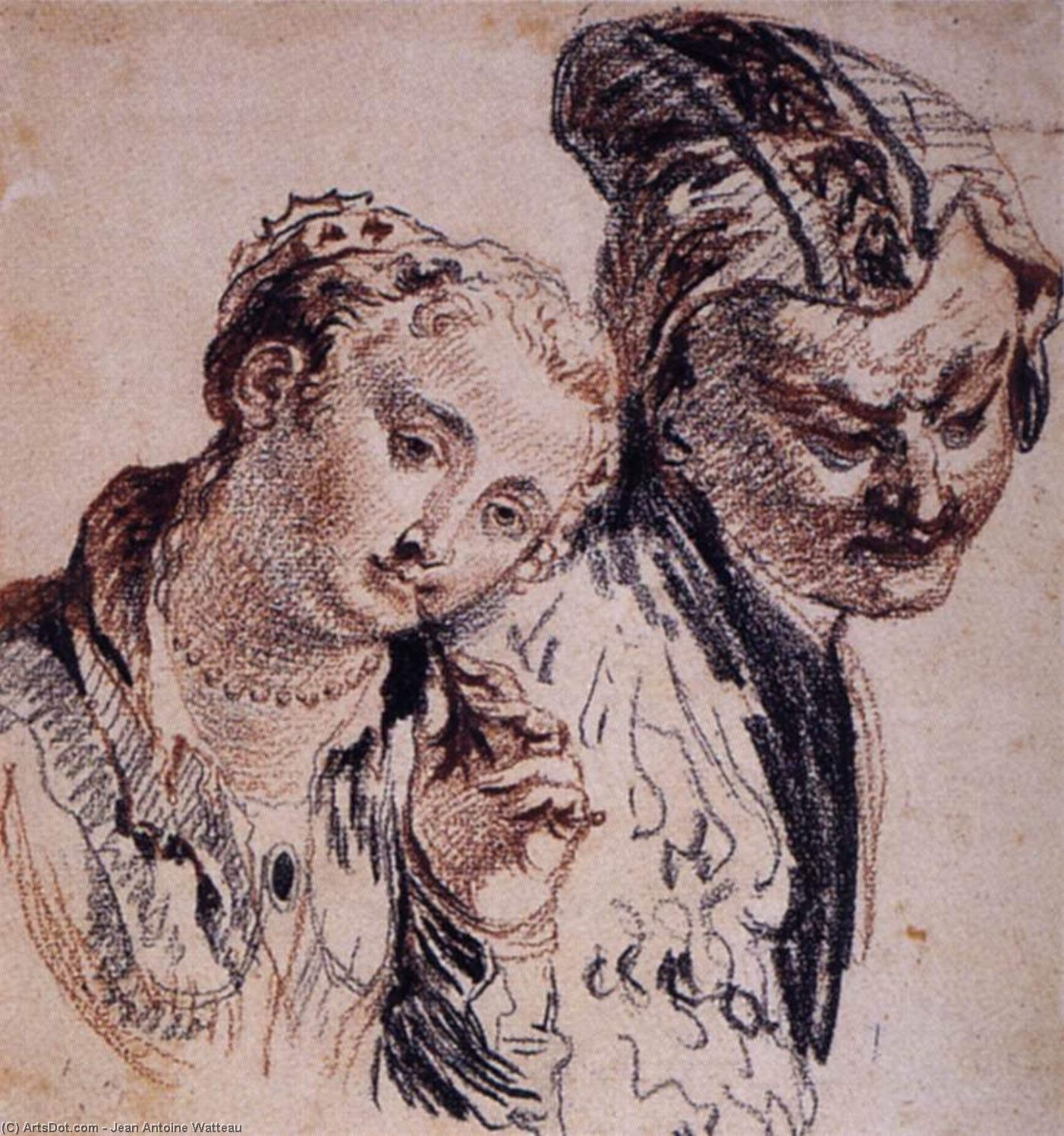
Sketch with Two Figures
The Ashmolean Museum of Art and Archaeology, nestled in Oxford’s historic heart, houses an unparalleled collection of artistic treasures—a testament to centuries of creativity and cultural exchange. Among its celebrated holdings is “Sketch with Two Figures” by Jean-Antoine Watteau, a masterpiece that encapsulates the essence of Rococo artistry and continues to fascinate viewers today. Created in 1715 using chalk on paper, this drawing measures 196 x 184 cm—a substantial canvas for its time—and offers an intimate glimpse into Watteau’s artistic vision.
### Composition and Details
The sketch depicts two figures positioned side by side within a richly decorated interior setting. On the left stands a woman adorned in elegant attire, her gaze downward as she examines something held delicately in her hand – perhaps a letter or a cherished trinket. A necklace encircles her neck, subtly enhancing her poise and conveying an aura of refined sophistication. Opposite her is a man absorbed in contemplation; his mouth slightly open as he stares intently into the distance, suggesting deep thought and introspection. Watteau’s meticulous attention to detail—particularly in capturing the textures of hair and facial expressions—elevates this drawing beyond mere representation, imbuing it with palpable emotion and psychological depth. The artist skillfully employs shading and tonal variations to create a sense of volume and atmosphere, mirroring the soft, diffused light characteristic of Rococo interiors.
### Artistic Significance
Watteau’s work distinguishes itself through its harmonious blend of realism and idealized beauty—a hallmark of the Rococo style that emerged in France during Louis XV's reign. Unlike the grand narratives favored by Baroque painters like Rembrandt or Rubens, Watteau focused on capturing fleeting moments of pleasure and intimacy, often portraying aristocratic gatherings in idyllic landscapes. “Sketch with Two Figures” exemplifies Watteau’s mastery in conveying complex emotions through understated gestures and expressive brushstrokes—a technique that anticipates Impressionism's emphasis on capturing sensory experience. The artist’s use of chalk lends itself beautifully to delicate lines and subtle gradations of tone, allowing for a remarkable level of precision and nuance.
### Historical Context
The Ashmolean Museum’s founding in 1678 represents a pivotal moment in British cultural history—the establishment of the nation's first public museum dedicated to art and archaeology. Prior to this groundbreaking initiative, access to artistic masterpieces was largely confined to aristocratic patronage, fostering an elitist culture of connoisseurship. Watteau’s contemporaries included Hans Holbein The Younger, renowned for his monumental portraits capturing the grandeur of Tudor England, and Michelangelo Buonarroti, whose sculptures embody the humanist ideals of the Renaissance. Consider Holbein's “The Triumph of Riches” (119 x 44 cm), a lavish depiction of royal splendor—a stark contrast to Watteau’s quieter contemplation—and Michelangelo’s “Bust of a Young Man (recto)” (282 x 200 cm)—a testament to sculptural excellence. These artworks underscore the breadth and depth of artistic achievement during Watteau's era, reflecting broader societal shifts toward greater openness and intellectual curiosity.
### Conclusion
“Sketch with Two Figures” stands as an enduring symbol of Rococo elegance and psychological insight—a drawing that transcends its formal dimensions to resonate deeply with viewers across time. Its placement within the Ashmolean Museum ensures that Watteau’s artistic legacy continues to inspire admiration and scholarly study. For those seeking to immerse themselves in the beauty of Watteau's oeuvre or explore similar masterpieces from Oxford’s celebrated collection, reproductions of “Sketch with Two Figures” are available on ArtsDot.com – a captivating opportunity to experience firsthand the genius of this pivotal figure in European art history.