Discover Jean-Antoine Watteau (1684-1721), the French Rococo master! Explore his idyllic 'fêtes galantes,' theatrical scenes, & influence on 18th-century art. View masterpieces like 'The Country Dance' & learn about his legacy.
Explore the Bibliothèque Nationale de France's stunning collections & architecture! From medieval manuscripts to modern art, discover centuries of French heritage in Paris.
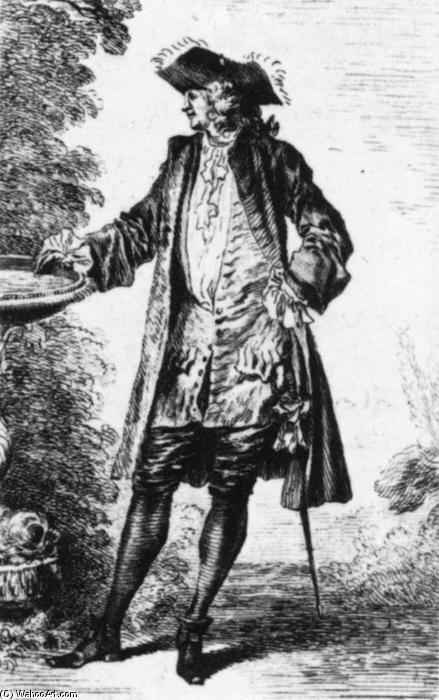
Standing Man: A Portrait of Rococo Grace
Jean-Antoine Watteau’s “Standing Man,” executed around 1710, stands as a quintessential emblem of the Rococo artistic movement—a stylistic revolution that gently eclipsed the grandeur and dramatic fervor of its predecessor, the Baroque. More than just a depiction of an individual, this engraving embodies the spirit of the era: an obsession with refined leisure, idealized beauty, and subtle emotional expression within meticulously crafted landscapes.
- Subject Matter & Context: The artwork portrays a gentleman in aristocratic attire, positioned amidst a tranquil garden setting—a deliberate choice reflecting Watteau’s fascination with pastoral ideals. These “fêtes galantes,” or elegant outdoor gatherings, were central to Rococo culture, representing a rejection of the weighty concerns of court life and embracing instead the pleasures of refined companionship and artistic contemplation. The inclusion of a bird adds an element of symbolism—often interpreted as representing innocence, freedom, and perhaps even fleeting beauty.
- Style & Technique: Watteau’s masterful use of engraving exemplifies the precision and detail achievable through this printmaking process. Lines are meticulously crafted using hatching and cross-hatching techniques to create tonal variations that convincingly simulate volume and texture—particularly noticeable in the fabric of the man's coat, which appears richly textured thanks to the varied linework.
- Composition & Lighting: The composition prioritizes balance and serenity. The figure occupies a slightly off-center position, creating visual dynamism without disrupting the overall sense of calm. Directional lighting—emanating from the left—casts strong shadows on the man’s right side and illuminates the foliage, enhancing depth perception and contributing to the artwork's atmospheric quality.
- Symbolism & Emotional Impact: Watteau’s posture exudes a quiet dignity and repose, conveying a feeling of gentle amusement. The gesture towards the bird reinforces this impression—suggesting an appreciation for nature’s beauty and hinting at a contemplative mood. Ultimately, “Standing Man” speaks to the Rococo ethos of understated elegance and emotional nuance.
- Further Research: For deeper insight into Watteau's oeuvre and the broader context of Rococo art, explore resources like The Art Institute of Chicago and The Metropolitan Museum of Art. Examining reproductions of Watteau’s other celebrated works—such as “Party of Four” and “Italian Comedians”—will illuminate the artist's distinctive vision and solidify his place as a cornerstone of eighteenth-century artistic achievement.