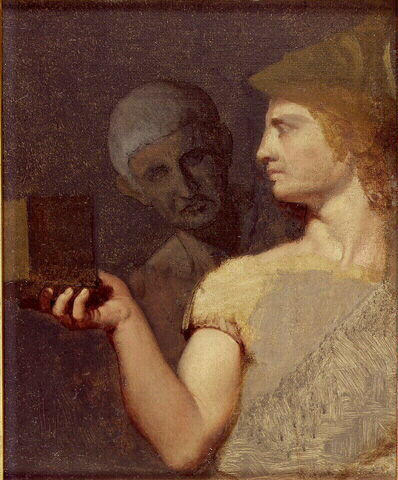
The
Bust of Alexander and Aristarchus is a stunning work of art created by the renowned French artist
Jean Auguste Dominique Ingres in 1827. This beautiful painting is a prime example of
Neo-Classicism, a style that emphasizes the use of classical elements and techniques while incorporating modern themes and ideas.
The Artist's Style and Technique
Jean Auguste Dominique Ingres was a master of his craft, known for his incredible attention to detail and his ability to capture the essence of his subjects. The
Bust of Alexander and Aristarchus is no exception, showcasing the artist's skillful use of light and shadow to create a sense of depth and dimensionality. The painting is characterized by its
harmonious lines and
balanced composition, which give it a sense of calm and serenity.
The Painting's Significance
The
Bust of Alexander and Aristarchus is not only a beautiful work of art, but also an important piece of history. It is a testament to the enduring legacy of
Jean Auguste Dominique Ingres and his contribution to the world of art. The painting can be found in the collection of the
Fogg Art Museum, which is part of the
Harvard Art Museums. You can also find a high-quality handmade oil painting reproduction of this artwork on
ArtsDot.com.
- The painting measures 26 x 21 cm, making it an intimate and personal work of art.
- The Bust of Alexander and Aristarchus is considered one of the most important works of Jean Auguste Dominique Ingres's career.
- The painting is a prime example of Neo-Classicism, a style that emphasizes the use of classical elements and techniques while incorporating modern themes and ideas.
Discover more about Jean Auguste Dominique Ingres and his artworks on ArtsDot.com. You can also learn more about the artist's life and work on
Wikipedia.
The
Bust of Alexander and Aristarchus is a must-see for anyone interested in art, history, or culture. Its beauty, significance, and importance make it a truly unforgettable experience.