A Masterpiece of Neoclassical Reverence: Jean Auguste Dominique Ingres’ “Christ Delivering the Keys to Saint Peter”
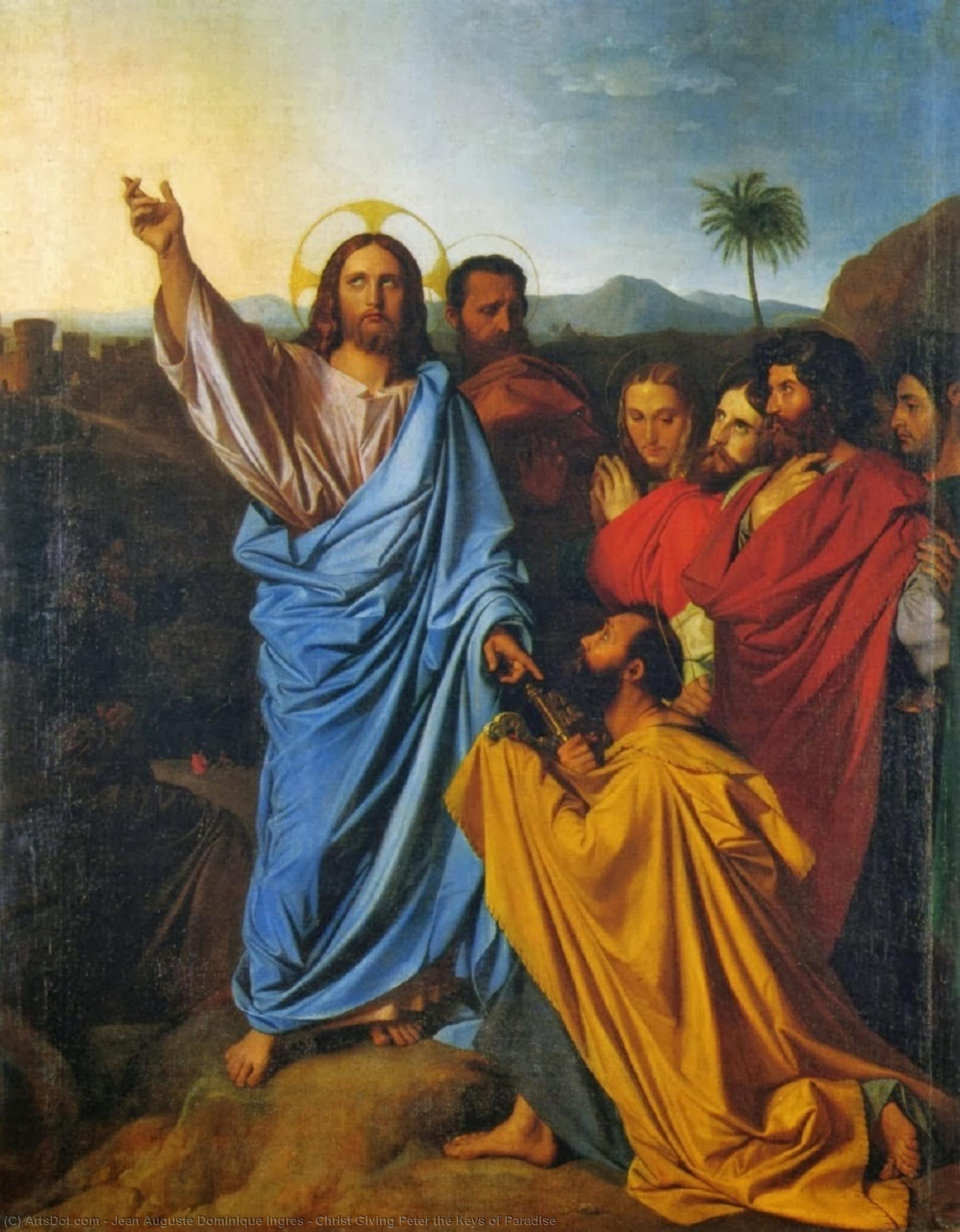
Jean-Auguste-Dominique Ingres' "Christ Delivering the Keys to Saint Peter," completed in 1820, stands as a cornerstone of Neoclassical art—a testament to meticulous observation and an unwavering devotion to classical ideals. Currently housed within the Musée Ingres in Montauban, France, this monumental canvas (280 x 217 cm) transcends mere depiction; it embodies a profound meditation on faith and divine authority, capturing the essence of Christian iconography with unparalleled grace.
Composition and Technique: Precision Embodied
Ingres’ masterful technique—characterized by smooth brushstrokes and precise lines—mirrors the sculptural elegance championed during the Enlightenment. He employed oil paint on canvas, meticulously layering pigments to achieve a luminous surface finish that captures subtle gradations of light and shadow. The artist's unwavering attention to detail is evident in every aspect of the painting, from the drapery folds of Christ’s robe to the musculature of Saint Peter’s pose—a deliberate homage to Michelangelo’s sculptures of biblical figures. This meticulous approach reflects Ingres’ belief that art should strive for idealized beauty and intellectual rigor.
Symbolism: Keys to Paradise and Divine Grace
The painting's symbolism is layered with theological significance. The central motif – Jesus presenting Saint Peter with the keys to heaven—is drawn directly from scripture, representing Christ’s bestowal of spiritual dominion upon his apostle. This gesture symbolizes salvation and divine grace, highlighting Peter’s role as protector of the Church and guarantor of eternal life. Surrounding figures—including two kneeling men and a standing clergyman—further enrich the scene's narrative complexity, emphasizing piety and contemplation. The cathedral setting—a deliberate choice by Ingres—underscores the sanctity of the occasion and reinforces its connection to medieval Christian tradition.
Historical Context: A Return to Antiquity
“Christ Delivering the Keys to Saint Peter” emerged during a period marked by intellectual ferment following the French Revolution, where artists sought inspiration in the grandeur and moral clarity of antiquity. Ingres’ revival of Neoclassical style represented a conscious rejection of Romantic sentimentality—a deliberate assertion of reason and order against the turbulent upheavals of the time. This artistic movement aimed to recapture the aesthetic standards of Classical Greece and Rome, believing that they embodied universal truths and offered models for noble behavior.
Emotional Resonance: Serenity Amidst Sacred Narrative
Despite its formal precision, “Christ Delivering the Keys to Saint Peter” possesses a palpable emotional depth. The serene expressions of the figures convey reverence and humility—a reflection of the profound spiritual experience depicted. Ingres skillfully captures the solemn atmosphere of the cathedral, transporting viewers into a space imbued with holiness and contemplation. This enduring artwork continues to inspire admiration for its beauty and intellectual sophistication, serving as a timeless reminder of faith’s transformative power.
- Artist: Jean Auguste Dominique Ingres
- Year Created: 1820
- Medium: Oil on Canvas
- Location: Musée Ingres, Montauban, France
Explore a stunning reproduction of “Christ Delivering the Keys to Saint Peter” at ArtsDot. Bring the majesty of Neoclassical art into your home!