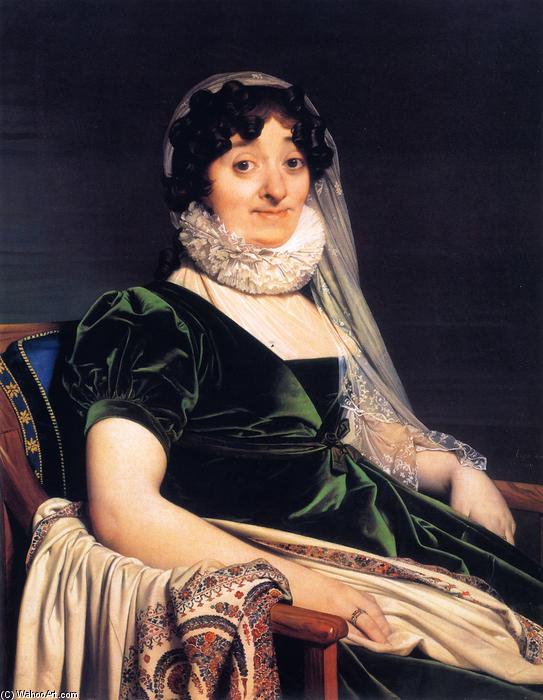
Experience the timeless elegance of Ingres’s ‘Comtesse de Tournon,’ a Neoclassical portrait defined by meticulous detail and serene beauty. This 1812 masterpiece captures the Countess's grace with muted tones, inviting you to discover or own this iconic artwork.
Comtesse de Tournon: A Portrait of Elegance Defined by Ingres
The world of art holds treasures that transcend generations, and Jean Auguste Dominique Ingres’s “Comtesse de Tournon” stands as a pinnacle of Neoclassical artistry. Painted in 1812 during the Romantic era's burgeoning influence, this oil on canvas portrait transcends mere representation; it embodies an ideal of beauty and refinement meticulously crafted by one of France’s most celebrated painters. Currently residing within the Philadelphia Museum of Art, the painting continues to captivate audiences with its luminous stillness and enduring legacy as a masterpiece of artistic achievement.
The Artist's Vision: Ingres and Neoclassical Precision
Jean Auguste Dominique Ingres (1780-1867) wasn’t simply replicating visual reality; he was actively engaging in a dialogue with classical tradition. Born in Montauban, France, Ingres possessed an unwavering commitment to the principles of Greek sculpture and Roman painting—a dedication that would permeate his entire oeuvre. Unlike the expressive fervor of Romanticism, Ingres championed a style characterized by meticulous detail, balanced composition, and a profound respect for form. This approach is vividly evident in “Comtesse de Tournon,” where Ingres prioritizes anatomical accuracy and idealized beauty above all else. His method involved painstaking sketching and layering thin glazes to achieve an unparalleled level of tonal subtlety—a technique that anticipates the Impressionists’ later explorations of light and color.
A Study in Light and Color: Capturing Essence Through Technique
The painting's remarkable quality stems from Ingres’ masterful manipulation of color and texture. He employs a palette dominated by muted greens and creams, skillfully highlighting the Countess’s complexion and creating an atmosphere of serene sophistication. The artist’s meticulous attention to detail extends beyond mere surface appearance; observe the intricate folds of her dress—rendered with astonishing precision—and the delicate sheen of her veil. Ingres utilized a technique known as sfumato – blurring edges and softening contours – to imbue the portrait with a sense of depth and luminosity, mirroring the idealized beauty he sought to portray. This subtle blending of tones contributes significantly to the painting’s emotional impact, conveying an aura of quiet dignity and contemplative grace.
Historical Context: Rome Under Napoleon's Shadow
“Comtesse de Tournon” was created during a pivotal moment in European history – Napoleon Bonaparte’s occupation of Rome. The Countess herself was married to a prominent diplomat serving under Napoleon, reflecting the political landscape of the time. Ingres’ depiction captures not only the physical beauty of his subject but also subtly communicates the social and cultural values prevalent within aristocratic circles. The painting exemplifies the Neoclassical preoccupation with moral virtue and intellectual contemplation—themes that resonated deeply with artists and intellectuals alike during the Napoleonic era.
Symbolism and Emotional Resonance: Beyond Mere Appearance
More than just a portrait, “Comtesse de Tournon” speaks to broader artistic concerns. Ingres’s deliberate framing and pose convey an air of composure and self-assurance—qualities associated with noble femininity. The Countess's gaze directs the viewer's attention inward, inviting contemplation on themes of inner beauty and refined sensibility. Ultimately, the painting transcends its formal constraints, offering a glimpse into the idealized vision of human perfection championed by Ingres and embodying the enduring power of Neoclassical art to inspire awe and admiration.
- Explore more about Ingres’s work: ArtsDot.com
- Discover detailed information on Ingres' paintings: List of paintings by Jean-Auguste-Dominique Ingres