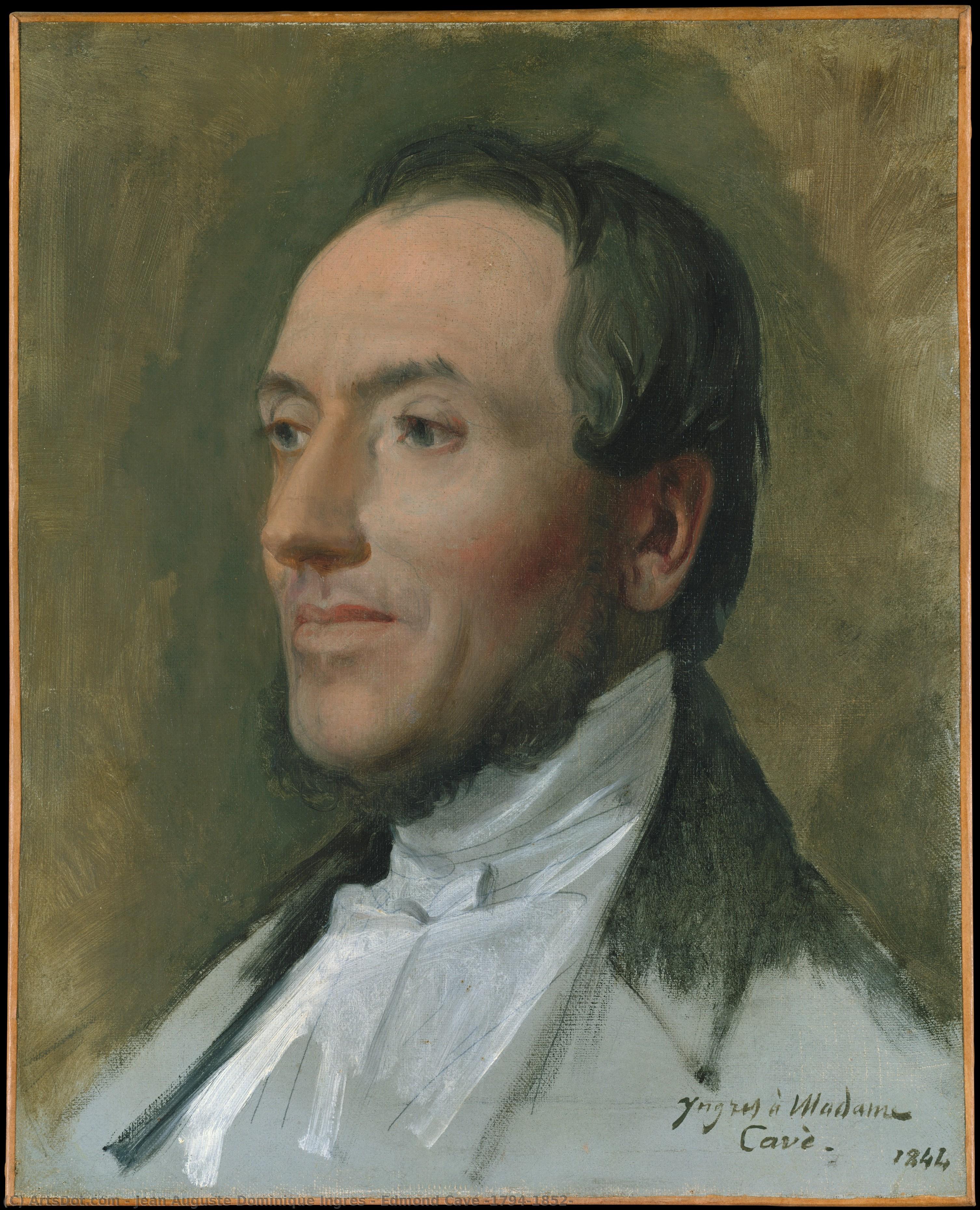
Jean-Auguste-Dominique Ingres’s Portrait of Edmond Cavé – A Study in Neoclassical Dignity
This meticulously rendered portrait of Edmond Cavé, painted in 1844 by the celebrated artist Jean-Auguste-Dominique Ingres, offers a captivating glimpse into the world of French high society during the reign of King Louis-Philippe. More than just a likeness, it’s a testament to Ingres's mastery of Neoclassical style – a deliberate and powerful return to the ideals of classical art that defined his career. The painting’s quiet dignity and precise execution speak volumes about Cavé’s position as an inspector and director within the fine arts administration, a role of considerable influence at the time.
- Subject & Context: The portrait depicts Edmond Cavé, a prominent figure in 19th-century France. Its creation coincided with his marriage, making it a celebratory piece intended to commemorate this significant life event. Interestingly, the work is linked to another of Ingres’s portraits – that of Cavé's wife – suggesting a deliberate pairing and an exploration of familial portraiture within the context of the era.
- Ingres’s Technique: Ingres was renowned for his unwavering commitment to line and form, achieving a remarkably sculptural effect through careful observation and precise brushwork. Notice the smooth transitions between tones, the sharp definition of Cavé's features, and the controlled handling of fabric – all hallmarks of Ingres’s distinctive style.
The Process of Creation: Collaboration and Observation
Ingres’s approach to this portrait was remarkably innovative for its time. He didn’t simply rely on a direct observation of Cavé; instead, he engaged in a collaborative process with his subject. Consulting with Cavé regarding the dimensions of his wife's likeness – as documented in the creation of that earlier portrait – Ingres then meticulously transferred a drawing from the Musée Ingres in Montauban onto the canvas. This technique demonstrates Ingres’s dedication to accuracy and his willingness to utilize existing artistic resources, showcasing a sophisticated understanding of the creative process.
- Drawing as Foundation: The use of a preparatory drawing is crucial to understanding Ingres's method. It allowed him to refine his composition and ensure the accurate representation of Cavé’s form before committing it to paint.
- Musée Ingres Connection: The reference to the Musée Ingres highlights the importance of personal archives and artistic resources within Ingres’s practice, reflecting a systematic approach to his work.
Symbolism and Emotional Impact
Despite its formal restraint, the portrait possesses a subtle emotional resonance. Cavé's serious expression and direct gaze command attention, conveying an air of authority and self-assuredness. The white shirt and tie, typical attire for the period, further anchor the image in its historical context. While not overtly sentimental, the painting evokes a sense of respect for Cavé’s position and status within French society – a testament to Ingres's ability to capture not just physical appearance but also the essence of his subject.
- Neoclassical Values: The portrait embodies the core values of Neoclassicism – order, clarity, and rationalism – reflecting the artistic sensibilities of the time.
- Power and Status: Cavé’s attire and demeanor subtly communicate his position as a high-ranking official within the government.
Specifications
Title: Edmond Cavé (1794–1852) Artist: Jean-Auguste-Dominique Ingres Date: 1844 Size: 41 x 33 cm Medium: Oil on Canvas