The Serene Devotion of Ingres' Masterpiece
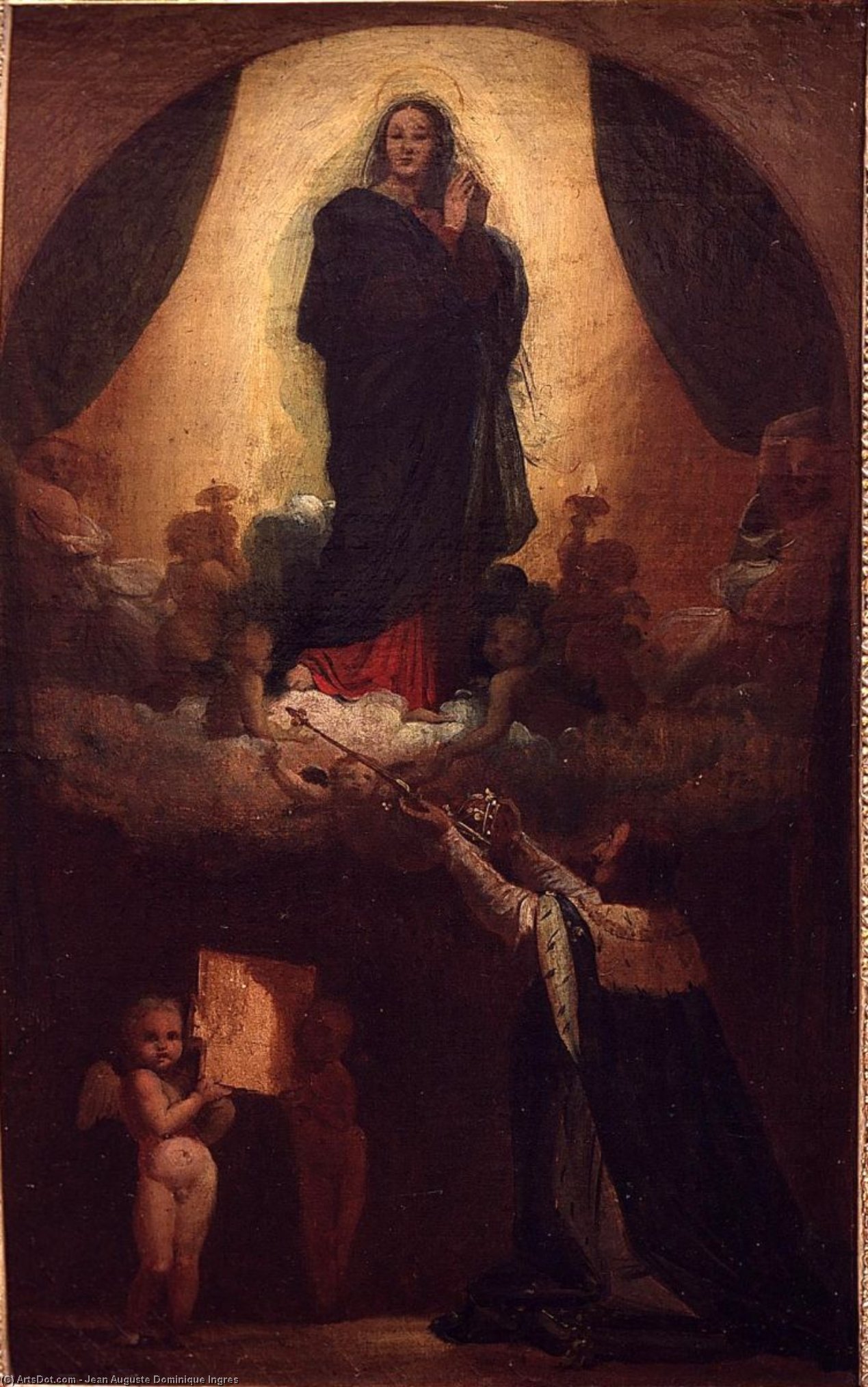
To gaze upon Jean-Auguste-Dominique Ingres’ First Thought of the Vow of Louis XIII is to step into a moment suspended between divine revelation and profound human piety. Painted in 1821, this work transcends mere portraiture or religious depiction; it captures the very breath of devotion. The composition centers around the tender embrace of the Virgin Mary holding the Christ Child, figures rendered with an almost sculptural perfection that is so characteristic of Ingres’ unwavering commitment to classical ideals. One feels immediately enveloped by a palpable sense of serenity, as if the viewer has stumbled upon a private moment of sacred contemplation.
A Study in Neoclassical Grace and Line
Technically, this painting is a quintessential example of Neoclassicism. Ingres’ genius lay in his unparalleled mastery of line—a precision that gives every fold of drapery, every gesture of the hands, an almost architectural grace. The harmonious composition guides the eye effortlessly from the central figures outward to the surrounding angels and the kneeling supplicant. These supporting elements are not mere decoration; they weave a narrative tapestry around the core mystery. Notice the inclusion of the books, placed thoughtfully in the corners; these objects serve as silent testaments to scripture and enduring wisdom, grounding the ethereal scene in tangible scholarship.
Symbolism Woven into Sacred Form
The symbolism within First Thought of the Vow of Louis XIII is rich and multilayered. The Virgin Mary and Jesus embody timeless themes of motherhood and divinity, while the surrounding angels act as celestial witnesses to this sacred exchange. The kneeling figure below suggests a universal human response—the posture of humility before the sublime. It invites every viewer, regardless of personal belief, to consider their own moment of profound realization or vow. This depth ensures that the painting resonates not just with art historians, but with anyone seeking an emotional anchor in their décor.
Bringing History Home: Owning a Fragment of Art History
For the discerning collector or interior designer, this piece offers more than just aesthetic beauty; it offers a connection to the grand narrative of European art history. While the original oil painting commands reverence in its historical setting, owning a high-quality reproduction allows you to integrate this masterpiece’s quiet power into your own sanctuary or drawing room. The delicate balance between classical structure and emotional warmth makes it an unparalleled focal point. It is an heirloom quality piece that speaks volumes about taste, refinement, and an appreciation for enduring artistic perfection.