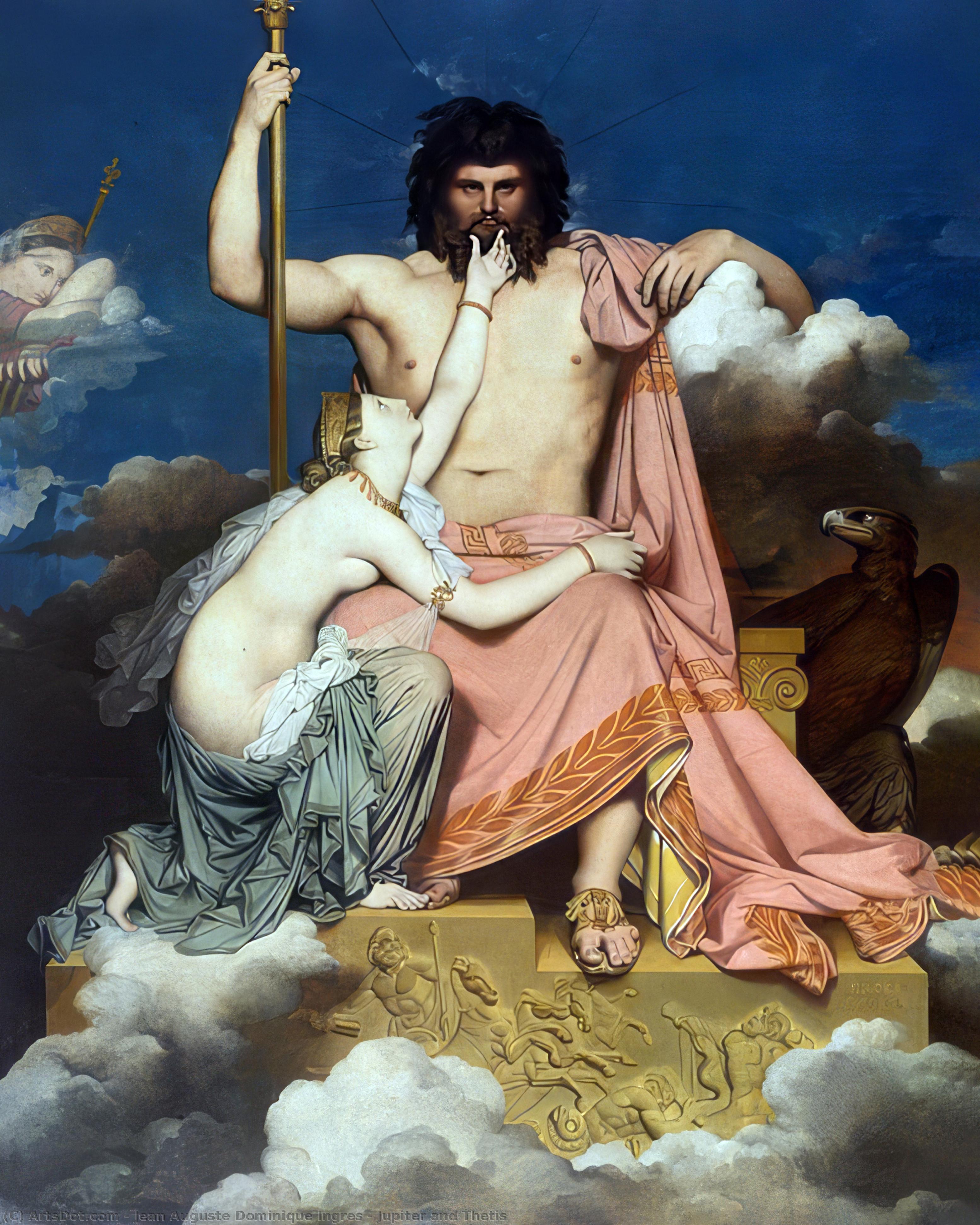
A Testament to Classical Grace: Exploring Jean Auguste Dominique Ingres’ Jupiter and Thetis
Jean-Auguste-Dominique Ingres remains a singular figure in the annals of art history—a painter who fiercely defended the tenets of Neoclassicism while simultaneously injecting an undeniable element of sensual beauty into his canvases. Born in Montauban, France, in 1780, Ingres’ artistic vision was profoundly shaped by his father's influence and nurtured within the rigorous framework of Toulouse’s Académie Royale. This formative period instilled a deep appreciation for form and meticulous craftsmanship, principles that would permeate his entire oeuvre.
- Subject Matter & Mythological Resonance: Ingres’ Jupiter and Thetis delves into the rich tapestry of Greek mythology, depicting the poignant plea of Thetis—mother to Achilles—for Zeus to bestow upon her son invincibility during battle. This narrative embodies timeless themes of maternal devotion, divine intervention, and the struggle against fate – concepts central to classical thought.
- Neoclassical Style & Technique: The painting exemplifies Ingres’ signature Neoclassical style, characterized by linear precision and idealized forms reminiscent of ancient sculptures. He achieved this remarkable effect through painstaking brushwork and a masterful command of chiaroscuro—the dramatic interplay between light and dark—creating depth and conveying an emotional intensity.
- Composition & Dynamism: Despite its stillness, Jupiter and Thetis possesses a palpable dynamism. Ingres skillfully arranges the figures to convey movement and energy, guiding the viewer’s eye across the canvas with deliberate precision. This compositional technique underscores the importance of balance and harmony—hallmarks of Neoclassical aesthetics.
Historical Context & Artistic Legacy
Created during Ingres' prolific artistic career, Jupiter and Thetis stands as a cornerstone of 19th-century French art. It reflects the broader intellectual currents of its time—a revival of interest in classical ideals following the Enlightenment—and aligns perfectly with the prevailing aesthetic sensibilities of the era. Furthermore, Ingres’ work anticipated developments in Impressionism, subtly hinting at the burgeoning exploration of color and light that would soon redefine artistic expression.
Symbolism & Emotional Impact
Beyond its formal beauty, Jupiter and Thetis resonates with profound symbolic meaning. Zeus represents divine authority and immutable law, while Thetis embodies unwavering maternal love and vulnerability. The depiction of Achilles underscores the heroic ideal—strength tempered by compassion—a motif prevalent throughout classical literature and art. Ingres’ ability to evoke emotion through visual language elevates this painting beyond mere representation; it invites contemplation on themes of mortality, honor, and the enduring power of myth.
Exploring Reproduction Options
ArtsDot.com offers exceptional reproductions of Jupiter and Thetis, meticulously crafted by skilled artisans using archival pigments and substrates. These high-quality prints allow art enthusiasts to experience the grandeur and subtlety of Ingres’ masterpiece firsthand—bringing a piece of artistic history into any home or interior design project.