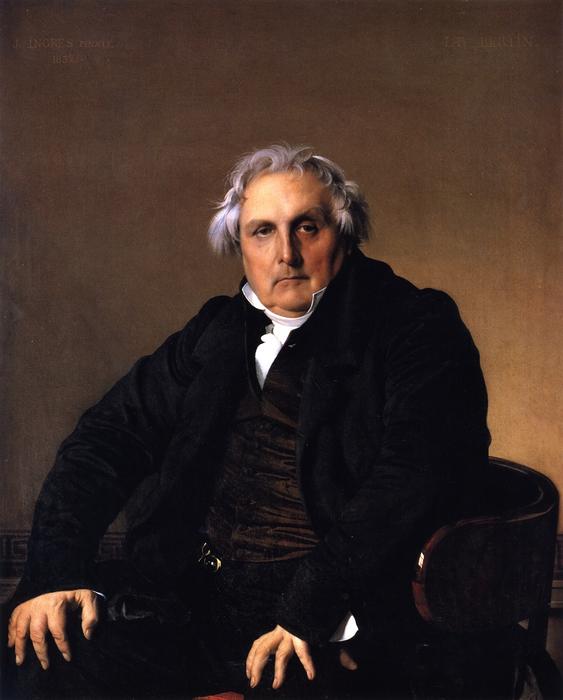
A Portrait of Dignity: Jean Auguste Dominique Ingres’ Louis François Bertin
Jean-Auguste-Dominique Ingres remains an artist whose influence reverberates through the annals of art history. His unwavering devotion to classical principles—particularly line and form—established him as a cornerstone of Neoclassicism, shaping artistic sensibilities for decades to come. This meticulous portrayal of Louis François Bertin, completed in 1832, exemplifies Ingres’ signature style and offers a fascinating glimpse into the intellectual landscape of his time. Measuring 116 x 95 cm, the canvas transcends mere representation; it embodies an idealized vision of human character and achievement.
The Essence of Neoclassicism: Precision and Ideal Beauty
Ingres' artistic philosophy centered on recapturing the grandeur and clarity of antiquity—a reaction against the turbulent Romantic movement that dominated Europe during his formative years. Unlike its emotive counterparts, Neoclassicism prioritized rational order and balanced composition. This is immediately apparent in Bertin’s portrait. The artist eschews dramatic lighting or expressive gestures, opting instead for a subdued palette and carefully considered anatomical accuracy. Every line and curve contributes to an overall sense of serenity and intellectual contemplation—a deliberate choice designed to elevate the subject beyond the mundane.
A Study in Form: Technique and Material Considerations
The painting’s remarkable detail speaks volumes about Ingres' mastery of oil paint on canvas. He employed a layering technique known as *glazure*, applying thin washes of translucent color over subsequent layers of opaque pigment. This method allowed him to achieve subtle tonal variations and imbue the surface with luminosity—capturing the nuances of skin texture and drapery folds with breathtaking precision. The artist’s meticulous attention to detail isn't merely decorative; it serves as a conduit for conveying Ingres’ belief in the transformative power of observation and artistic skill.
Historical Context: Bertin and the Pursuit of Enlightenment
Louis François Bertin, depicted here, was a prominent French journalist and politician who championed liberal ideals during the Bourbon Restoration era. His pose—seated formally with clasped hands—reflects the values of reason, dignity, and civic responsibility that characterized the intellectual currents of the time. Ingres’ portrait captures not only Bertin's physical likeness but also his inner spirit—a testament to the artist’s ability to distill complex ideas into a single visual image. The inclusion of a couch in the background subtly reinforces this sense of stability and refinement, anchoring Bertin within a broader cultural context.
Symbolism Beyond Appearance: An Expression of Inner Virtue
More than just a likeness, Bertin's portrait operates on a symbolic level. Ingres’ deliberate restraint—the muted colors, the formal attire—suggests an inner composure and moral fortitude. The artist avoids overtly sentimental gestures, prioritizing instead the conveyance of intellectual seriousness. This stylistic choice underscores Ingres’ conviction that beauty resided not merely in outward form but also in the cultivation of virtue and intellect—a timeless message conveyed with unparalleled elegance and grace.
- Artist: Jean Auguste Dominique Ingres
- Year Created: 1832
- Dimensions: 116 x 95 cm
- Medium: Oil on Canvas
- Style: Neoclassicism