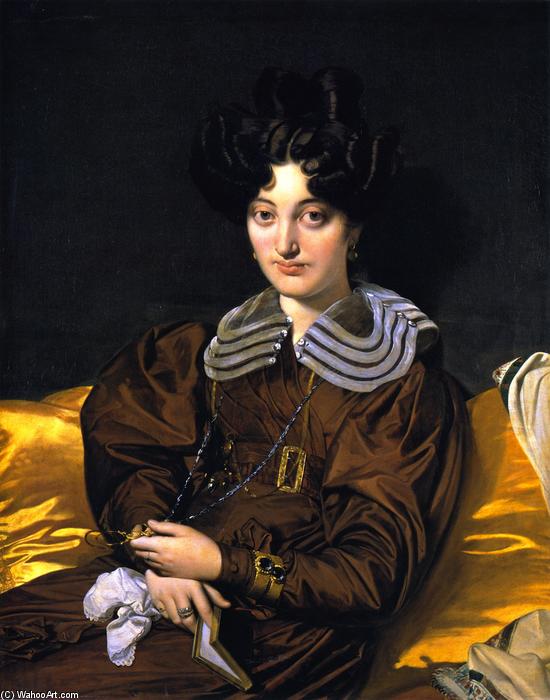
A Portrait of Grace and Restraint: Ingres’s *Madame Marie Marcotte*
Jean-Auguste-Dominique Ingres's *Madame Marie Marcotte (Marcotte de Sainte-Marie)*, painted in 1826, is more than simply a likeness; it’s a carefully constructed embodiment of Neoclassical ideals and a testament to the artist’s mastery of line and form. This captivating portrait, currently residing within the hallowed halls of the Musée du Louvre, offers a glimpse into a world of refined elegance and subtle psychological depth. The painting immediately draws the viewer in with its subject's direct gaze – a deliberate choice by Ingres that invites an intimate connection, suggesting both vulnerability and quiet strength.
The composition itself is meticulously balanced, reflecting Ingres’s unwavering commitment to classical harmony. Madame Marcotte sits poised within a shallow space, her posture conveying a sense of dignified composure. Her attire – the rich fabrics and delicate lace hinting at wealth and status – speaks volumes about the societal expectations placed upon women of her era. The subtle curve of her neck, the gentle fall of her hair, all contribute to an overall impression of serene beauty. Notice how Ingres uses light to sculpt her features; a soft illumination highlights her cheekbones and eyes, while carefully shadowed areas create depth and volume, lending a remarkable three-dimensionality to the canvas.
The Language of Line: Ingres’s Neoclassical Technique
Ingres was renowned for his rigorous approach to technique, prioritizing precision and anatomical accuracy above all else. *Madame Marie Marcotte* exemplifies this dedication. The artist's brushwork is remarkably controlled – each line deliberate and purposeful, contributing to the painting’s overall sense of order and clarity. He employed a layering technique, building up color gradually through numerous thin glazes, resulting in a surface that possesses both luminosity and remarkable detail. This meticulous approach isn’t merely about replicating reality; it's about elevating it – transforming a portrait into an enduring work of art.
The choice of oil on panel was crucial to achieving this effect. The slightly textured surface of the panel allowed Ingres to build up layers of paint with greater control and nuance than he might have achieved on canvas. Furthermore, the relatively small scale of the painting – 93 x 74 cm – forces the viewer to engage closely with every detail, intensifying the impact of the artist’s meticulous craftsmanship.
A Glimpse into a Parisian World
To fully appreciate *Madame Marie Marcotte*, it's essential to understand its historical context. Painted in the early 19th century, during the height of Neoclassical influence, the portrait reflects the values and sensibilities of the time. The subject’s reserved demeanor and elegant attire align with the ideals of female virtue and social decorum prevalent within aristocratic circles. The two figures flanking Madame Marcotte – though less defined – likely represent her husband and son, subtly reinforcing the theme of domestic harmony.
Beyond its immediate representation, the painting offers a window into Parisian society—a world of refined manners, artistic patronage, and carefully constructed appearances. It’s a poignant reminder that even within the confines of formal portraiture, Ingres managed to capture something far more profound: the quiet dignity and inherent grace of a woman navigating her place in a complex social landscape.
Bringing *Madame Marie Marcotte* Home
At ArtsDot.com, we are proud to offer meticulously crafted reproductions of this iconic masterpiece. Our hand-painted reproductions capture not only the visual likeness but also the spirit and atmosphere of Ingres’s original work. Whether you're an art enthusiast, a collector seeking to expand your collection, or simply looking for a stunning piece to enhance your interior décor, our reproduction provides an accessible and authentic way to experience the timeless beauty of *Madame Marie Marcotte*. Explore our selection today at https://ArtsDot.com and discover other exquisite works by Jean-Auguste-Dominique Ingres.