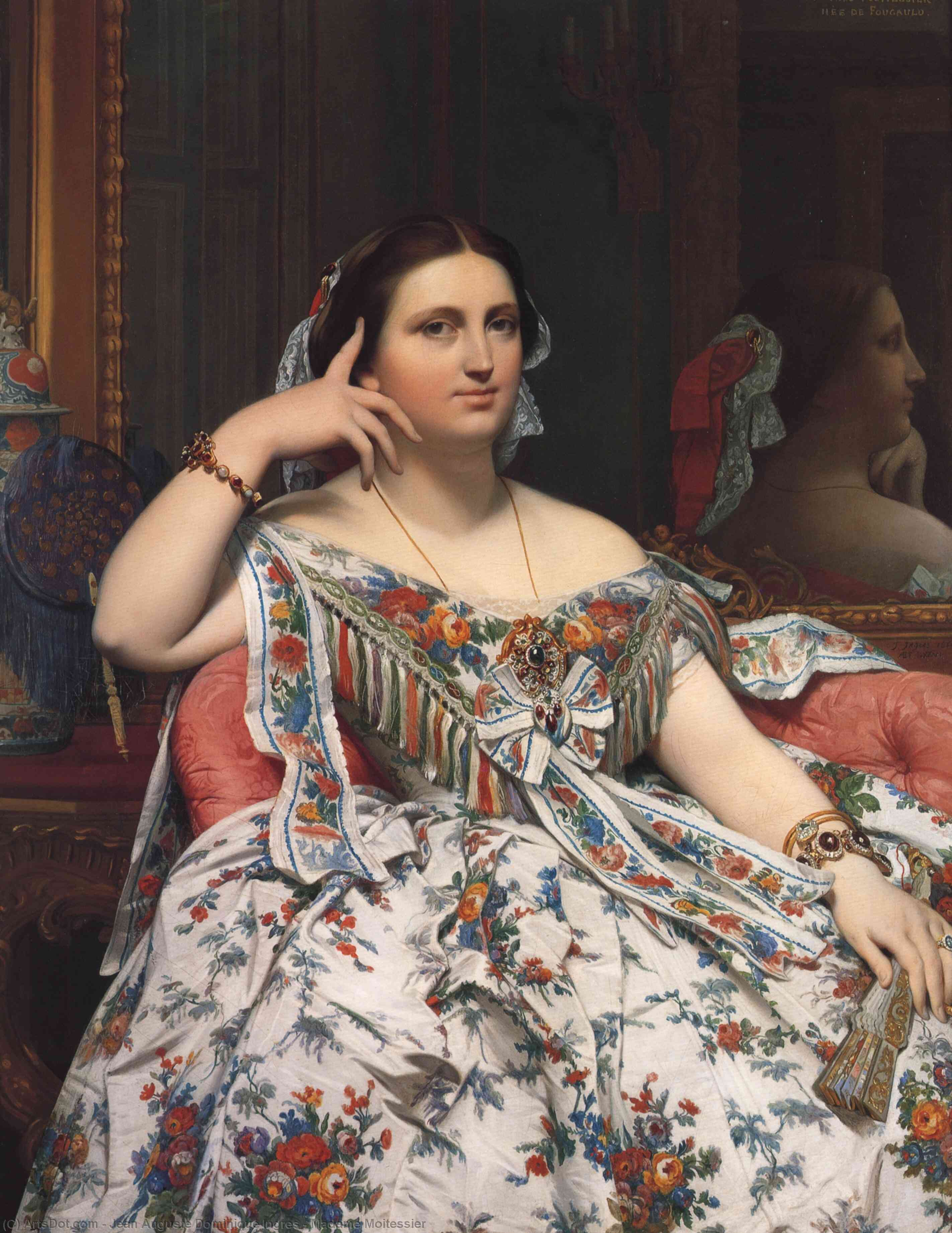
A Portrait of Grace and Dignity: Jean-Auguste-Dominique Ingres’s Madame Moitessier
Jean-Auguste-Dominique Ingres's "Madame Moitessier," painted in 1856, is more than simply a likeness; it’s a carefully constructed tableau of elegance, restraint, and subtle psychological depth. This captivating portrait offers a glimpse into the refined world of mid-19th century French society through the eyes of one of its most discerning observers – Ingres himself. The painting resides within the National Gallery in London, a testament to its enduring artistic merit and historical significance.
The subject, Marie-Clotilde-Inès de Foucauld, was a woman of considerable social standing, married to the wealthy banker Sigisbert Moitessier. Ingres’s decision to immortalize her on canvas wasn't driven by mere vanity; rather, it reflects a fascination with classical ideals and a desire to capture not just outward appearance but also an underlying sense of character. The portrait emerged from a protracted process, spanning over a decade and undergoing several revisions, revealing the artist’s meticulous approach and his willingness to adapt his vision based on the sitter's evolving presence.
A Study in Neoclassical Precision
Ingres was a staunch defender of Neoclassicism, deeply influenced by the artistic traditions of antiquity. This influence is immediately apparent in "Madame Moitessier." The composition adheres to strict geometric principles – the balanced arrangement of figures, the precise delineation of forms, and the use of clear, defined lines all speak to this classical sensibility. Ingres’s technique is characterized by a remarkable level of detail and control; he masterfully renders the textures of the fabrics—the luxurious silk brocade of her dress, the delicate folds of the drapery—with an almost photographic realism. The subtle gradations of light and shadow create a sense of volume and depth, drawing the viewer’s eye to the subject's face and posture.
Notably, Ingres employed a technique known as *contre-jour*, or “against the light,” which dramatically enhances the three-dimensionality of the portrait. This method highlights the contours of Madame Moitessier’s features, emphasizing her aristocratic profile and conveying an aura of quiet dignity. The use of muted tones—primarily browns, grays, and creams—further contributes to the painting's sophisticated atmosphere, creating a sense of understated elegance.
Symbolism and Gesture
Beyond its technical brilliance, "Madame Moitessier" is rich in symbolic meaning. The pose itself – Madame Moitessier seated with her hand resting gently on her chin—is laden with significance. It’s a gesture of thoughtful contemplation, suggesting an inner life beyond the superficial appearance. Scholars have noted that this particular pose was inspired by Ingres's recollection of a classical fresco depicting Hercules and Telephus, a reference to the ancient myth of a hero rescuing a boy from a rock. This allusion elevates Madame Moitessier’s image, associating her with strength, resilience, and perhaps even divine grace.
The floral pattern adorning her dress is not merely decorative; it symbolizes beauty, fertility, and the flourishing of life—themes central to classical art. The careful arrangement of accessories – the necklace, the delicate jewelry – further reinforces this sense of refinement and wealth. Even the background, rendered with a subtle, almost dreamlike quality, contributes to the overall atmosphere of serenity and composure.
A Legacy of Beauty
"Madame Moitessier" remains one of Ingres’s most celebrated portraits, admired for its technical mastery, psychological insight, and timeless beauty. It offers a compelling glimpse into the world of 19th-century French society and reveals the artist's profound understanding of human character. Reproductions of this iconic work capture the essence of Ingres’s vision, allowing viewers to appreciate the subtle nuances and enduring appeal of this remarkable portrait.
Consider commissioning a hand-painted reproduction from ArtsDot.com to bring the elegance and sophistication of "Madame Moitessier" into your home or office – a timeless piece that will undoubtedly become a cherished focal point for years to come.