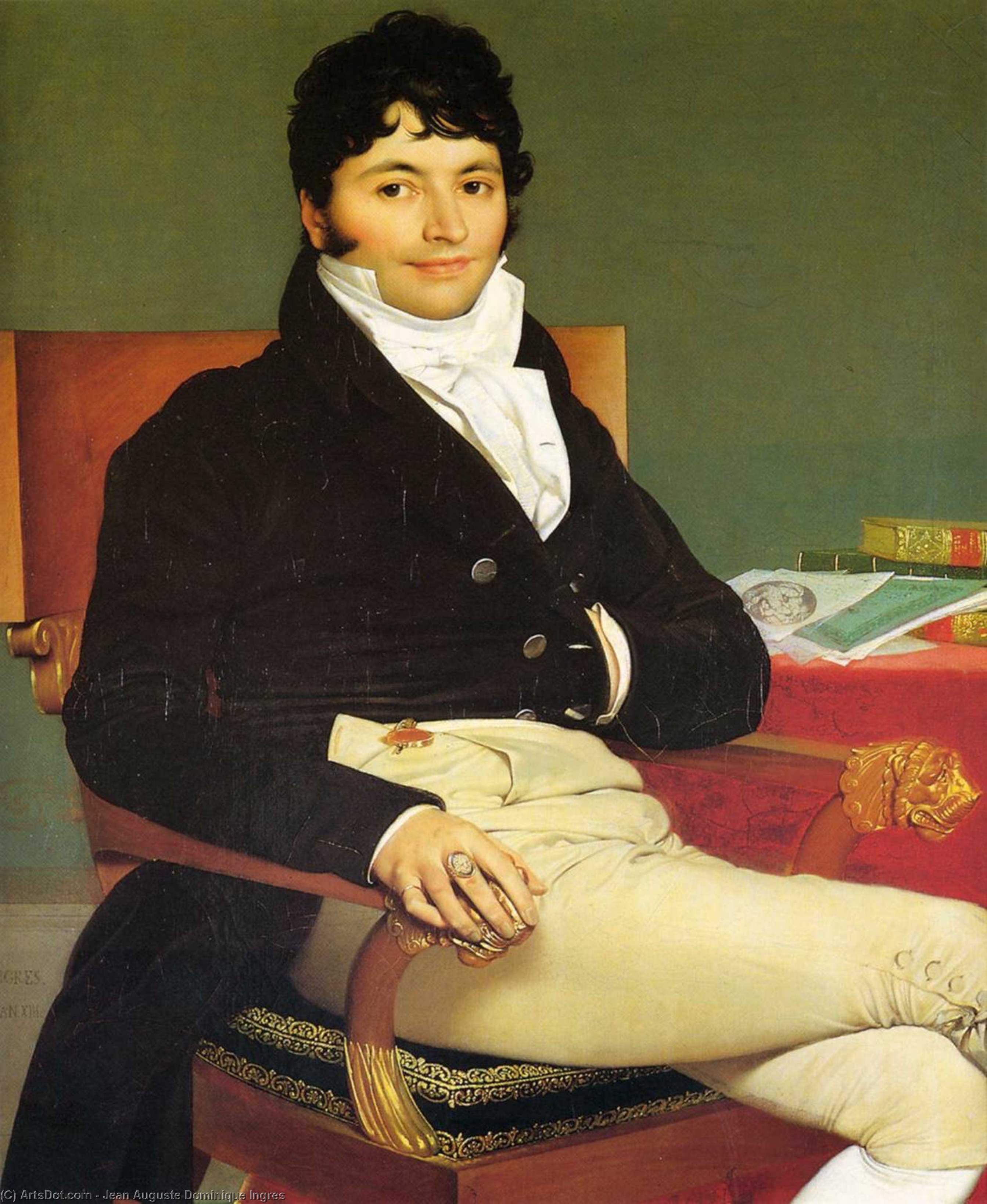
Monsieur Rivière: A Portrait of Refined Dignity
Jean-Auguste-Dominique Ingres’s “Monsieur Rivière,” completed in 1805, stands as a cornerstone of Neoclassical portraiture—a testament to meticulous observation and an unwavering devotion to classical ideals. Commissioned by Philibert Rivière de L'Isle, a prominent figure within Napoleon’s court administration, the painting transcends mere likeness; it embodies a carefully constructed representation of status, intellect, and restrained elegance.
- Subject Matter: The portrait depicts Philibert Rivière seated in an ornate chair, crossed legs conveying composure and authority. Alongside him is his wife, Caroline Rivière, adding to the familial tableau.
- Style & Technique: Ingres’s signature style—characterized by linear precision and sculptural form—is evident throughout. He employs a masterful use of chiaroscuro (light and shadow) to sculpt the figure's musculature and drapery, creating an illusion of depth that draws the viewer into the scene. The painting is executed in oil on canvas with remarkable detail, capturing subtle nuances of texture and color.
- Historical Context: Created during Napoleon’s reign, “Monsieur Rivière” reflects the prevailing aesthetic sensibilities of the era—a reaction against the turbulent Romantic movement. Ingres sought to recapture the grandeur and clarity of antiquity, aligning his artistic vision with the values of reason and order championed by the French monarchy.
Composition & Spatial Harmony
Ingres’s compositional choices are deliberate and profound. The chair itself serves as a central axis, guiding the eye upward towards Rivière's gaze—a gaze that is both direct and slightly averted, conveying thoughtfulness rather than overt emotion. The drapery surrounding Rivière contributes to this sense of spatial harmony, mirroring the curves of the chair and creating an illusion of movement despite the stillness of the pose. Notably, Ingres utilizes a technique known as “contrepoint,” subtly offsetting the dominant vertical axis with horizontal lines—the chair’s base and the table cloth—to achieve visual balance.
Symbolism & Aesthetic Ideals
Beyond its formal beauty, “Monsieur Rivière” carries symbolic weight. The opulent furnishings—the velvet cushion, the gilded frame—represent wealth and social prestige, reflecting Rivière's position within the Napoleonic hierarchy. Furthermore, Ingres’s meticulous attention to detail—from the folds of Rivière’s shirt to the texture of his waistcoat—demonstrates a belief in the importance of craftsmanship and accuracy. The painting embodies Ingres’s conviction that art should strive for ideal beauty—a beauty rooted in proportion, clarity, and restraint.
Emotional Impact & Legacy
Despite its apparent formality, “Monsieur Rivière” possesses an understated emotional resonance. Rivière's gaze invites contemplation, suggesting a man of intellect and dignity who commands respect without demanding attention. Ingres’s masterful rendering of human anatomy—particularly the musculature of Rivière’s torso—captures not only physical form but also psychological character. The painting remains admired for its timeless elegance and technical brilliance, securing Ingres's place as one of the most influential artists of the 19th century and continuing to inspire artists today.