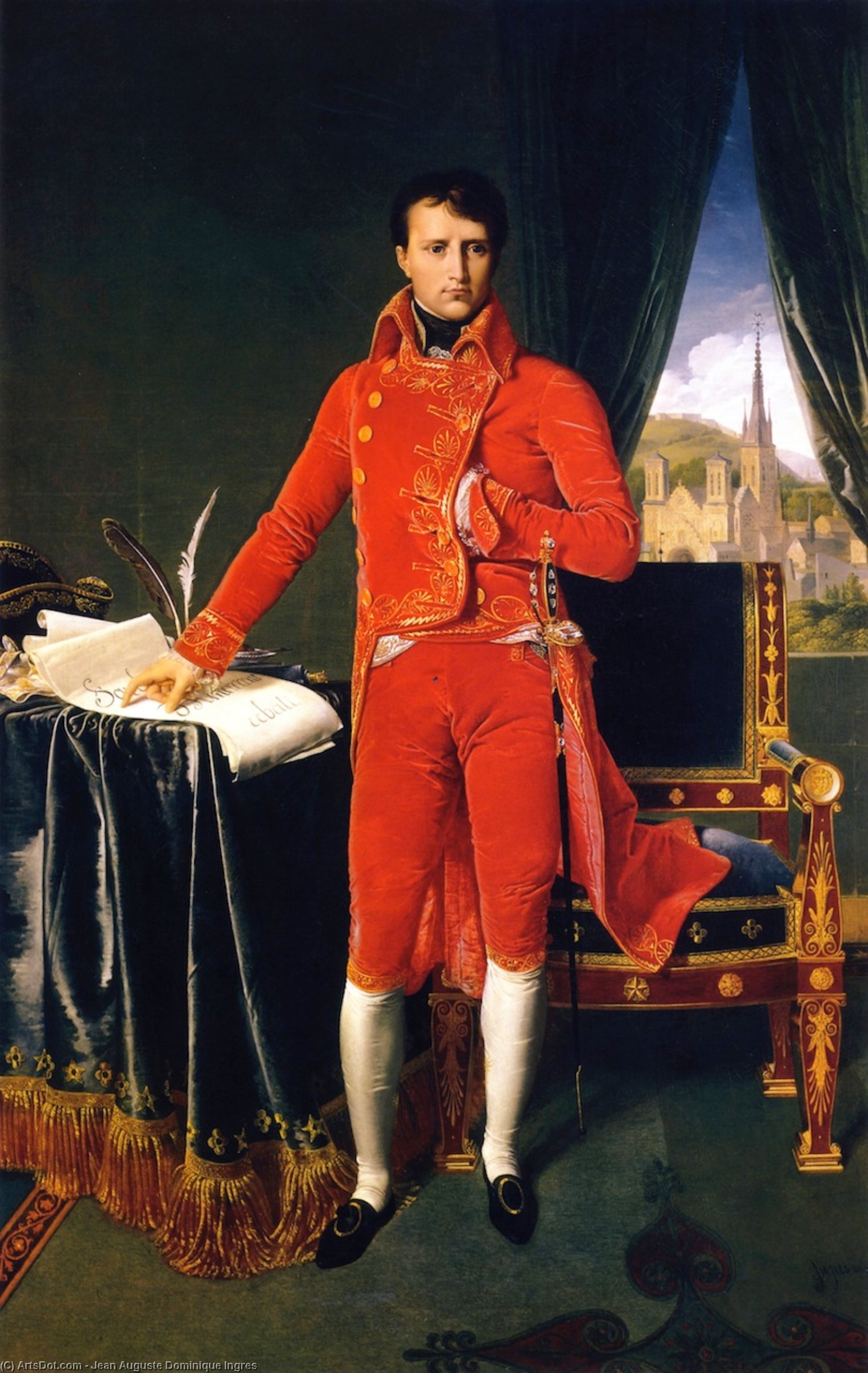
The painting
Napoleon Bonaparte in the Uniform of the First Consul by
Jean Auguste Dominique Ingres is a seminal work that captures the essence of Napoleon's rise to power. Created in 1804, this oil on canvas masterpiece measures 227 x 147 cm and is currently housed at the
Musee d'Armes in Belgium.
The Historical Context
Napoleon Bonaparte was a French military leader who rose to prominence during the French Revolution. He became the First Consul of France in 1799, marking the beginning of his ascent to power. Ingres's painting depicts Napoleon in this pivotal role, showcasing his authority and influence.
Artistic Significance
Ingres was a renowned Neoclassicist painter known for his attention to detail and realism. This painting exemplifies his skill, with intricate details on Napoleon's uniform and the surrounding environment. The background includes a chair and a curtain, adding depth and context to the scene.
Symbolism and Composition
The composition of the painting is deliberate, with Napoleon standing next to a table with a book on it. This symbolizes his intellectual prowess and strategic thinking. The uniform he wears signifies his military strength and leadership.
Relevance in Modern Times
Today, this painting remains an important historical artifact, offering insights into Napoleon's character and the era in which he lived. It is a testament to Ingres's artistic genius and continues to captivate art enthusiasts worldwide.
Acquiring a Reproduction
For those interested in owning a piece of history,
ArtsDot.com offers high-quality, handmade oil painting reproductions of this masterpiece. Each reproduction is crafted with meticulous attention to detail, ensuring that the essence of Ingres's original work is preserved.
Conclusion
Napoleon Bonaparte in the Uniform of the First Consul by
Jean Auguste Dominique Ingres is a masterpiece that combines historical significance with artistic brilliance. It serves as a reminder of Napoleon's impact on history and Ingres's contribution to the world of art.
Wikipedia.org provides additional information on
Jean Auguste Dominique Ingres and his works.