The Enduring Grace of Portraiture in Ingres' Hand
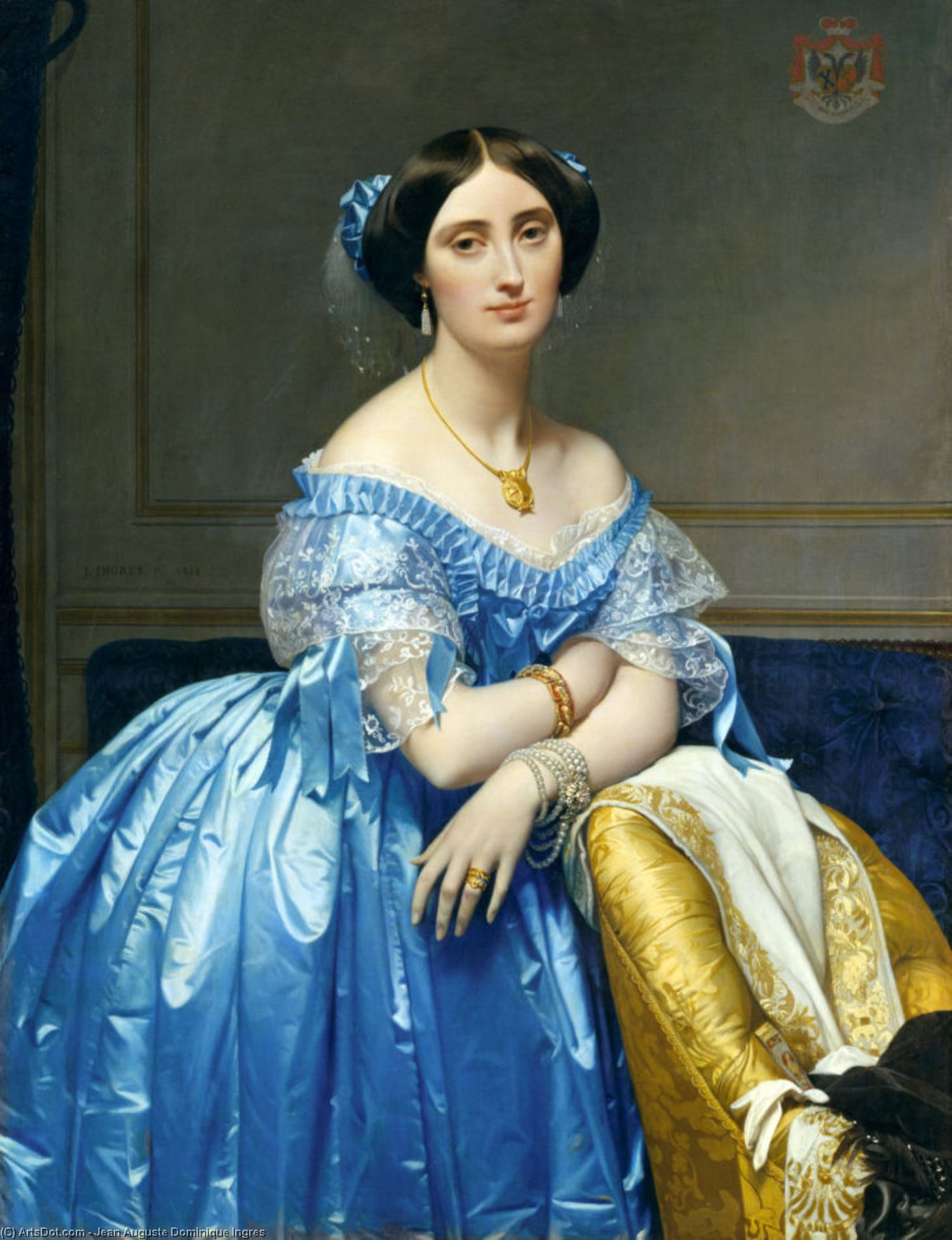
To gaze upon Jean-Auguste-Dominique Ingres’ Princess Pauline-Eleonore de Broglie is to encounter a moment suspended between the rigid elegance of Neoclassicism and the burgeoning, undeniable allure of portraiture. Painted in 1853, this work captures not merely a likeness, but an idealized vision of aristocratic femininity. The subject, draped in a luminous blue gown accented by a vibrant yellow sash, possesses a stillness that belies the life force captured within the oil paint. Ingres, ever the master of line and form, presents his sitter with a composure that speaks volumes about the societal expectations placed upon women of her stature during the mid-nineteenth century.
A Study in Neoclassical Line and Form
Ingres’ technique here is nothing short of masterful. His commitment to drawing—that exquisite, almost architectural precision—is palpable in every fold of the blue silk and the delicate curve of her posture. While some might associate him with cold formality, one must look closer to perceive the underlying warmth. The meticulous rendering of the fabric, contrasted against the subtle glow emanating from her skin, demonstrates a technical virtuosity that remains breathtaking even today. It is a celebration of contour; every strand of hair, every ripple in the costly material, is delineated with an almost sculptural clarity, hallmarks of his devotion to classical ideals.
Symbolism and the Aura of Nobility
The very composition whispers tales of lineage and refinement. The blue gown itself often carries connotations of fidelity and depth, while the gold necklace serves as a radiant anchor point, drawing the eye toward the subject’s serene countenance. In the context of 19th-century portraiture, such an image functions as more than just decoration; it is a carefully constructed emblem of status. The sitter embodies a certain timeless grace—a blend of inherited nobility and personal poise that transcends fleeting fashion trends. It invites the viewer to contemplate not only who she was, but what enduring ideals of beauty and composure she represents.
Bringing Salon Grandeur Home
For the collector or designer seeking to infuse a space with the gravitas and artistry of historical masters, this reproduction offers an unparalleled opportunity. Owning a piece echoing Ingres’ vision means acquiring more than just art; it is acquiring a conversation piece steeped in academic history and romantic elegance. Whether placed above a grand mantelpiece or within a richly appointed drawing-room, Princess Pauline-Eleonore de Broglie commands attention with its sophisticated palette and unwavering commitment to formal beauty. It promises an air of cultivated taste, allowing the grandeur of the Parisian salon to grace your modern sanctuary.