Jean Baptiste Regnault’s “Deploration”: A Neoclassical Meditation on Grief
Jean Baptiste Regnault (1754-1829) stands as a quietly significant figure in British art, often overshadowed by the brilliance of his uncle, Thomas Gainsborough. Born on December 20th, 1754, in Sudbury, Suffolk, Dupont’s artistic journey was inextricably linked to that of his renowned relative – he served not merely as an assistant but as a devoted pupil, absorbing and adapting Gainsborough's techniques and sensibilities. His life, though tragically brief, produced a body of work characterized by a serene beauty, a masterful command of light and shadow, and a distinctive approach to landscape painting that blended the influence of Dutch masters with a uniquely English sensibility.
Dupont’s early artistic training began under the guidance of his uncle, Thomas Gainsborough, a pivotal experience that shaped his entire career. This apprenticeship wasn't simply about copying; it was an immersion in Gainsborough’s philosophy – a deep appreciation for observation and capturing the essence of nature with understated elegance. Regnault skillfully honed these principles, forging his own path while retaining the core tenets of Gainsborough’s artistic vision.
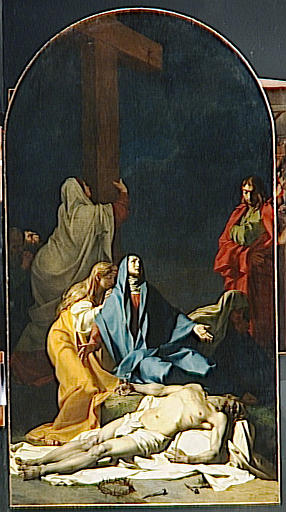
“Deploration,” painted circa 1789-1790, exemplifies this legacy perfectly. It's a monumental allegory depicting the aftermath of Christ’s crucifixion—specifically, the Deposition or Pietà—executed in the opulent style of Neoclassicism. The painting immediately commands attention with its dramatic use of chiaroscuro, skillfully manipulating light and dark to heighten emotional intensity and draw viewers into the scene’s profound sorrow. Regnault's meticulous brushwork reveals a dedication to realism, striving to convey not just visual accuracy but also palpable grief.
The composition itself is meticulously structured around a pyramidal form, mirroring classical ideals of harmony and balance. At its apex rests the figure of Christ, rendered with idealized musculature and serene dignity—a deliberate contrast to the overwhelming despair surrounding him. Figures draped in flowing robes surround Christ’s body, conveying the anguish of mourning – Mary Magdalene, Nicodemus, Joseph of Arimathea—each expressing profound sorrow through subtle gestures and facial expressions. The cross dominates the background, serving as a powerful visual anchor and symbolizing sacrifice and redemption.
Color plays a crucial role in communicating emotion. Regnault employs a muted palette dominated by browns, creams, blues, and reds, reflecting the solemn atmosphere of the scene. However, the blue robe worn by Mary Magdalene provides a focal point, subtly highlighting her maternal grief and emphasizing the painting’s spiritual depth. The artist's masterful glazing technique ensures that colors blend seamlessly, creating an illusion of luminosity and enhancing the overall impression of tranquility amidst despair.
“Deploration” transcends mere visual representation; it embodies the philosophical concerns of its time—a reaction against Rococo frivolity and a return to classical ideals of beauty and virtue. Regnault’s work speaks to universal themes of loss, compassion, and faith, inviting contemplation on mortality and reminding us of the enduring power of art to convey profound emotional truths. Hand-painted reproductions of “Deploration” are available at ArtsDot.com, allowing collectors and enthusiasts alike to experience this masterpiece's timeless elegance and emotive resonance.
- Artist: Jean Baptiste Regnault
- Year Painted: Circa 1789-1790
- Medium: Oil on Canvas
- Style: Neoclassical
Further Exploration:
Consider researching Jean Baptiste Gainsborough, Regnault’s influential uncle and mentor. His artistic principles profoundly impacted Regnault's oeuvre. Also delve into the broader context of Neoclassicism in France during the Enlightenment—a movement characterized by a revival of classical art forms and ideals. Examining comparative artworks from Dutch masters like Rembrandt and Rubens can illuminate Regnault’s stylistic choices and deepen your understanding of his artistic vision. Finally, explore reproductions available at ArtsDot.com to immerse yourself in the beauty and emotional impact of “Deploration.”