A Vision of Serenity: The Soul of Agostina
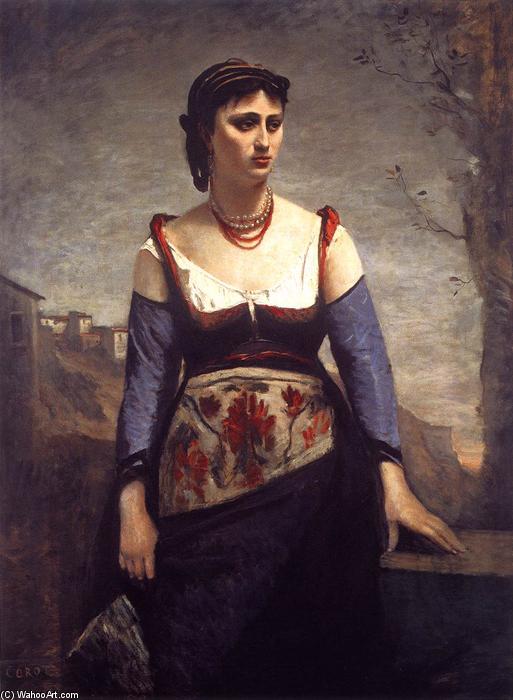
In the quietude of Jean-Baptiste-Camille Corot’s 1866 masterpiece, Agostina, one finds a profound intersection between the human spirit and the natural world. This evocative portrait does more than merely capture a likeness; it invites the viewer into a meditative state, where time seems to slow under the golden warmth of a Tuscan afternoon. The subject, a young woman believed to be an immigrant from the rural regions near Rome, stands with a monumental presence that is both grounded and ethereal. Dressed in traditional Italian attire—a striking blue dress adorned with delicate red floral motifs—she gazals at the observer with an intensity that bridges the gap between the canvas and the soul. Her gaze, deep-set and thoughtful, suggests a narrative of resilience and quiet dignity, making her much more than a mere figure in a landscape, but rather the very heart of the scene.
The setting serves as a breathtaking extension of the subject's inner peace. Corot masterfully places Agostina amidst the rolling hills of Italy, where olive trees sway gently in the breeze and a solitary bird drifts through the expansive sky. This harmonious arrangement creates a sense of eternal stillness, a hallmark of Corot’s ability to capture the fleeting breath of the earth. For the discerning collector or interior designer, this painting offers a rare atmospheric quality; it possesses the unique ability to anchor a room with its tranquil energy, providing a focal point that inspires contemplation and emotional warmth.
The Alchemy of Light and Technique
To behold Agostina is to witness a masterclass in the manipulation of light. Corot, a pivotal figure who bridged the gap between Neoclassical structure and the burgeoning freedom of Impressionism, employs a technique that feels almost luminous from within. He eschews the harsh, rigid outlines of traditional portraiture, opting instead for soft, blended brushstrokes that allow colors to bleed into one another with seamless grace. Through the meticulous application of glazing—layering thin, translucent pigments—the artist achieves a remarkable depth of tone, particularly in the way the late afternoon sunlight catches the fabric of the woman's dress and illuminates the distant landscape.
This technical brilliance creates a shimmering effect, an illusion of light that dances across the canvas. The interplay between strong darks and luminous highlights gives the figure a sculptural, almost statuesque quality, yet it remains softened by the atmospheric haze characteristic of Corot’s style. This delicate balance of precision and fluidity ensures that the painting feels alive, capturing not just the physical reality of the Tuscan countryside, but the very feeling of the sun's warmth on skin and the soft scent of the air. It is this sensory richness that makes a high-quality reproduction of this work such a captivating addition to any curated collection, bringing a touch of 19th-century French elegance into a modern living space.
A Legacy of Timeless Elegance
Historically, Agostina stands as a testament to the dawn of a new era in art. Painted during a period of significant transition, it embodies the Romantic fascination with nature and the Realist commitment to capturing authentic human presence. The painting’s journey through notable collections, eventually finding its home in the National Gallery of Art, underscores its enduring importance in the canon of Western art. It is a work that resonates across centuries because it speaks to universal themes: the beauty of simplicity, the dignity of the individual, and our intrinsic connection to the landscapes we inhabit.
For those seeking to infuse their surroundings with sophistication and peace, Agostina offers unparalleled inspiration. Whether placed in a sun-drenched study or a grand salon, the painting acts as a window into a more tranquil epoch. It is not merely a decorative element but an emotional experience—a piece of history that continues to breathe, much like the soft winds of the Italian hills Corot so lovingly preserved for us.