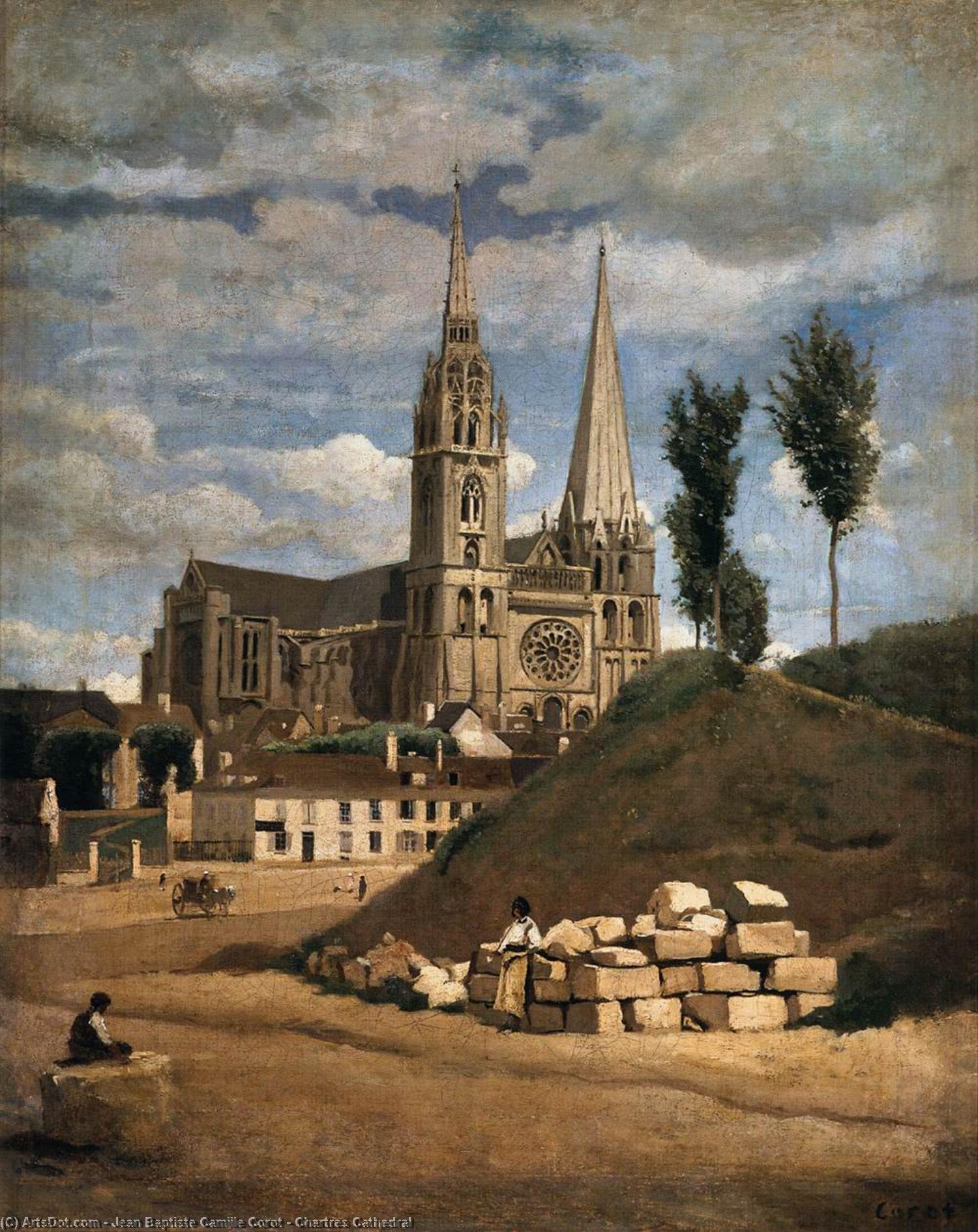
A Moment Frozen in Light: Jean-Baptiste-Camille Corot’s Chartres Cathedral
Jean-Baptiste-Camille Corot's “Chartres Cathedral,” completed in 1830, transcends mere depiction; it embodies a profound communion between the artist and the sublime beauty of the French Gothic cathedral itself. More than just a visual record, this oil on canvas masterpiece represents a pivotal moment in artistic history—a harmonious blend of Neoclassical influence and burgeoning Impressionistic sensibilities that cemented Corot’s legacy as one of France's foremost landscape painters.
- Composition & Harmony: Corot meticulously crafted the scene, prioritizing balance and serenity. The cathedral dominates the horizon line, its towering spires piercing through a hazy sky—a deliberate echo of classical architectural grandeur. Foreground figures, positioned on a dusty road, serve as anchors for the eye, subtly emphasizing the vastness of the landscape. Notice the careful division into four planes – the earthy road, the piled stones, the houses lining the street, and finally, the cathedral’s façade – demonstrating Corot's mastery of spatial perspective.
- Technique & Style: Corot employed a technique characteristic of plein air painting—working directly from nature—allowing him to capture the fleeting effects of light and atmosphere with remarkable accuracy. His brushstrokes are loose, blended seamlessly, prioritizing tonal gradations over sharp outlines. This approach aligns perfectly with Impressionism’s rejection of academic conventions and its celebration of sensory experience.
- Historical Context: Created during a period of artistic experimentation, “Chartres Cathedral” reflects the broader intellectual currents of its time. Corot's work simultaneously referenced classical landscape composition while anticipating the fresh, outdoor approach championed by artists like Monet and Sisley. The painting’s inclusion in Marcel Proust’s "In Search of Lost Time" underscores its cultural significance—considered one of the eight paintings destined for the Louvre gallery in 1920.
- Symbolism & Emotional Impact: Beyond its formal qualities, “Chartres Cathedral” speaks to themes of spirituality and contemplation. The cathedral’s imposing presence symbolizes faith and permanence against the backdrop of earthly existence. Corot's masterful rendering evokes a feeling of awe and reverence—a testament to his ability to translate emotion into visual form.
At ArtsDot.com, we offer exceptional reproductions of Corot’s “Chartres Cathedral,” painstakingly crafted by skilled artisans who meticulously recreate the original painting's textures and colors. Explore this iconic artwork and bring its tranquil beauty into your home—a timeless reminder of Corot’s artistic genius.