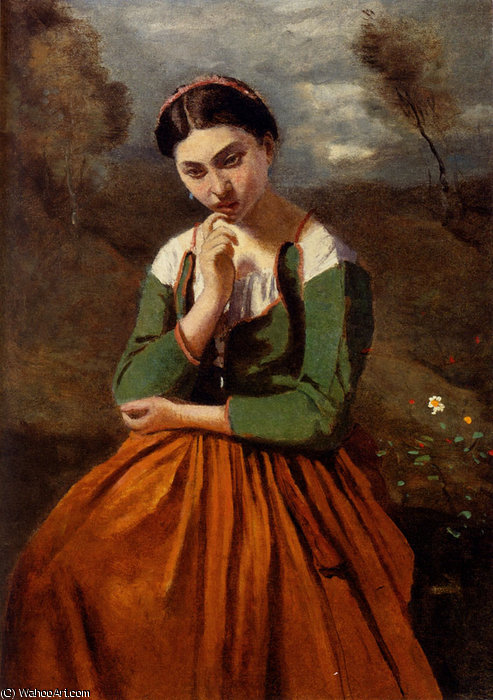
La Meditation – A Portrait of Tranquility
Jean-Baptiste-Camille Corot’s “La Meditation,” completed in 1867, is more than just a depiction of a woman seated beneath the dappled shade of trees; it's an embodiment of Romantic idealism distilled into visual form. Painted during a period marked by profound shifts in artistic sensibilities – moving away from Neoclassical formality towards expressive landscapes and psychological introspection – Corot’s work stands as a testament to his unwavering commitment to capturing the elusive beauty of nature and conveying inner contemplation.
Subject Matter & Composition
The painting centers around a solitary female figure, positioned centrally on the canvas. Her gaze is directed downwards, suggesting deep absorption in thought or perhaps prayer. Surrounding her are mature trees – oaks and beeches – rendered with meticulous detail, their branches intertwining to create a canopy that filters sunlight into soft, diffused illumination. This deliberate compositional choice isn’t merely aesthetic; it serves as a powerful metaphor for the human spirit seeking solace and understanding amidst the complexities of life.
Style & Technique
Corot adhered rigorously to the tenets of Romantic landscape painting, prioritizing tonal harmony and atmospheric perspective above all else. He employed a muted palette dominated by earthy greens, browns, and ochres – colors that evoke the stillness and serenity of the forest floor. His brushstrokes are loose and expressive, conveying texture and movement without resorting to sharp delineation. Corot’s technique is characterized by layering thin glazes over an underpainting, allowing for subtle gradations of color and creating a luminous effect that captures the ephemeral qualities of light – a hallmark of Romantic art.
Historical Context & Influences
“La Meditation” emerged from the broader artistic landscape of mid-Victorian France. The Romantic movement championed emotion and imagination as antidotes to Enlightenment rationalism, prioritizing subjective experience over objective observation. Corot drew inspiration from Caspar David Friedrich’s monumental landscapes – particularly “Wanderer Above the Sea of Fog” – which similarly explored themes of solitude, spirituality, and communion with nature. These influences underscored the Romantic conviction that art could elevate the human soul and foster a deeper appreciation for the sublime.
Symbolism & Emotional Impact
The woman’s posture embodies the core concept of meditation—a deliberate effort to quiet the mind and connect with inner peace. The trees symbolize resilience, wisdom, and the enduring presence of nature's rhythms. More broadly, “La Meditation” speaks to a universal yearning for tranquility and contemplation – emotions that resonate powerfully across cultures and eras. Corot’s masterful rendering of light and atmosphere invites viewers into a realm of quiet reflection, fostering a sense of awe and reverence for the beauty of the natural world.
Concluding Remarks
“La Meditation” remains an enduring masterpiece of Romantic landscape painting, demonstrating Corot's unparalleled ability to translate psychological states into visual splendor. Its understated elegance and profound symbolism continue to captivate audiences today, cementing its place as a cornerstone of Impressionist heritage and a timeless reminder of the transformative power of art.