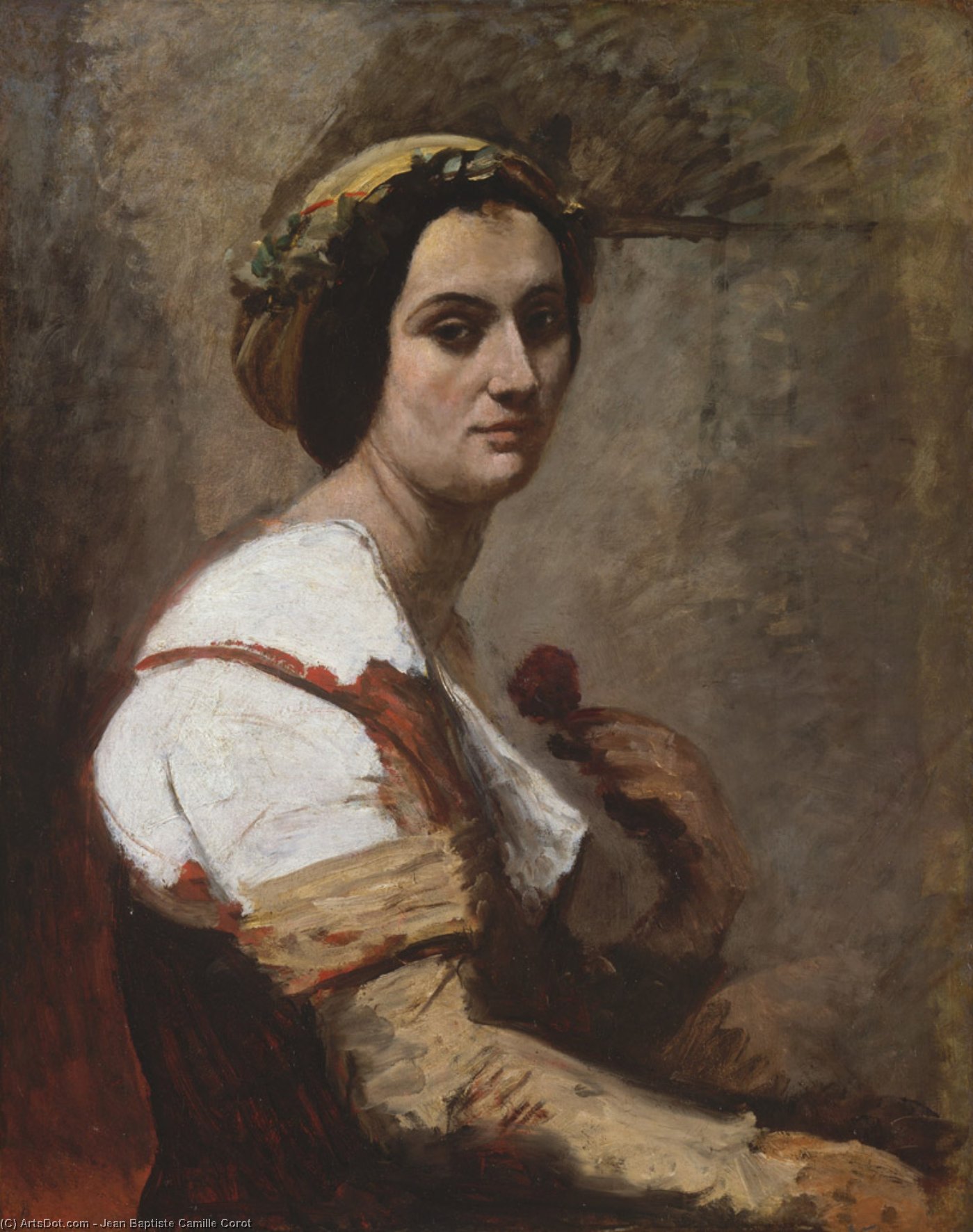
Sibylle

{ "meta_description": "Delve into the serene beauty of Jean Baptiste Camille Corot’s ‘Sibylle,’ a captivating chalk painting from 1870 depicting a woman gazing intently at the viewer with a delicate rose – a masterpiece housed in NYC's Metropolitan Museum.", "json_answer": ""


Jean-Baptiste-Camille Corot (1796 - 1875)

Discover Jean-Baptiste-Camille Corot (1796-1875), the master of atmospheric landscapes bridging Neoclassicism & Impressionism. Explore his serene paintings and lasting influence on art history.

Metropolitan Museum of Art (new york, United States of America)

Explore The Metropolitan Museum of Art: 5,000 years of art from around the world! Discover masterpieces, ancient artifacts & immersive exhibitions – a global art destination awaits.

A Moment Frozen in Pastoral Tranquility: Exploring Jean Baptiste Camille Corot’s Sibylle

Jean-Baptiste-Camille Corot's “Sibylle,” painted in 1870, transcends mere depiction; it embodies the very essence of Impressionist landscape painting and invites contemplation on themes of femininity, solitude, and the sublime beauty of nature. This serene tableau captures a woman—likely Sibylle Regina Etrusca, referencing an Etruscan mythological figure symbolizing prophetic vision—seated beneath a dappled canopy of trees, her gaze directed towards the viewer with quiet dignity. Held delicately in her hand is a single rose, a symbol universally recognized for love and remembrance, subtly anchoring the composition within a framework of romantic idealism.
  • Style & Technique: Corot’s masterful approach aligns perfectly with the burgeoning Impressionist movement. He eschewed meticulous detail, prioritizing instead the fleeting effects of light and atmosphere—a hallmark of his distinctive style. The painting utilizes chalk on canvas, a technique favored by Corot for its ability to achieve luminous washes and tonal gradations that capture the subtle nuances of sunlight filtering through foliage. This method allows for an unparalleled sensitivity to color variations and textural subtleties, resulting in an image that feels remarkably alive.
  • Historical Context: Painted during a period of significant artistic experimentation, “Sibylle” reflects the broader preoccupation with capturing the grandeur of the natural world—a reaction against academic conventions that favored idealized representations. The Franco-Prussian War cast a shadow over Europe in 1870, yet Corot’s focus remained steadfast on portraying landscapes untouched by human intervention, offering viewers an escape from the anxieties of the time.
Symbolism & Emotion: The woman herself represents not only feminine grace but also introspection and contemplation. Her posture conveys a sense of stillness and serenity, inviting the viewer to share in her quiet observation of the surrounding environment. The rose serves as a poignant reminder of beauty, fragility, and enduring affection—elements that resonate deeply within the Romantic tradition. Ultimately, “Sibylle” evokes feelings of peace, nostalgia, and an appreciation for the sublime – Corot’s ability to convey these emotions through visual language is truly remarkable.
  • Composition & Color Palette: Corot skillfully employs a pyramidal composition, drawing the eye upwards towards the sky and emphasizing the dominance of natural light. The color palette is muted yet harmonious, dominated by greens and browns—colors that evoke the earthy tones of woodland landscapes. Subtle hints of pinks and yellows illuminate the rose and contribute to the overall impression of ethereal beauty.
  • Metropolitan Museum of Art Display: Currently housed at the Metropolitan Museum of Art in New York City, “Sibylle” stands as a testament to Corot’s enduring legacy. Its presence within this prestigious institution underscores its significance as an exemplar of Impressionist art and continues to inspire admiration for its understated elegance and profound emotional resonance.
Concluding Thoughts: Jean Baptiste Camille Corot's “Sibylle” is more than just a painting; it’s a distillation of Romantic ideals—a celebration of beauty, solitude, and the transformative power of nature. Reproductions crafted with meticulous attention to detail offer collectors and interior designers alike an opportunity to experience firsthand the artist’s masterful technique and capture the evocative spirit of this timeless masterpiece.