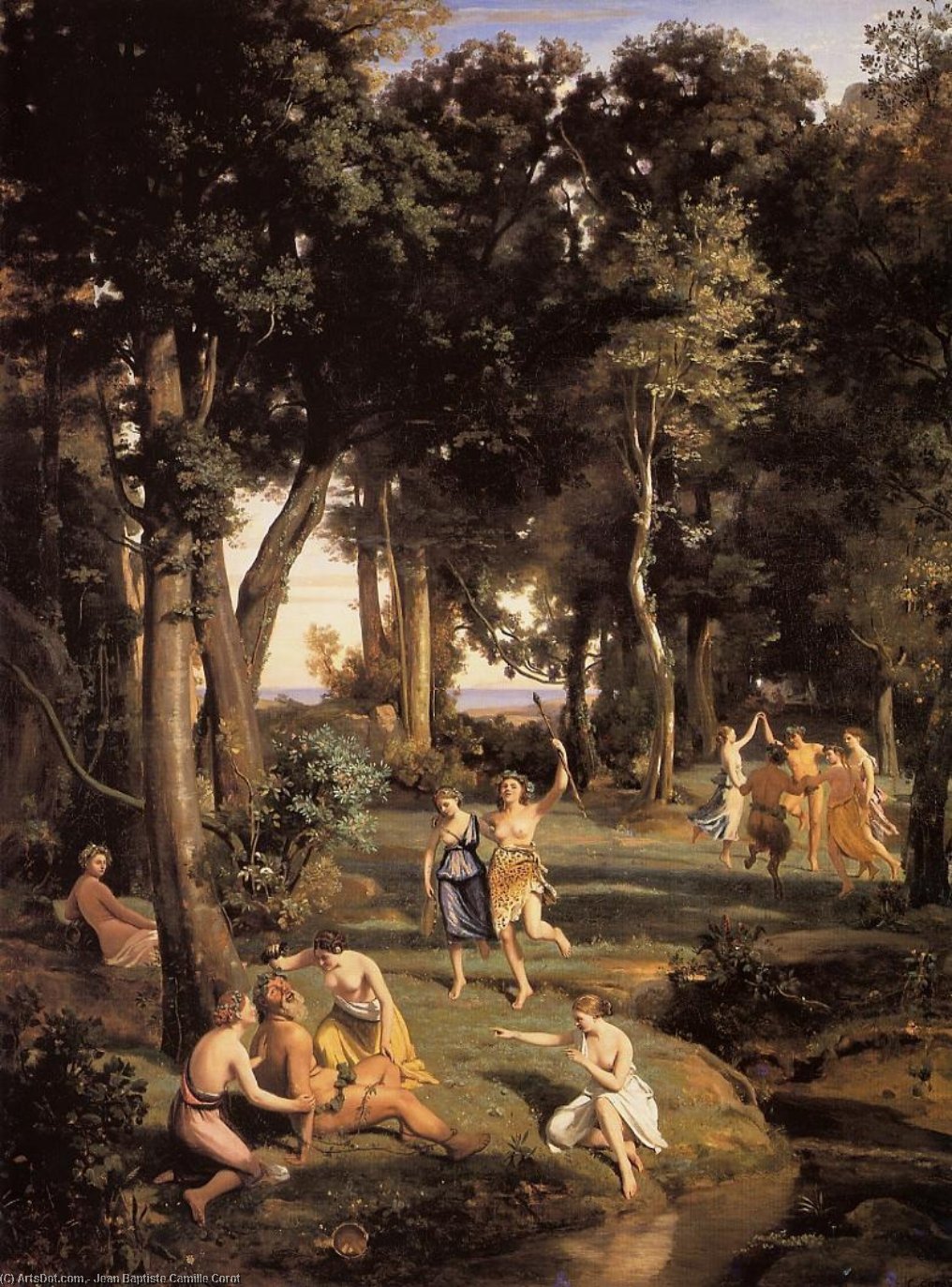
A Moment Frozen in Time: Jean-Baptiste Camille Corot’s Silenus
Jean-Baptiste Camille Corot (1796 – 1875), arguably France's foremost landscape painter of the Romantic era, gifted us with “Silenus,” a masterpiece that transcends mere depiction and delves into the very essence of pastoral tranquility. Painted in 1838 during his prolific period exploring the Fontainebleau Forest near Paris, this canvas embodies Corot’s signature style – characterized by luminous tonal harmonies and an unwavering commitment to capturing the subtle nuances of natural light.
- Subject Matter: The painting portrays a solitary figure seated beneath a sprawling oak tree. This isn't simply a depiction of a man; it’s a deliberate choice to represent humanity in communion with nature, mirroring themes prevalent throughout Romantic art.
- Style & Technique: Corot employed a technique known as “plein air” painting – working directly outdoors—a revolutionary approach for its time. He meticulously blended oil paints on canvas using soft brushes and layering techniques, achieving an astonishingly realistic rendering of texture and color. The muted palette—dominated by greens, browns, and ochres—creates an atmosphere of profound stillness and contemplation.
- Historical Context: “Silenus” emerged during a period of significant artistic upheaval in France. Romanticism rejected Neoclassical formalism, prioritizing emotion and imagination over reason. Artists like Corot sought inspiration from the sublime – awe-inspiring vistas that evoked feelings of humility and wonder—reflecting the broader intellectual currents of the era.
- Symbolism: The oak tree itself holds considerable symbolic weight. Traditionally associated with strength, resilience, and longevity, it represents permanence amidst the fleeting beauty of the forest scene. The solitary figure embodies introspection and contemplation, inviting viewers to consider their own relationship with the natural world.
More than just a beautiful landscape, “Silenus” speaks to something deeper within the human spirit. Corot’s masterful execution captures not only the visual splendor of Fontainebleau but also an intangible quality—a sense of peace and solitude that resonates across generations. It's a painting that encourages us to slow down, observe closely, and appreciate the profound beauty inherent in simple moments of connection with nature.
- Interior Designers’ Note: Consider incorporating Corot’s palette—muted greens and earthy browns—into your interior design schemes. The tonal harmony achieved by Corot exemplifies a timeless aesthetic that prioritizes calm sophistication.