Jean-Baptiste-Camille Corot
A Life Immersed in Light and LandscapeJean-Baptiste-Camille Corot, a name that resonates with the tranquil beauty of 19th-century French landscape painting, was born into a comfortable Parisian bourgeois family on July 16, 1796. Though initially steered towards a commercial path, destiny – and perhaps an innate artistic sensibility – intervened. His early years were ma
A Window Into Tranquility: Exploring Jean-Baptiste-Camille Corot’s “The Artist's Studio”
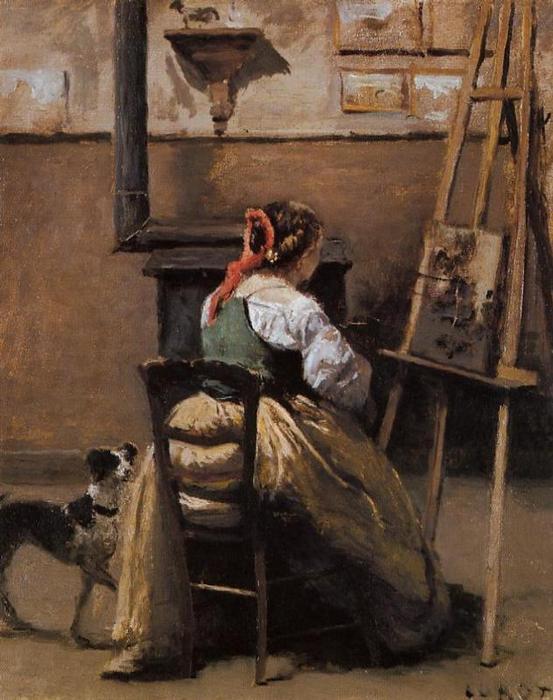
Jean-Baptiste-Camille Corot’s “The Artist’s Studio,” completed around 1860, transcends mere depiction; it embodies the very spirit of Impressionism – a movement dedicated to capturing fleeting moments of light and atmosphere. This serene landscape painting offers an intimate glimpse into the creative process itself, inviting viewers to contemplate beauty amidst simplicity.
Subject Matter & Composition
At its core, the artwork portrays a modest studio nestled within a verdant hillside. A woman artist sits before a canvas bathed in dappled sunlight, her gaze focused intently on her task. Complementing this central figure are two dogs – one resting calmly at her feet and another gazing out from the doorway – establishing a harmonious relationship between human endeavor and the natural world.
Style & Technique: Impressionistic Luminosity
Corot’s masterful technique exemplifies the Impressionist approach. He eschews meticulous detail, prioritizing instead the subtle nuances of color and light. Loose brushstrokes blend seamlessly to create an ethereal effect, capturing the diffused glow of sunlight filtering through foliage. The artist employs a muted palette dominated by greens, browns, and ochres—colors that evoke the tranquility of rural landscapes.
Historical Context & Artistic Influences
"The Artist’s Studio" emerged during a pivotal period in French art history – the Belle Époque. Following the Franco-Prussian War (1870-1871), Impressionism gained considerable momentum, fueled by artists like Claude Monet and Edgar Degas who sought to break away from academic conventions. Corot's work aligns with this broader trend, reflecting a desire to portray nature as experienced directly by the senses—a reaction against idealized representations prevalent in earlier eras.
Symbolism & Emotional Resonance
Beyond its visual beauty, “The Artist’s Studio” carries symbolic weight. The woman artist represents creativity and dedication, while the dogs symbolize companionship and loyalty. More broadly, the studio itself symbolizes the birthplace of artistic inspiration—a space where imagination flourishes amidst the grounding presence of nature. The painting evokes feelings of peace, contemplation, and appreciation for the sublime beauty of the natural world.
Concluding Thoughts
“The Artist’s Studio” remains a testament to Corot's ability to distill complex emotions into deceptively simple forms. Its enduring appeal lies in its capacity to transport viewers back to a moment of quiet observation, reminding us of the profound connection between art and experience.