Jean-Baptiste-Camille Corot
Oil Painting
A Life Immersed in Light and LandscapeJean-Baptiste-Camille Corot, a name that resonates with the tranquil beauty of 19th-century French landscape painting, was born into a comfortable Parisian bourgeois family on July 16, 1796. Though initially steered towards a commercial path, destiny – and perhaps an innate artistic sensibility – intervened. His early
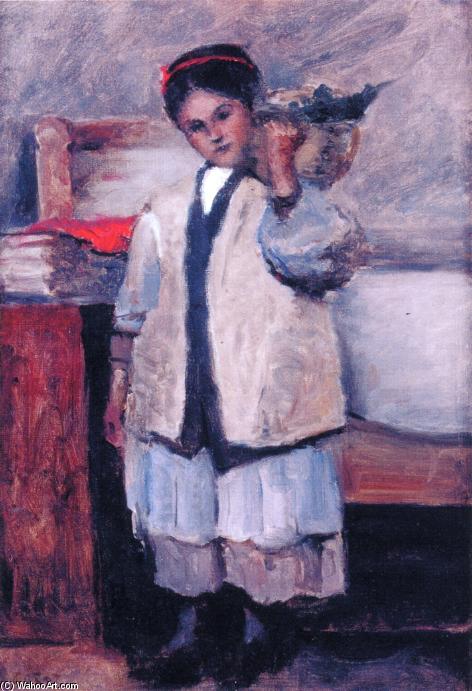
Jean-Baptiste-Camille Corot's "The Little Angel": A Study in Light and Rural Tranquility
This exquisite depiction of a young girl holding a bird, attributed to the master of French landscape painting Jean-Baptiste-Camille Corot, offers a poignant glimpse into the artist’s profound connection with nature. Executed around 1870, during his most contemplative period, the work exemplifies Corot's signature style – characterized by loose brushwork, subtle tonal variations, and an almost palpable sense of atmosphere. The scene unfolds within a simple, rustic interior, dominated by a warm-toned bed and scattered books, suggesting a haven of quiet contemplation for the child.
Technique and Style: Corot’s Impressionistic Vision
Corot's technique is immediately recognizable. He employs a broken brushstroke, layering thin washes of oil paint to create an illusion of depth and texture. Notice how he doesn’t meticulously render every detail; instead, he focuses on capturing the *impression* of light and form. The soft modeling of the girl’s face and the delicate rendering of the bird are achieved through a masterful understanding of color mixing and glazing – techniques that allow layers of paint to subtly interact, creating luminous effects. This approach aligns with the burgeoning Impressionist movement, though Corot predates its formal emergence, laying crucial groundwork for its development.
Historical Context: A Parisian Artist Rooted in Rural Tradition
Born in Paris in 1796, Jean-Baptiste-Camille Corot initially pursued a more conventional artistic path. However, his formative years spent in the countryside near L’Isle-Adam profoundly shaped his artistic sensibilities. This immersion in rural life – observing the changing light on fields and forests – became the cornerstone of his oeuvre. The 1870s marked a period of intense reflection for Corot, as he sought to distill the essence of nature onto canvas, moving away from overtly representational works towards a more subjective and atmospheric style. The presence of the books adds another layer to this context; suggesting an intellectual curiosity alongside his deep connection with the natural world.
Symbolism and Emotional Impact: Innocence and Connection
The image of a young girl holding a bird is rich in symbolism. Birds have long represented freedom, hope, and spirituality across cultures. The act of offering the bird to the child evokes a sense of innocence, vulnerability, and perhaps even a nascent connection with the natural world. Corot’s masterful use of light – particularly the soft, diffused illumination – contributes significantly to the painting's emotional impact, creating an atmosphere of serenity and quiet contemplation. It invites viewers to reflect on themes of childhood, nature, and the enduring human desire for harmony.