A Life Immersed in Light and Landscape: Jean-Baptiste-Camille Corot was born into a Parisian bourgeois family and initially pursued mercantile ventures before dedicating himself to landscape painting. His early life spent in rural environments profoundly shaped his artistic vision, focusing on capturing the ephemeral qualities of light and atmosphere.
Jean-Baptiste-Camille Corot
The Valley
Pari
Jean-Baptiste Corot's "The Valley": A Symphony of Light and Tranquility
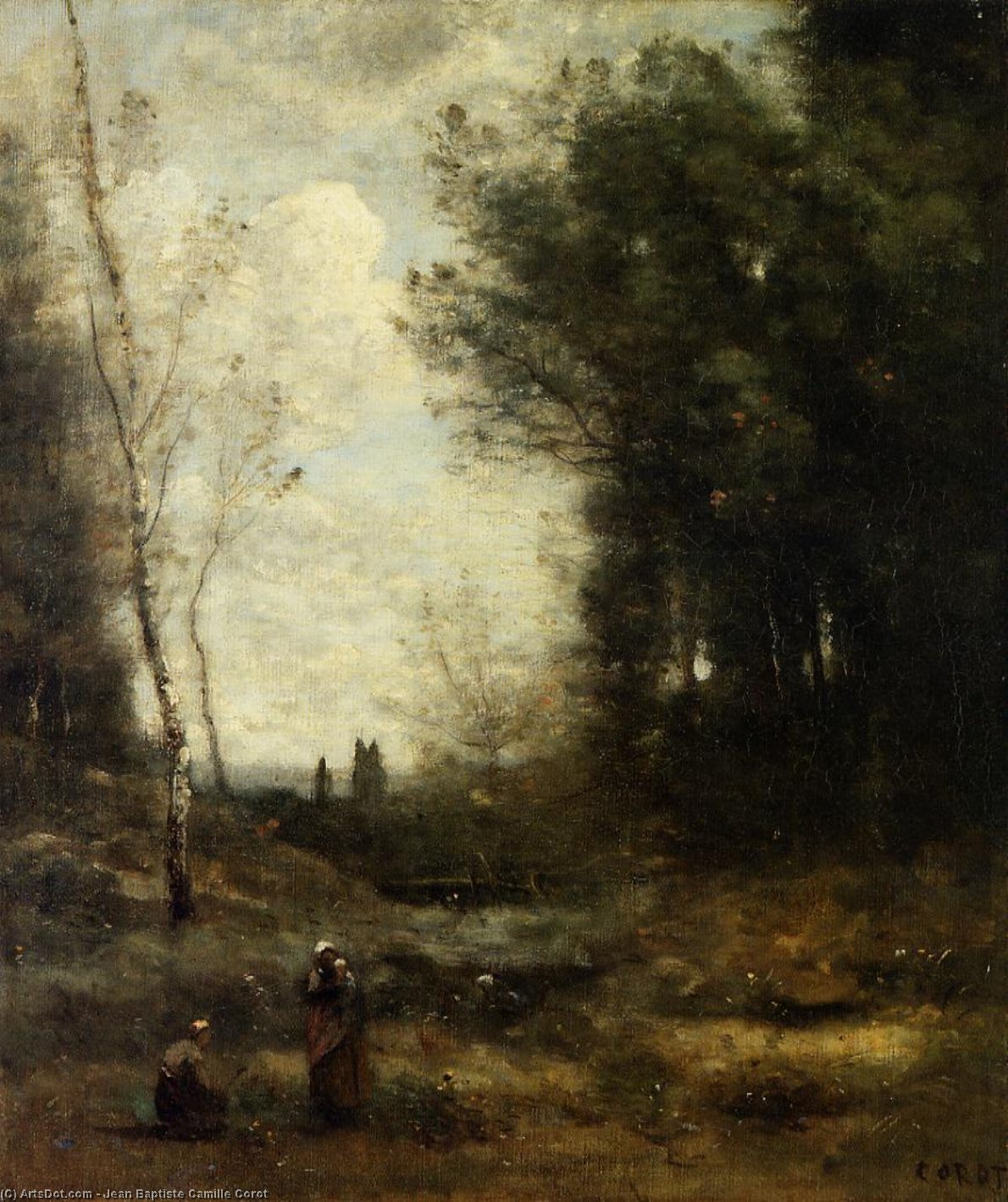
Jean-Baptiste-Camille Corot’s “The Valley,” painted in 1871, is more than a landscape; it’s an immersion into the very soul of nature. This evocative piece captures a quintessential moment of rural beauty – a valley bathed in soft light, framed by towering trees that seem to whisper secrets to the wind. The scene unfolds with a quiet dignity, inviting the viewer to step into its serene embrace and contemplate the timeless connection between humanity and the natural world.
A Masterclass in Impressionistic Technique
Corot was a pivotal figure in the development of landscape painting, profoundly influencing the Impressionist movement. His technique is characterized by loose, visible brushstrokes – not to create sharp detail but rather to capture the fleeting effects of light and atmosphere. Notice how he uses broken color, layering hues subtly to suggest depth and volume. The absence of strong outlines contributes to a dreamlike quality, blurring the boundaries between foreground and background. He meticulously studied the way sunlight filtered through foliage, achieving an unparalleled sense of luminosity that is characteristic of his work. This painting exemplifies his dedication to observing and translating natural phenomena with remarkable sensitivity.
Historical Context: The Rise of Romantic Landscape
"The Valley" reflects a key moment in art history – the rise of Romantic landscape painting in mid-19th century France. Following the neoclassical emphasis on idealized forms, artists like Corot sought to represent nature as it truly appeared, imbued with emotion and spiritual significance. The burgeoning interest in scientific observation (particularly geology and botany) also influenced this shift, encouraging a deeper appreciation for the natural world. Corot’s work aligns perfectly with this movement, prioritizing subjective experience over strict representation, reflecting a growing desire to find solace and inspiration within the beauty of the countryside.
Symbolism and Emotional Resonance
Beyond its technical brilliance, “The Valley” resonates deeply on an emotional level. The solitary figure seated in the foreground evokes feelings of contemplation, peace, and perhaps even melancholy. The vastness of the valley suggests a sense of humility before the power and grandeur of nature. Corot’s deliberate use of muted tones – predominantly greens, browns, and blues – further enhances this atmosphere of tranquility and introspection. The painting isn't simply depicting a scene; it’s inviting us to share in a moment of quiet reflection, reminding us of the restorative qualities of the natural world.