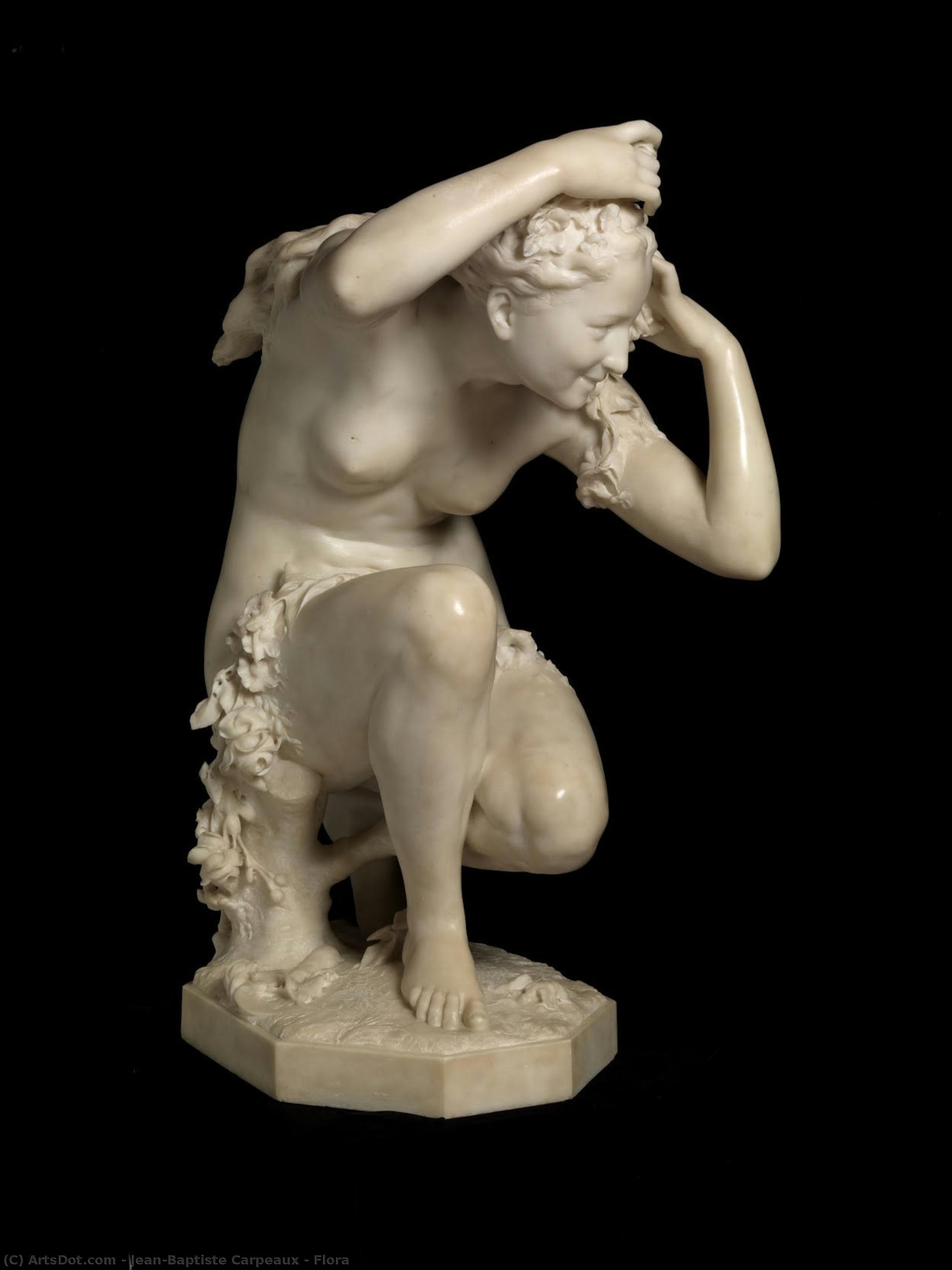
Flora

Jean-Baptiste Carpeaux’s "Flora" is a captivating marble statue depicting Anne Foucart, daughter of Jean-Baptiste Foucart. Commissioned by Turner, it reflects the artist's London period and celebrates the beauty of human form.


Jean-Baptiste Carpeaux (1827 - 1875)

Jean-Baptiste Carpeaux was a celebrated 19th-century French sculptor known for his dynamic and emotionally charged works like "La Danse" and "Ugolino and His Sons." He masterfully blended realism with Baroque influences, capturing movement and human expression in marble and bronze.

Calouste Gulbenkian Foundation (Lisbon, Portugal)

Explore the Calouste Gulbenkian Museum's stunning art collection & architecture in Lisbon! Discover a legacy of philanthropy, spanning ancient to modern masterpieces.

Inspired by the high relief executed, at the request of the architect Lefuel, for the Pavillon de Flore, in the Palais du Louvre, which had as its theme The Triumph of Flora, Carpeaux later made a single figure, which he called Spring. Modifying the attitude and the movement of his previous creation, the new Flora, is crouching, adorning her hair with flowers, her lips twitching in a smile that immediately enchanted the public. The face and smile are those of Anne Foucart, the daughter of Carpeaux’s great friend, Jean-Baptiste Foucart.This human-scale version was executed in 1873, when Carpeaux was living in London, where he had taken refuge after the fall of the Second Empire. It was commissioned by a great lover of art, by the name of Turner. Carpeaux also did portrait busts of Mr. and Mrs. Turner at the same period.