A Symphony of Suffering: The Visceral Power of Carpeaux’s Masterpiece
In the realm of nineteenth-century sculpture, few works command the viewer's attention with such raw, unbridled intensity as Jean-Baptiste Carpeaux’s Ugolino and His Sons. This monumental marble creation is far more than a mere depiction of a literary scene; it is a profound exploration of human agony, betrayal, and the devastating weight of familial tragedy. Drawing directly from the chilling narratives of Dante Alighieri’s Inferno, Carpeaux captures the harrowing moment of Count Ugolino della Gherardesca, imprisoned and starving within the Torre dei Giganti, as he grapples with a despair that transcends the physical realm. To behold this work is to witness a masterclass in emotional storytelling, where every curve of marble seems to pulse with the rhythm of a desperate heartbeat.
The sculpture stands at a fascinating crossroads of artistic movements, embodying a unique synthesis of Neoclassical discipline and Romantic fervor. While Carpe a p maintains the formal elegance and anatomical precision characteristic of the Neoclassical tradition—a legacy of his rigorous training under François Rude—he deliberately breaks away from the era's penchant for idealized, serene beauty. Instead, Carpeaux embraces a burgeoning Realism, infusing the stone with a sense of movement and spontaneity that was revolutionary for its time. The result is a pyramidal composition that provides a stable, classical foundation for a scene of utter chaotic torment, creating a tension that keeps the observer perpetually enthralled.
The Mastery of Marble and the Language of Form
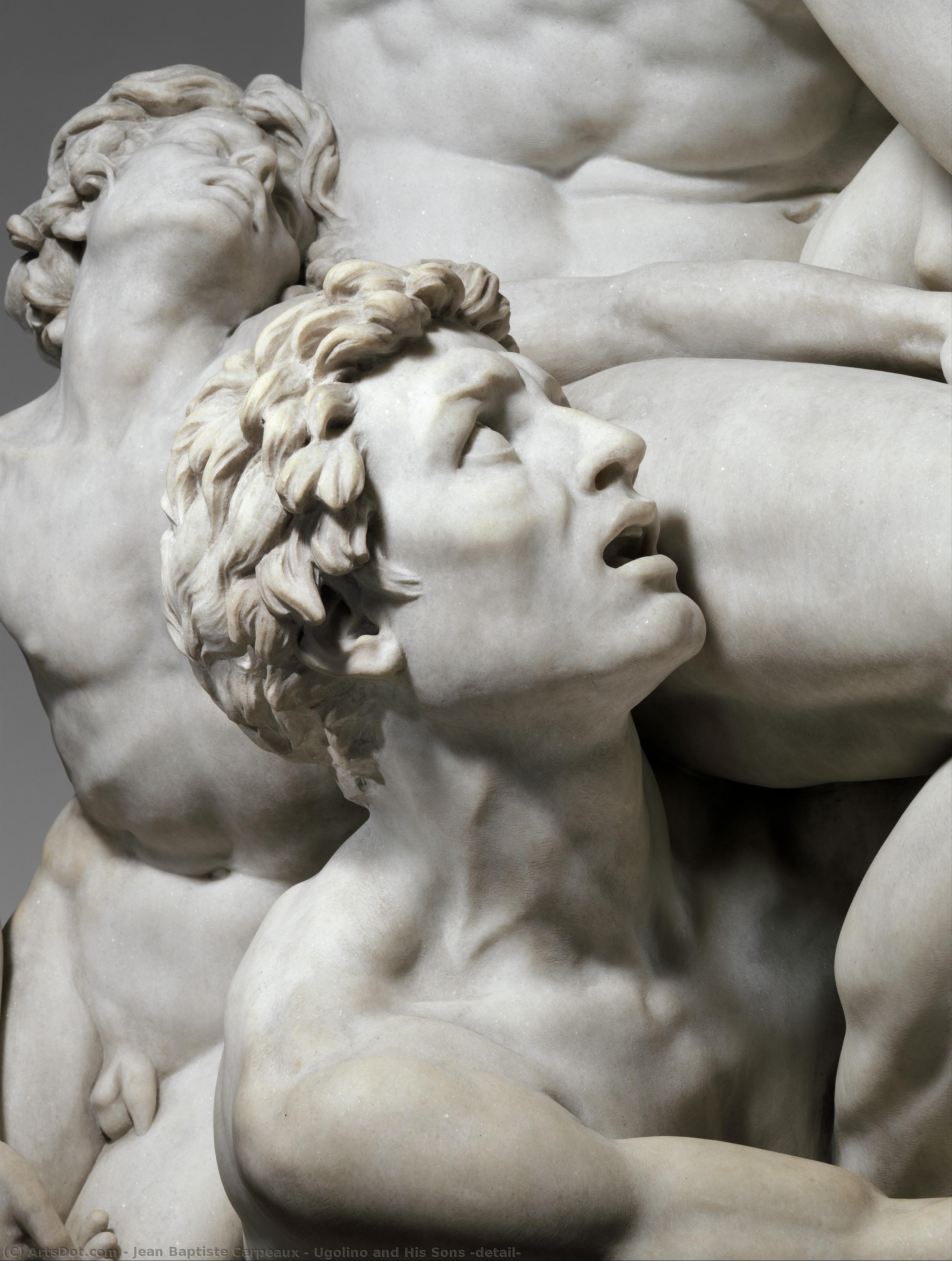
Carpeaux’s technical virtuosity is nothing short of breathtaking. Working with the luminous, cool surfaces of Carrara marble, he achieved an astonishing level of detail that breathes life into the inanimate stone. The artist utilized a sophisticated interplay of light and shadow to define the musculature and the intertwined, claustrophobic arrangement of the figures. Through meticulous carving, he created textures that range from the smooth, polished skin of the children to the more rugged, expressive tool marks that emphasize areas of physical and psychological tension. This tactile variety adds a layer of profound realism, making the suffering feel palpable to anyone standing before it.
The use of line in this detail is equally crucial to its emotional impact. Flowing, organic curves trace the contours of the bodies, suggesting a continuous, agonizing movement even within the stillness of the sculpture. These fluid lines are punctuated by sharp, angular transitions in the facial expressions, where the etched lines of grief and hunger become visible. For the discerning collector or interior designer, such a piece offers an unparalleled focal point; its complex shapes and dynamic energy can transform a space, providing a sophisticated yet emotionally resonant anchor for a curated collection of fine art reproductions.
Symbolism and Eternal Resonance
Beyond its technical brilliance, Ugolino and His Sons serves as a powerful symbolic vessel. It explores the darkest corners of the human condition: the betrayal of trust, the cruelty of fate, and the unbreakable, yet tragic, bonds of kinship. The way the figures are physically entangled mirrors their psychological entrapment, creating a sense of inescapable doom that resonates with the universal themes of the human experience. This depth of meaning ensures that the artwork remains as relevant today as it was in 1865, offering a timeless subject for contemplation.
For those seeking to bring a touch of historical grandeur and dramatic flair into their homes or galleries, a high-quality reproduction of this masterpiece offers an opportunity to engage with one of the most significant achievements of French sculpture. Whether placed in a quiet study or as a centerpiece in a grand hall, the evocative power of Carpeaux’s vision continues to inspire awe, inviting viewers to lose themselves in the beautiful, tragic dance of light, shadow, and stone.