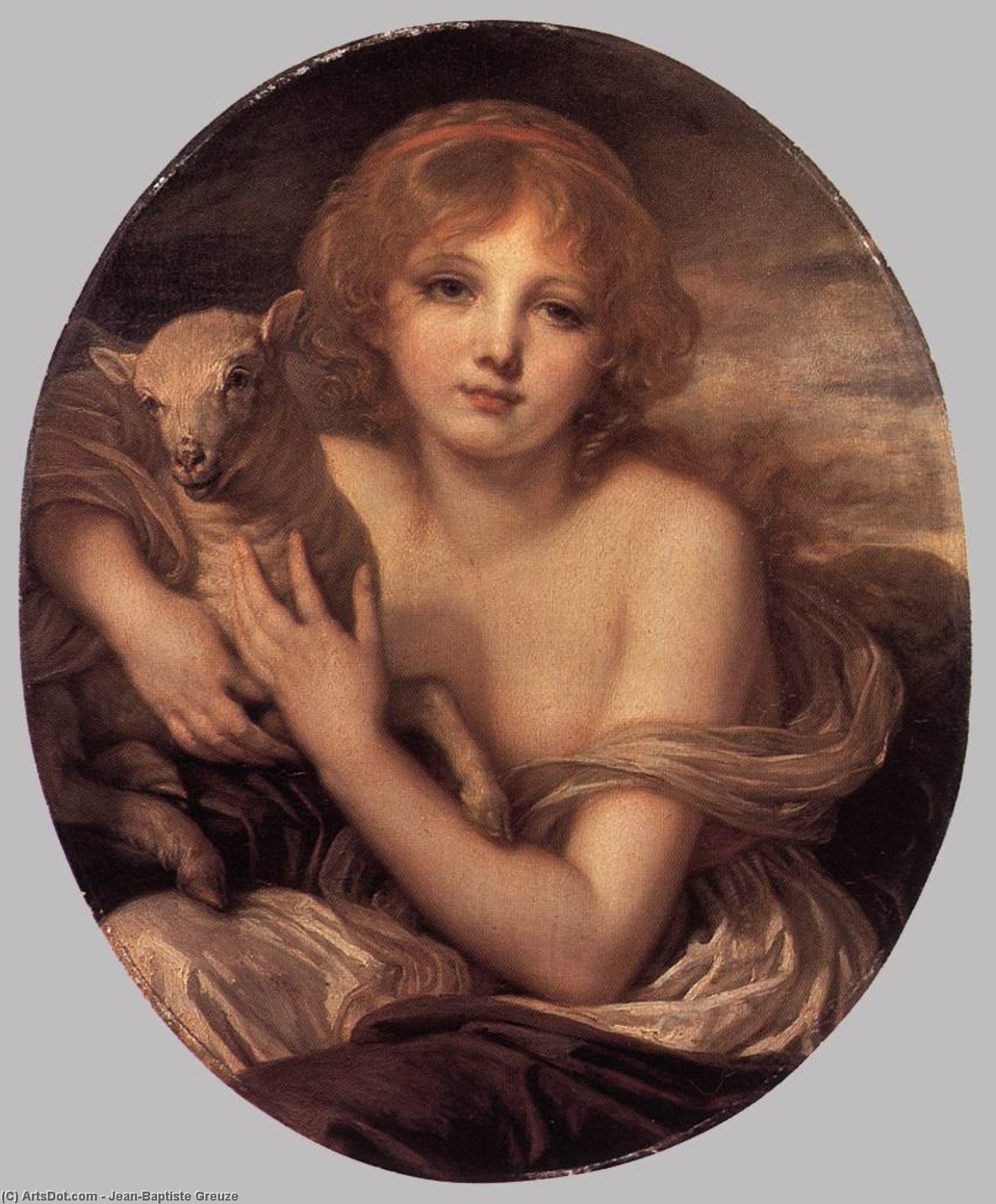
Jean-Baptiste Greuze’s ‘Innocence,’ a Rococo masterpiece bathed in pastel hues and imbued with moral tenderness, portrays a young woman cradling a lamb—a poignant symbol of compassion—captured with meticulous brushstrokes and ethereal luminosity.
Jean-Baptiste Greuze (1725-1805): Explore the emotionally resonant genre scenes & portraits of this pivotal French Rococo painter, known for capturing everyday life and moral lessons.
Discover exquisite French art & arms at the Wallace Collection! Explore Rococo masterpieces, Georgian grandeur, and a unique royal townhouse experience – free admission awaits!
A Portrait Steeped in Sentiment: Jean-Baptiste Greuze’s ‘Innocence’
Jean-Baptiste Greuze's “Innocence,” completed around 1793, stands as an emblem of the Rococo era’s preoccupation with emotion and moral instruction—a testament to his mastery of capturing the tender vulnerability inherent in human experience. Executed on canvas measuring 63 x 53 cm, this captivating portrait depicts a young woman cradling a lamb, an image instantly recognizable for its profound simplicity and idealized beauty. The painting resides within the Wallace Collection’s holdings, offering visitors a rare glimpse into the artistic sensibilities of late eighteenth-century France.
Style and Technique: Neoclassical Influence Amidst Rococo Flourishes
While firmly rooted in the Rococo style—characterized by delicate pastel hues, ornate ornamentation, and an emphasis on graceful curves—Greuze’s approach transcends mere decorative convention. Unlike many artists of his time who favored grand historical narratives or mythological allegories, Greuze deliberately eschewed such subjects, focusing instead on scenes from everyday life imbued with moral significance. His technique is meticulous, employing soft brushstrokes and subtle glazing to achieve an ethereal luminosity that enhances the emotional impact of the composition. The artist skillfully utilizes chiaroscuro—the dramatic interplay of light and shadow—to sculpt the woman’s figure and illuminate the lamb, creating a palpable sense of intimacy and tenderness.
Historical Context: Sentimentality and Moral Reform
“Innocence” emerged during a period marked by significant social upheaval – the French Revolution was looming on the horizon – yet Greuze's work embodies an enduring fascination with themes of compassion, purity, and maternal devotion. The sentimental movement, gaining momentum throughout Europe, championed the depiction of human emotions as conduits for moral reform. Artists like Greuze sought to elevate the commonplace into something sublime, reminding viewers of the importance of virtue and empathy. This artistic impulse reflected a broader societal desire to instill ethical values amidst turbulent times.
Symbolism: Lamb as Emblematic Virtue
The lamb itself serves as a potent symbol within the painting—representing innocence, meekness, and divine compassion. Traditionally associated with Christ’s sacrifice and purity, the lamb embodies spiritual virtue and underscores the woman's nurturing role. The pink ribbon adorning her hair further reinforces this symbolism, signifying modesty and grace – qualities highly valued during the Rococo period. Greuze’s deliberate choice of imagery speaks to a deeper philosophical concern: the preservation of moral goodness amidst societal pressures.
Emotional Impact: A Window into Human Vulnerability
Ultimately, “Innocence” succeeds in conveying an overwhelming sense of tenderness and vulnerability. The woman's gaze is serene yet melancholic, reflecting both maternal love and perhaps a hint of sorrow—a poignant acknowledgment of the fragility inherent in human existence. Greuze’s masterful rendering captures not merely physical likeness but also psychological depth, inviting viewers to contemplate themes of compassion, purity, and the enduring power of maternal devotion. It remains a timeless masterpiece, resonating with audiences across generations as an unforgettable portrayal of innocence and grace.