A Glimpse Through the Veils of Time
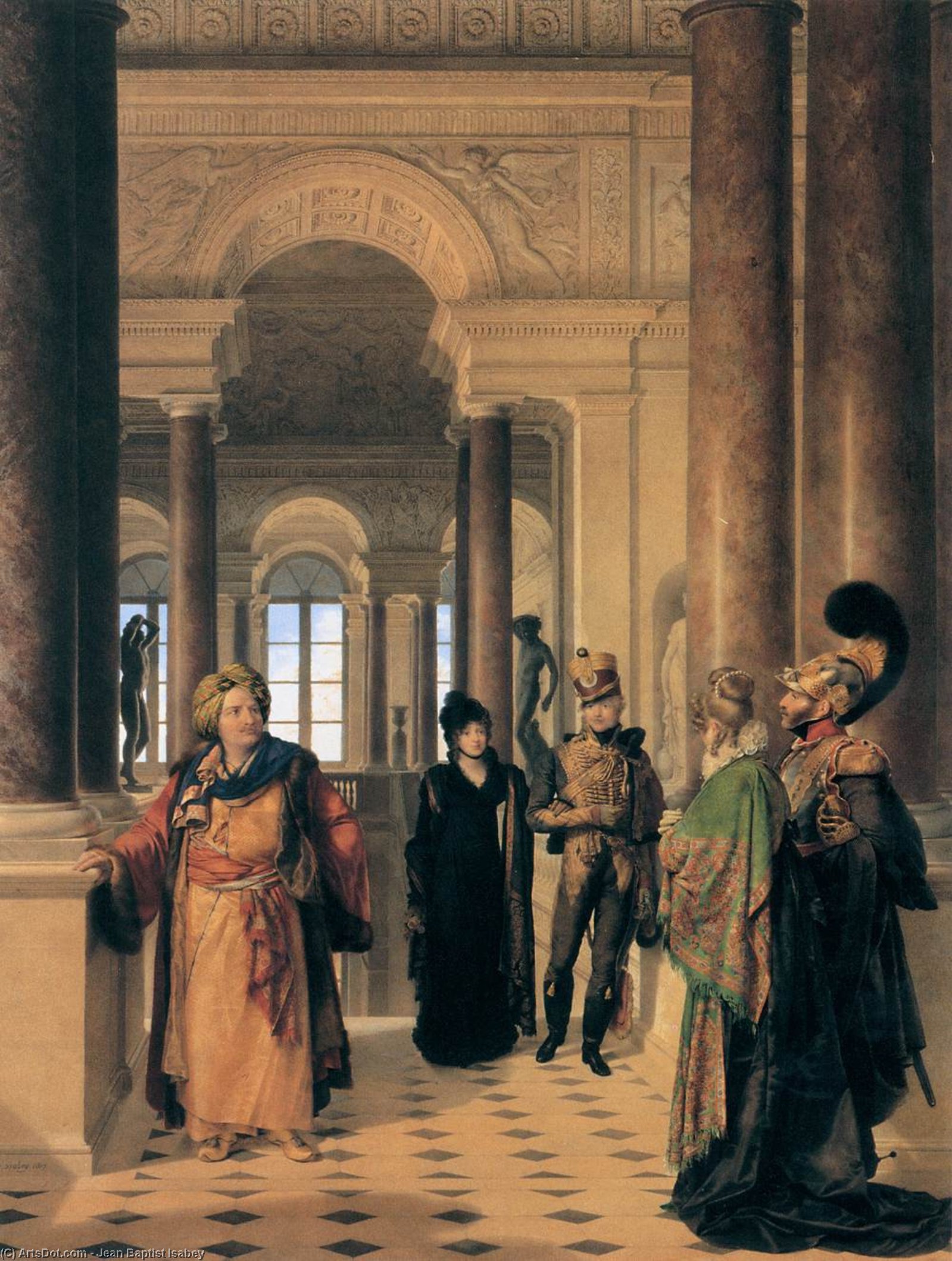
In the delicate, translucent layers of Jean-Baptiste Isabey’s 1817 masterpiece, “The Museum Stairway,” we find much more than a mere watercolor study; we encounter a portal into the soul of post-Revolutionary France. As the viewer’s eye wanders through the grand, architectural expanse of the scene, there is an immediate sense of being transported to the opulent halls of the Musée des Beaux-Arts in Reims. The painting captures a fleeting moment of social grace, where the rigid hierarchies of the past begin to soften into the intellectual curiosity of the Enlightenment. Isabey, a master of capturing the ephemeral, uses the grand staircase not just as a setting, but as a metaphor for the ascent of society toward knowledge and refined aesthetic appreciation.
The composition is a sophisticated dance of light and shadow, orchestrated with the precision of a seasoned portraitist. Within this bustling tableau, figures of various social standings—artists, intellectuals, and aristocrats—are woven into the fabric of the architecture. There is a palpable sense of movement as men and women in period attire ascend the steps, their silhouettes framed by classical columns that evoke the enduring strength of antiquity. The artist’s ability to render the subtle textures of silk, the heavy drape of velvet, and the delicate lace of collars provides a tactile richness that invites the observer to step closer, almost feeling the cool air of the museum gallery and hearing the hushed, animated whispers of the gathered crowd.
The Mastery of Watercolor and Light
Technically, “The Museum Stairway” stands as a testament to Isabey’s unparalleled command over the watercolor medium. Unlike the heavy, opaque strokes found in oil portraiture of the era, Isabey employs luminous washes that allow the paper to breathe, creating an ethereal, almost dreamlike atmosphere. This technique is particularly evident in the way light filters through the unseen heights of the museum ceiling, casting soft gradations across the faces of the figures and illuminating the architectural details with a gentle, pearlescent glow. The use of muted, sophisticated tones ensures that while the scene is populated, it never feels cluttered; instead, it maintains a serene, contemplative equilibrium.
For the discerning collector or interior designer, this piece offers a profound sense of historical depth and atmospheric elegance. The subtle interplay of light and shadow provides a versatile focal point that can anchor a room with a sense of quiet grandeur. Whether placed in a sun-drenched morning room or a more formal, dimly lit study, the painting brings with it an air of intellectual sophistication. It is a work that does not demand attention through loud colors, but rather earns it through its intricate details and the emotional resonance of its subject matter—a celebration of beauty, social connection, and the enduring human quest for enlightenment.