A Symphony in Bloom: Jean-Baptiste Monnoyer’s “Flower Piece”
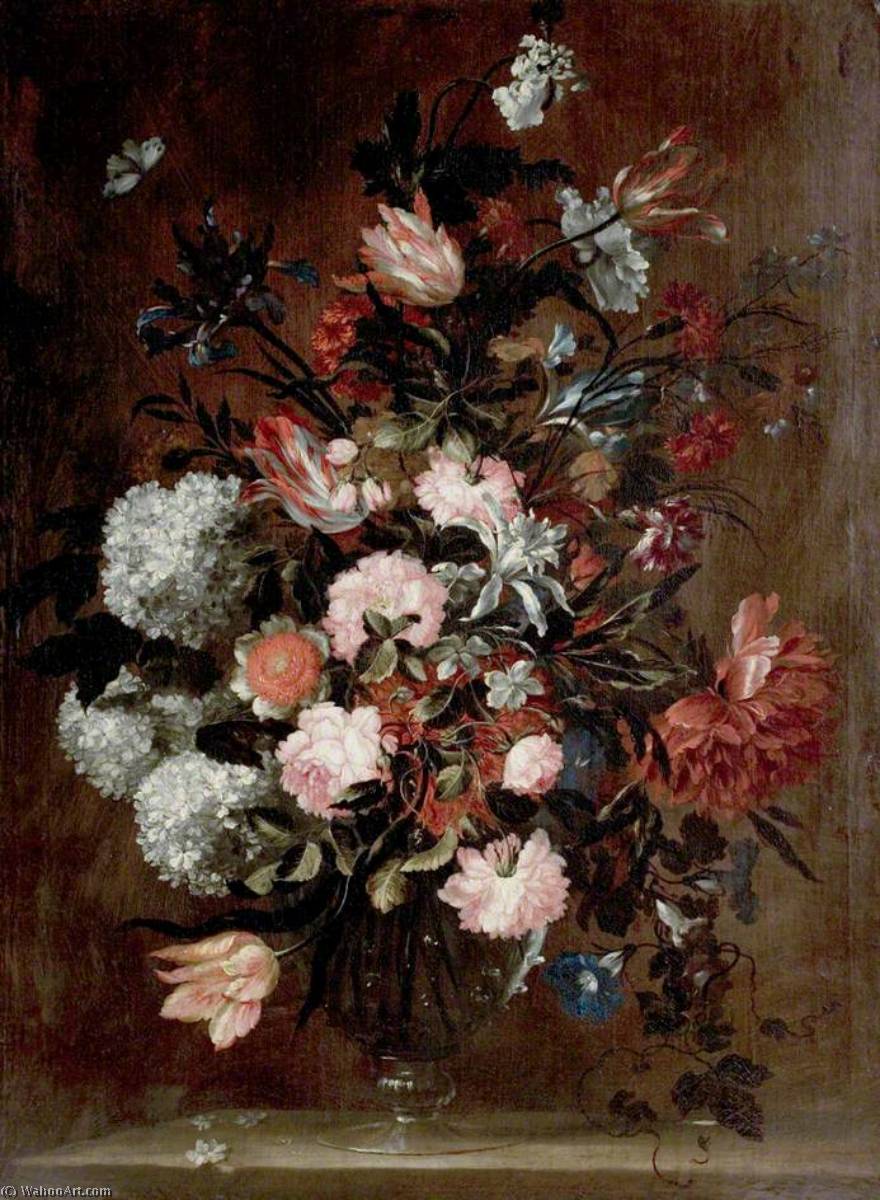
Jean-Baptiste Monnoyer's "Flower Piece," painted circa 1690, is more than just a still life; it’s a meticulously crafted tableau of opulent beauty and Baroque drama. This captivating work transports the viewer to a world of luxurious abundance, where vibrant blossoms and rich textures converge within an intricately designed vase. The painting, now housed at Bristol Museums, Galleries & Archives, offers a glimpse into the refined tastes of 17th-century French aristocracy and reveals Monnoyer’s mastery of light, color, and composition – skills honed during his formative years working for Charles Le Brun and other prominent figures in the royal court.
The scene unfolds within a dark, textured brown background, providing a dramatic counterpoint to the explosion of color emanating from the floral arrangement. The dominant hues—deep pinks, fiery reds, pristine whites, and verdant greens—are rendered with an almost tactile quality, achieved through Monnoyer’s signature layering technique. Thin glazes of oil paint are carefully built up to create a sense of depth and luminosity, capturing the velvety softness of petals and the subtle sheen of foliage. The artist's attention to detail is remarkable; each leaf, each petal, appears to possess its own unique texture and form, contributing to the overall illusion of three-dimensionality.
Baroque Grandeur and Royal Patronage
Monnoyer’s work firmly establishes him within the context of the Baroque period, a time characterized by dramatic contrasts, elaborate ornamentation, and an emphasis on emotional intensity. His association with the Gobelins and Beauvais tapestry workshops—where he created intricate cartoons for weavers—demonstrates his deep understanding of decorative arts and his ability to translate complex designs into visually stunning surfaces. Crucially, Monnoyer’s career was inextricably linked to royal patronage; commissions from Louis XIV and his court provided him with unparalleled access to luxurious materials, advanced techniques, and a sophisticated aesthetic sensibility. The opulent setting and the sheer profusion of flowers reflect this privileged position within French society.
Symbolism of Abundance and Mortality
Floral still lifes during the Baroque era were not merely decorative; they often carried symbolic weight. The abundance of blossoms in “Flower Piece” can be interpreted as a representation of fertility, prosperity, and the fleeting beauty of life itself. The juxtaposition of vibrant colors with darker tones—particularly the deep browns and reds—hints at the inevitability of mortality and the transience of earthly pleasures. Flowers, symbols of both joy and decay, serve as a poignant reminder of the ephemeral nature of existence – a common theme explored in Baroque art.
A Legacy of Elegance: Reproduction Possibilities
Reproductions of Monnoyer’s “Flower Piece” offer a remarkable opportunity to bring this exquisite work into any interior space. The rich colors, intricate details, and dramatic lighting translate beautifully to high-quality prints and canvases. Whether adorning a formal salon or a more contemporary setting, this painting evokes a sense of timeless elegance and luxurious sophistication. Collectors and design enthusiasts alike will appreciate the enduring appeal of Monnoyer’s masterful composition—a testament to his skill as a painter and a window into the opulent world of 17th-century France.
- Artist: Jean-Baptiste Monnoyer
- Date: Unknown (circa 1690)
- Medium: Oil on Canvas
- Dimensions: 113 x 88 cm
- Location: Bristol Museums, Galleries & Archives