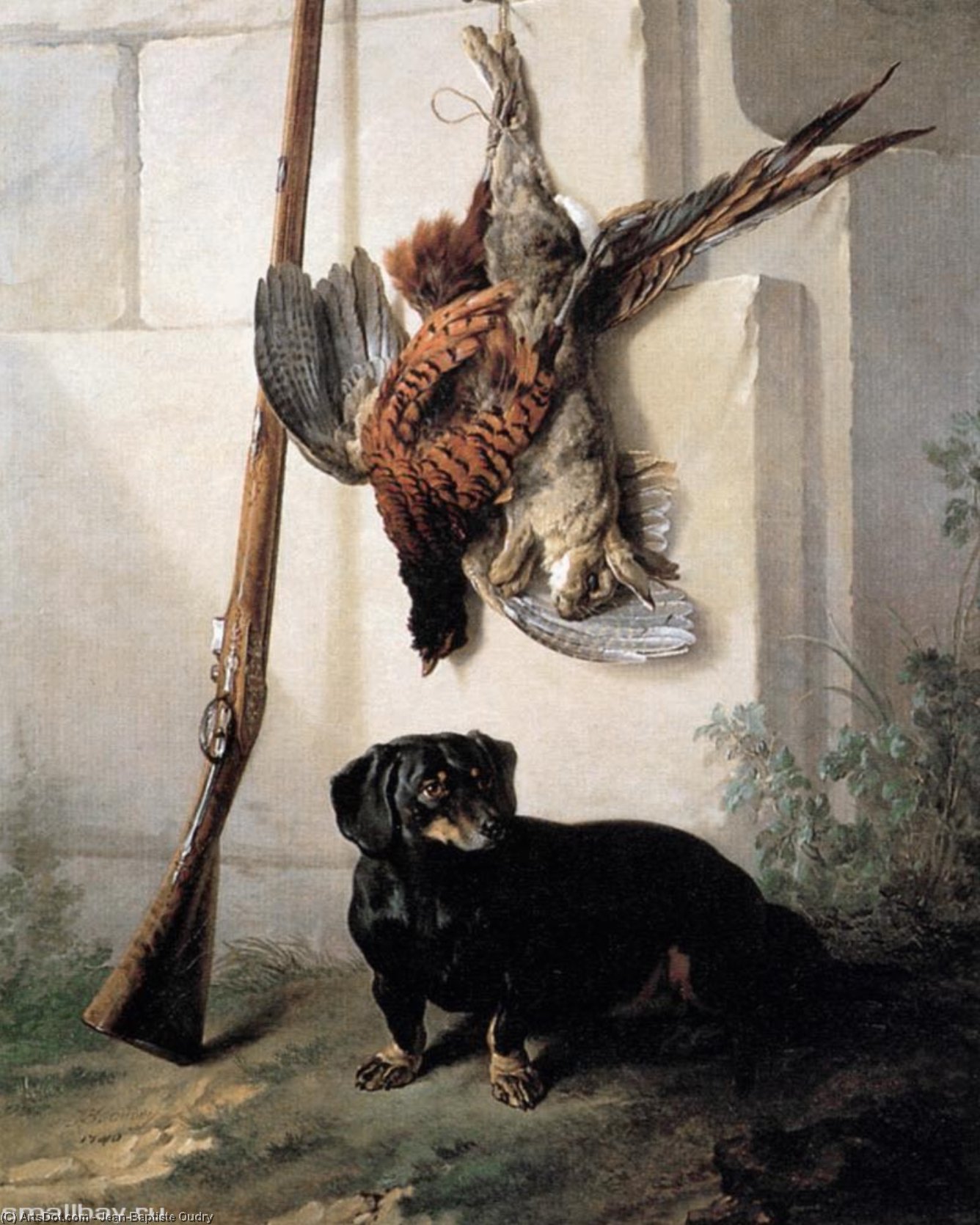
A masterful Rococo hunting scene by Jean-Baptiste Oudry captures the lifelike textures of a poised hound and fallen game from 1740, offering a refined glimpse into French aristocratic life for your private collection.
Explore Jean-Baptiste Oudry's exquisite Rococo paintings & tapestries! Renowned for naturalistic animal depictions, royal hunt scenes & French artistry.
Explore Swedish art & design at the Nationalmuseum! From Rembrandt to contemporary creations, discover masterpieces and innovative Scandinavian design in Stockholm's stunning Renaissance building.
Hound with Gun and Dead Game by Jean-Baptiste Oudry
Jean-Baptiste Oudry’s “Hound with Gun and Dead Game,” painted in 1740, stands as a quintessential emblem of the Rococo artistic movement—a celebration of aristocratic leisure intertwined with meticulous observation of the natural world. This captivating artwork resides within The Metropolitan Museum of Art's collection, offering viewers an unparalleled glimpse into the sensibilities of Enlightenment France.
Subject Matter and Composition
The painting depicts a hunting scene rendered with remarkable realism. At its center is a dog poised attentively at the edge of a grassy expanse, gazing towards a distant bird—presumably its quarry. Above him hangs a dead pheasant, suspended from a rope, symbolizing both the success of the hunt and the ephemeral nature of beauty itself. Scattered throughout the canvas are additional birds, some lifeless and frozen in stillness, further emphasizing Oudry’s dedication to portraying animals with astonishing accuracy. The artist skillfully employs perspective to create depth and atmosphere, immersing the viewer within the tranquil yet purposeful environment of a royal hunting expedition.
Style and Technique: Rococo Elegance
Oudry's mastery lies in his embodiment of Rococo aesthetics—characterized by delicate brushstrokes, pastel hues, and an emphasis on ornamentation. The artist’s technique is meticulous; he painstakingly captures textures – the fur of the dog, the feathers of the birds – with remarkable detail. Oudry utilizes chiaroscuro—the dramatic interplay of light and shadow—to sculpt form and heighten emotional impact. Unlike the grand narratives favored by Baroque painters, Rococo prioritizes refined beauty and sensual pleasure, as exemplified in this serene tableau. The composition is balanced and harmonious, reflecting the aristocratic ideals of the period.
Historical Context: Enlightenment Ideals Reflected
“Hound with Gun and Dead Game” emerged during the Age of Enlightenment, a time marked by intellectual curiosity and a renewed interest in classical art and philosophy. Oudry’s work reflects the prevailing fascination with observing and representing nature—a departure from the stylized depictions prevalent earlier centuries. However, it simultaneously embodies aristocratic tastes for opulent displays of wealth and leisure. The painting served as a commission for royalty, demonstrating the importance of patronage in fostering artistic innovation during this era. It speaks to a broader cultural preoccupation with capturing fleeting moments of beauty and mastering the natural world—themes that resonated deeply within the intellectual currents of the time.
Symbolism: Mortality and Triumph
Beyond its visual splendor, “Hound with Gun and Dead Game” carries profound symbolic weight. The dead pheasant serves as a poignant reminder of mortality—a contemplation on the inevitable decline of all living things. Yet, it is juxtaposed against the active pursuit of the bird by the dog, representing triumph over adversity and the preservation of vitality. Oudry’s careful arrangement of birds contributes to this layered symbolism, prompting viewers to consider themes of life, death, and the cyclical rhythms of nature. The painting's stillness contrasts with the dynamism of the hunt, inviting reflection on the transient beauty of existence.
Emotional Impact: Tranquility Amidst Pursuit
Ultimately, Oudry’s masterpiece evokes a sense of contemplative serenity—a captivating blend of observation and artistic virtuosity. The muted palette and soft brushstrokes create an atmosphere of tranquility, despite the active pursuit of prey. The artist's ability to convey emotion through visual means is remarkable; he captures not only the physical appearance of animals but also their psychological state. “Hound with Gun and Dead Game” remains a testament to Oudry’s artistic genius—a timeless depiction of aristocratic life infused with philosophical contemplation and an enduring appreciation for the splendor of the natural world.