Discover Jean-Baptiste Pater (1695-1736), a French Rococo painter & Watteau's sole pupil. Explore his elegant *fête galante* scenes, shimmering lines, and portraits for Frederick the Great. Find reproductions & learn about this influential artist!
Explore the Louvre Museum in Paris! Home to iconic masterpieces like the Mona Lisa & Venus de Milo, journey through art history from ancient Egypt to Renaissance icons. Plan your visit today!
A Symphony of Rococo Grace
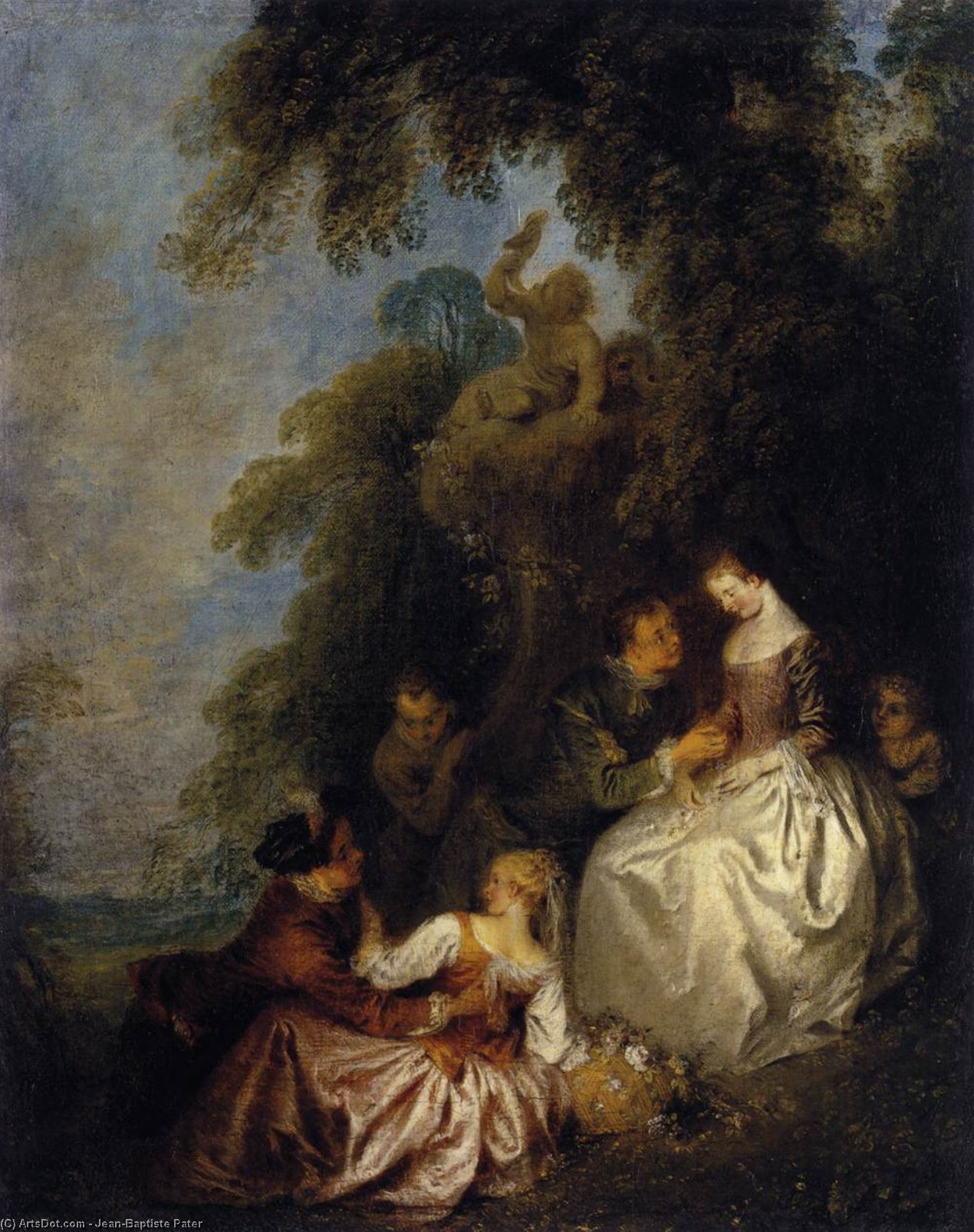
In the delicate dance of light and shadow that defines the French Rococo era, Jean-Baptiste Pater’s Conversation Galante emerges as a breathtaking window into an age of refined leisure. Painted around 1720, this masterpiece captures more than just a social gathering; it encapsulates an entire philosophy of existence—one rooted in the pursuit of pleasure, elegance, and the ephemeral beauty of human connection. As the most notable pupil of the legendary Antoine Watteau, Pater does not merely imitate his master but breathes new life into the fête galante genre, creating a scene that feels both intimately personal and grandly theatrical.
The composition invites the viewer to step into a lush, manicured garden where the boundaries between nature and artifice blur. At the heart of this pastoral dream, a group of aristocrats is gathered in animated, whispered exchanges. The eye is immediately drawn to a woman seated on the ground in the foreground; her back is turned toward us, acting as a silent, contemplative gateway that pulls the observer into the circle of intimacy. Around her, the figures are draped in the sumptuous silks and intricate laces characteristic of 18th-century high fashion, their postures embodying a graceful ease that suggests a world untouched by the rigors of reality.
Mastery of Light and Ethereal Technique
Technically, Pater demonstrates a profound command over the illusionistic vision inherited from Watteau. His brushwork is characterized by a shimmering precision, where light seems to catch on the folds of a gown or the dew-kissed leaves of the background foliage with equal brilliance. He employs a palette of soft pastels and luminous tones that imbue the canvas with an atmospheric glow, a technique that creates a sense of depth and airiness. This mastery of light does more than define form; it establishes a mood of dreamlike nostalgia, making the garden feel as though it exists in a moment suspended in time.
For the discerning collector or interior designer, this painting offers an unparalleled opportunity to introduce a sense of historical prestige and rhythmic elegance into a space. The asymmetrical balance of the composition provides a dynamic energy that prevents the scene from feeling static, making it a perfect focal point for a sophisticated salon or a grand dining room. To possess a reproduction of such a work is to bring a piece of French history into the modern home—a reminder of the enduring allure of beauty, social grace, and the quiet joy found in a shared moment under the summer sun.