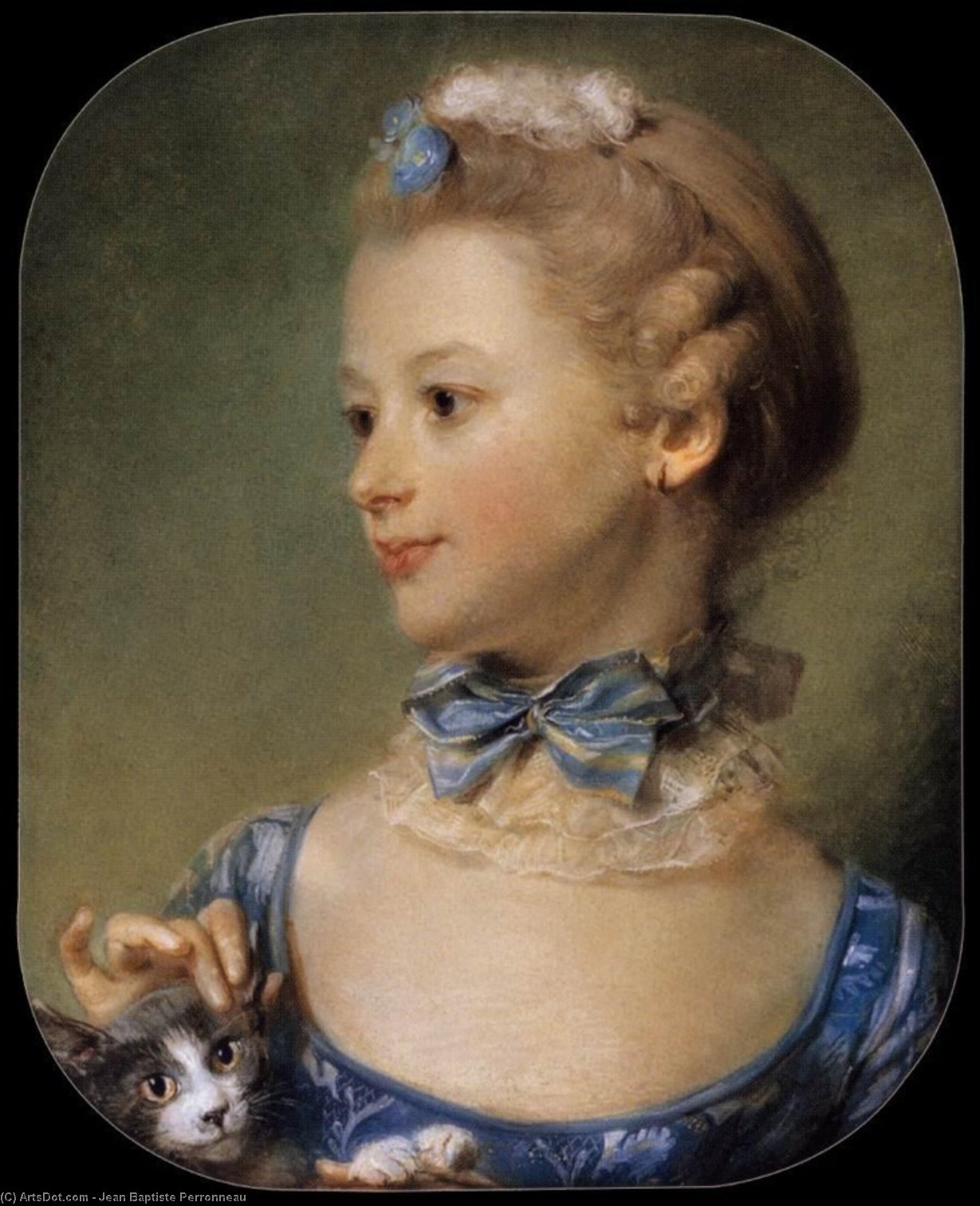
The painting’s subject matter – a woman with blonde hair and a gentle smile—reflects the prevailing ideals of femininity during the period. Its location at the Louvre underscores its significance within French artistic heritage. Further research into Jean Baptiste Oudry reveals a kindred spirit, sharing Perronneau's dedication to naturalistic depictions of animals and landscapes.
Jean Baptiste Perronneau’s Delicate Portrait of Innocence: Mademoiselle Huquier
Jean Baptiste Perronneau, a figure largely overshadowed by the flamboyant Rococo era's titans like Boucher and Watteau, nevertheless possesses an enduring fascination for art historians. His singular focus on capturing human emotion through pastel – a medium notoriously difficult to master – resulted in works that resonate with remarkable intimacy and subtlety. “Mademoiselle Huquier,” completed in 1747, exemplifies this approach perfectly.
- Subject Matter: The painting depicts Mademoiselle Huquier, daughter of Gabriel Huquier, a prominent Parisian engraver. She is portrayed with serene grace, cradling a tabby cat—a symbol of domestic tranquility and maternal tenderness—in her arms.
- Style & Technique: Perronneau’s masterful use of pastel distinguishes “Mademoiselle Huquier” from its contemporaries. Pastel pigments, derived from powdered minerals like chalk and charcoal, offer unparalleled luminosity and tonal nuance, allowing for incredibly delicate gradations of color that convey a profound sense of softness and ethereal beauty. The artist skillfully employs hatching and blending techniques to sculpt form and texture, creating an illusionistic surface that invites contemplation.
- Historical Context: Created during the reign of Louis XV, “Mademoiselle Huquier” reflects the prevailing aesthetic sensibilities of the period—characterized by aristocratic patronage and a preoccupation with idealized femininity. The Rococo style prioritized elegance, ornamentation, and playful asymmetry, rejecting the grandeur of Baroque art in favor of a more sensual and emotionally expressive visual language.
- Symbolism: Beyond its depiction of youthful beauty, “Mademoiselle Huquier” carries symbolic weight. The cat represents nurturing and protection—a common motif in Rococo art—while Mademoiselle Huquier’s gentle smile conveys contentment and inner peace. These elements contribute to the painting's overall impression of harmony and refinement.
- Emotional Impact: Perronneau’s pastel technique achieves a remarkable feat: it captures not merely likeness but also an intangible quality – emotion—with breathtaking precision. The viewer is drawn into Mademoiselle Huquier’s world, experiencing her quiet serenity and tenderness. It's a portrait that speaks to the universal desire for beauty, innocence, and maternal affection.
This exquisite pastel reproduction captures the essence of Perronneau’s artistic vision—a testament to his dedication to portraying human character with sensitivity and grace.