A Vision of Marble and Majesty
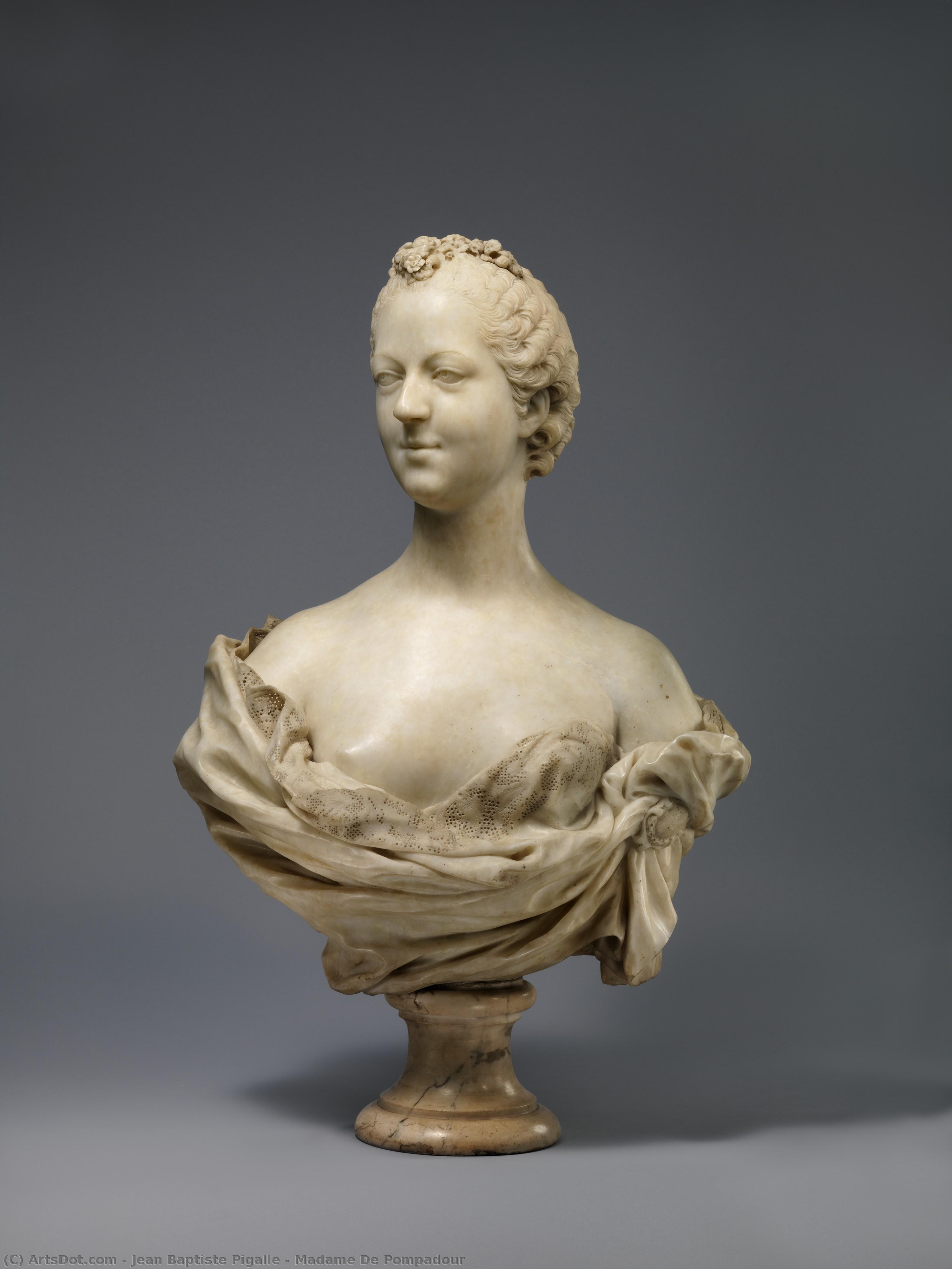
In the quiet, luminous presence of Jean-Baptiste Pigalle’s 1751 masterpiece, Madame De Pompadour, one encounters more than a mere portrait; one meets the very soul of an era. This exquisite marble bust captures the essence of Jeanne Antoinette Poisson, the legendary Marquise de Pompadour, with a precision that transcends time. As you gaze upon the smooth, polished contours of her face, there is an immediate sense of encountering a figure of profound intellect and serene authority. Pigalle does not simply replicate a likeness; he distills the regal grace of the French court into a singular, breathtaking form. For the discerning collector or the designer seeking to infuse a space with historical weight and classical elegance, this sculpture offers a window into a world of unparalleled sophistication.
The technical mastery displayed in this work is nothing short of extraordinary. Utilizing the prestigious Carrara marble technique, Pigalle achieved a surface so translucent and refined that it seems to hold a soft, inner light. The sculptor’s ability to manipulate such a hard medium into the delicate textures of flowing drapery and the soft, lifelike features of the subject is a testament to his virtuosity. Every curve of the neck and every intricate fold of the marble cloth serves to enhance the realism of the portrait, creating a play of light and shadow that breathes life into the stone. This meticulous attention to anatomical accuracy and surface finish ensures that the piece remains a captivating focal point, regardless of the setting.
The Intersection of Rococo Charm and Neoclassical Order
Historically, this bust sits at a fascinating crossroads of artistic evolution. While the era was often characterized by the exuberant and sometimes frivolous ornamentation of the Rococo style, Pigalle’s work for Madame de Pompadour hints at the burgeoning Neoclassical movement. There is a deliberate sense of balance and restraint within the composition—a pyramidal stability that evokes the grandeur of ancient Greek and Roman sculpture. This stylistic tension creates a profound emotional impact; the piece possesses the soft, romantic allure of the mid-18th century while maintaining a structural dignity that feels eternal. It is a celebration of beauty that refuses to be fleeting.
Beyond its aesthetic brilliance, the sculpture serves as a powerful symbol of status and influence. As the official chief mistress to King Louis XV, Madame de Pompadour was a formidable force in French politics and culture. Pigalle captures this duality—the softness of her femininity intertwined with the unshakeable strength of her position. To display a high-quality reproduction of this bust is to invite a conversation about power, grace, and the enduring legacy of French artistry into one's home or gallery. It is an investment in a piece of history that continues to inspire awe, making it an ideal selection for those who curate environments defined by culture, depth, and timeless luxury.