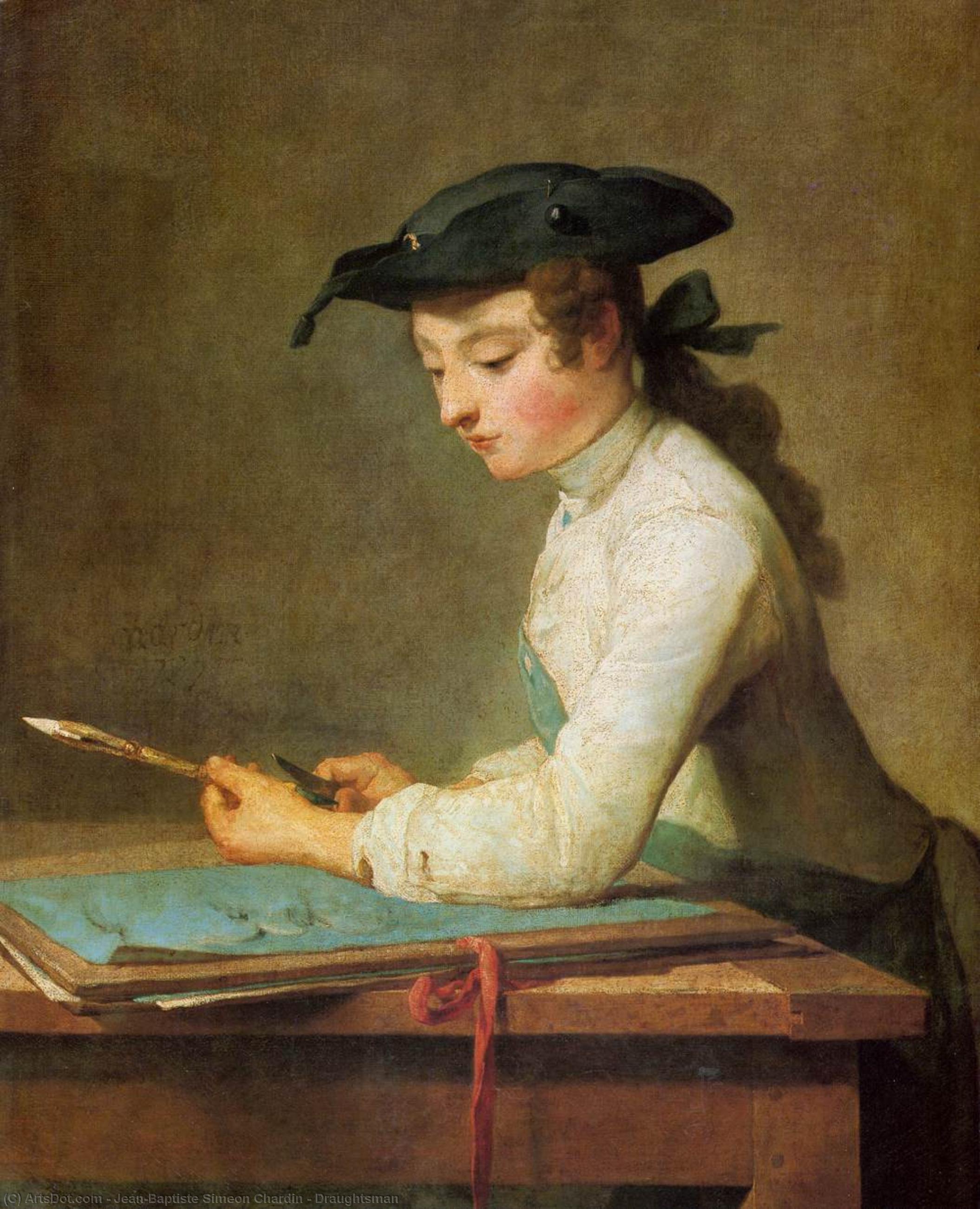
A Moment of Quiet Reflection: Jean-Baptiste Simeon Chardin’s ‘Draughtsman’
Jean-Baptiste Simeon Chardin's “Draughtsman,” painted in 1737, is more than just a portrait; it’s a carefully constructed tableau of domesticity and contemplation. This exquisite oil on canvas, measuring 65 x 80 cm, offers a rare glimpse into the world of a Rococo gentleman, captured with Chardin's signature blend of meticulous detail and profound sensitivity. The painting immediately draws the eye to the central figure – a woman elegantly dressed in white, her posture suggesting both focus and repose as she engages in the act of drawing or writing. Her blue ribboned hat adds a touch of vibrant color against the muted tones of the room, subtly highlighting her importance within this intimate scene.
- Subject Matter: The painting’s subject is deceptively simple – a woman engaged in artistic activity. However, Chardin elevates this commonplace scene into something deeply resonant through his masterful execution.
- Composition: The arrangement of figures and objects creates a sense of depth and narrative. The two secondary figures, positioned subtly in the background, contribute to the feeling of a lived-in space, hinting at a story beyond the immediate moment.
- Technique: Chardin’s technique is characterized by his remarkable ability to render light and texture with astonishing realism. Notice how the folds of the woman's clothing appear almost three-dimensional, and how the surface of the paper seems to shimmer with reflected light.
The Rococo Aesthetic and Chardin’s Vision
“Draughtsman” is a quintessential example of Rococo art, a style that flourished in 18th-century France. The Rococo aesthetic prioritized elegance, refinement, and a sense of playful luxury – qualities perfectly embodied in this work. Unlike the grand narratives favored by earlier artistic movements, Chardin focused on capturing the nuances of everyday life, imbuing his subjects with a quiet dignity and warmth. His paintings were often commissioned privately, reflecting a shift away from the dominance of royal patronage and towards a more intimate engagement with the lives of ordinary people.
Chardin’s artistic vision was deeply rooted in his upbringing. His father was a cabinetmaker, a profession that instilled in him an appreciation for craftsmanship, form, and the beauty of materials – all of which he translated into his art. This connection to the tangible world is evident in the painting's meticulous attention to detail, from the texture of the paper to the sheen of the woman’s clothing.
Symbolism and Emotional Impact
Beyond its technical brilliance, “Draughtsman” is rich in symbolism. The act of drawing or writing represents creativity, intellect, and perhaps even a yearning for self-expression. The setting – a comfortable room with a dining table and book – suggests a life of leisure and intellectual pursuits. The overall mood is one of tranquility and contemplation, inviting the viewer to share in the subject’s quiet moment of reflection.
The painting's enduring appeal lies not only in its aesthetic beauty but also in its ability to evoke a sense of nostalgia for a simpler time. It’s a reminder that even the most ordinary moments can be imbued with profound meaning and grace, if observed with care and attention.
Own a Piece of Art History
Handmade oil painting reproductions of “Draughtsman” are now available, allowing art enthusiasts to own a piece of this remarkable work. These meticulously crafted reproductions capture the essence of Chardin’s original masterpiece, bringing its beauty and serenity into your home or office. Consider commissioning a reproduction for your study, salon, or as a unique and thoughtful gift.