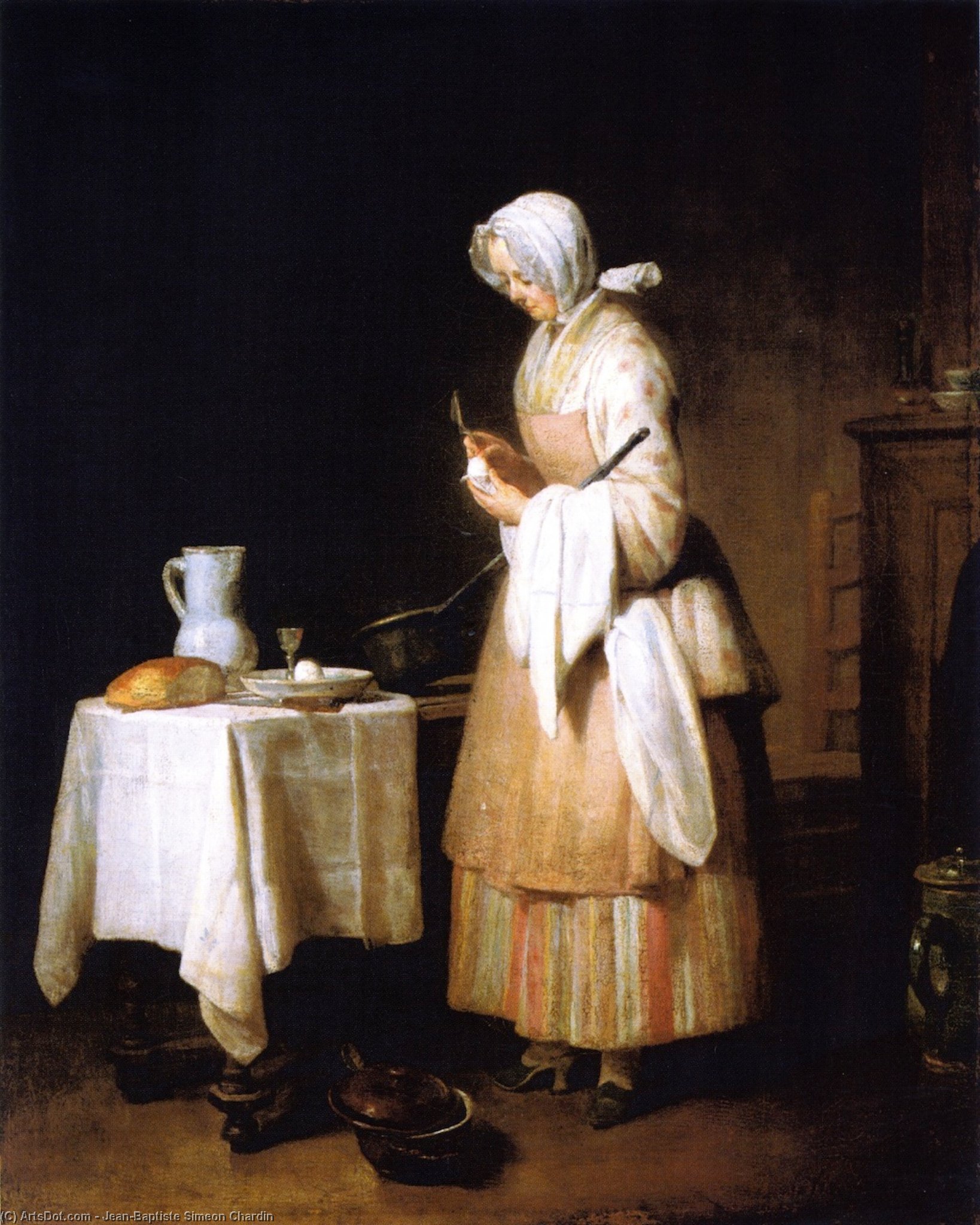
A Moment of Quiet Grace: Jean-Baptiste Chardin’s “Meal for a Convalescent”
Jean-Baptiste-Siméon Chardin's "Meal for a Convalescent," painted in 1747, isn’t a grand statement of power or dramatic narrative; instead, it offers a profound intimacy—a glimpse into the quiet dignity of everyday care. This captivating oil on canvas, now residing within the National Gallery of Art in Washington D.C., immediately draws the viewer into a scene brimming with warmth and a subtle, almost palpable tenderness. It’s a painting that speaks not to the eye alone, but to the heart, inviting us to contemplate the simple beauty of human connection and the restorative power of a shared meal.
The Composition: A Study in Domestic Harmony
Chardin masterfully orchestrates this small tableau within a modestly sized canvas. The focal point is undoubtedly the woman, her posture relaxed yet attentive as she prepares or serves food to an unseen patient – hence the alternate title, “The Attractive Nurse.” Her apron, a practical garment rendered with exquisite detail, hints at her role in providing comfort and sustenance. Notice how she’s positioned slightly off-center, creating a sense of naturalism and preventing the composition from feeling overly formal. The table itself is laden not with extravagance, but with essential objects: a bowl, a cup, a knife, and a spoon – each rendered with meticulous attention to texture and light. Two bottles stand guard near the edge, suggesting both nourishment and perhaps a touch of medicinal care. The arrangement isn’t merely decorative; it's carefully considered, reflecting a deep understanding of functionality and beauty intertwined.
Technique and Style: The Language of Light and Texture
Chardin’s signature style is immediately apparent in “Meal for a Convalescent.” He employs a muted palette—soft browns, creams, and subtle greens—that contributes significantly to the painting's overall atmosphere of warmth. The artist’s use of oil paint allows him to build up layers of color with remarkable subtlety, creating a rich, tactile surface. Pay close attention to how he captures the play of light on the various objects – the sheen of the metal, the texture of the cloth, and the gentle illumination highlighting the woman's face. This masterful manipulation of light isn’t merely decorative; it imbues the scene with a sense of realism and depth, making the simple act of preparing food feel profoundly significant.
Symbolism and Historical Context: A Reflection of 18th-Century Values
“Meal for a Convalescent” is firmly rooted in the genre paintings that defined Chardin’s career during the mid-18th century. These works, often depicting domestic scenes, offered a window into the lives of ordinary people – a departure from the grand historical narratives favored by many of his contemporaries. The painting speaks to the values prevalent at the time: the importance of family, care for the vulnerable, and the appreciation of simple pleasures. The act of nursing a convalescent was considered a virtuous undertaking, reflecting a belief in compassion and the restorative power of human kindness. Chardin elevates this everyday task into something beautiful, suggesting that even the most mundane activities can be imbued with dignity and grace.
This painting’s enduring appeal lies in its ability to evoke feelings of comfort, empathy, and quiet contemplation. It's a reminder that beauty can be found not in grand gestures or dramatic displays, but in the subtle moments of human connection—a sentiment that continues to resonate with viewers today. A high-quality reproduction of “Meal for a Convalescent” offers a wonderful opportunity to bring this serene scene into your home, serving as a constant reminder of the value of care and compassion.