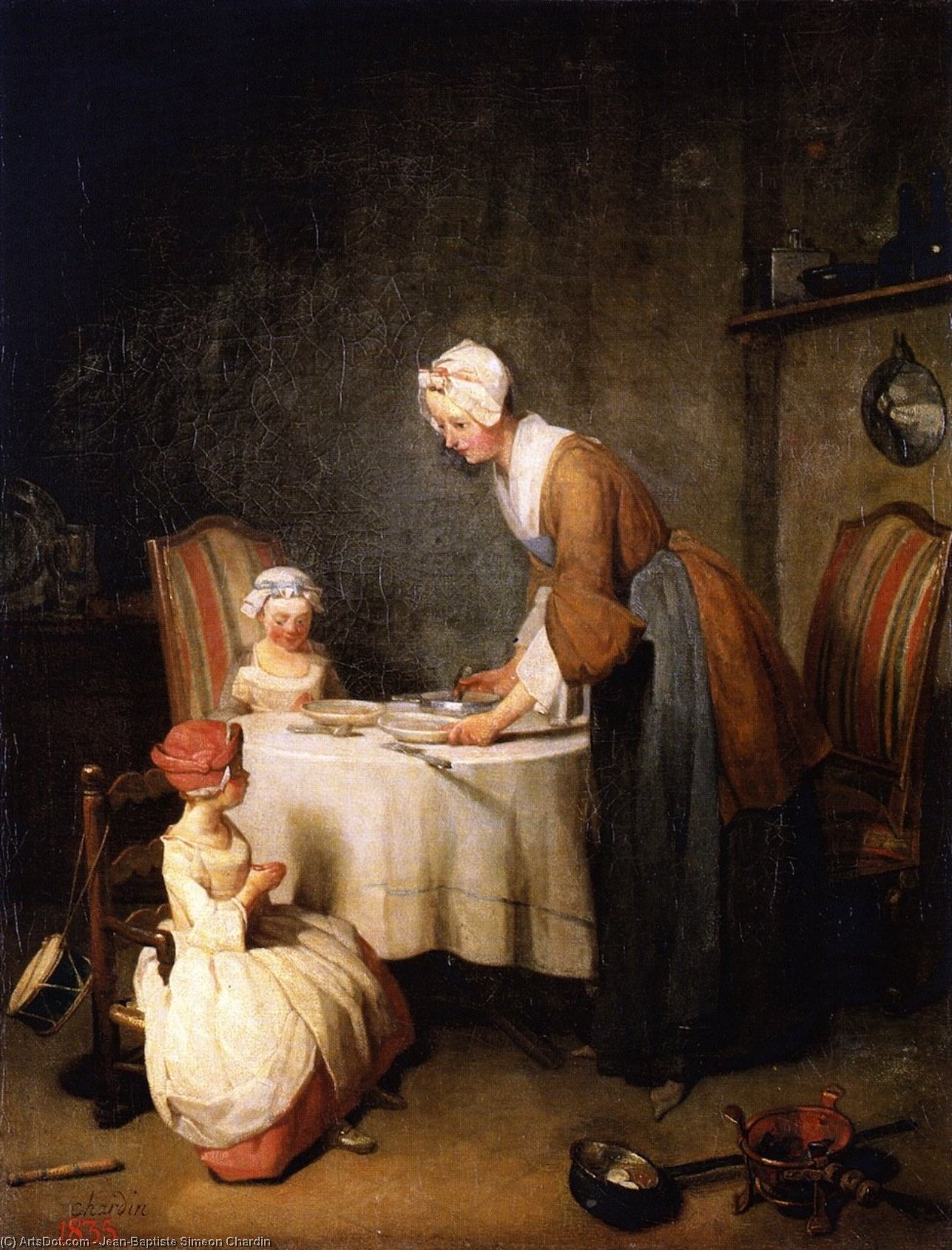
A Moment of Grace: Jean-Baptiste Simeon Chardin’s Saying Grace
Jean-Baptiste Simeon Chardin's "Saying Grace," painted in 1740, isn’t merely a depiction of a family meal; it’s a profound meditation on domesticity, faith, and the quiet dignity of everyday life. Housed within the hallowed halls of the Musée du Louvre, this oil-on-canvas masterpiece offers a rare glimpse into the heart of 18th-century France, revealing a world far removed from the grand pronouncements of courtly art. Chardin, a master of capturing subtle emotion and understated beauty, eschewed the dramatic narratives favored by his contemporaries, instead focusing on the intimate details that shaped the lives of ordinary people – a choice that cemented his legacy as one of the most poignant and enduring figures in French painting.
The Composition: Harmony in Simplicity
The scene unfolds with remarkable clarity. A woman, presumably the mother, sits at the head of a simple wooden table, her posture radiating gentle authority and quiet devotion. Two young children, their faces alight with innocent curiosity, gather around her, poised to participate in the ritual of grace. The arrangement is deliberately balanced – not through rigid symmetry, but through a natural flow that mirrors the warmth of familial connection. Notice how Chardin avoids any overtly theatrical gesture; instead, he presents a scene of genuine engagement, capturing a fleeting moment of shared reverence. The placement of the two bottles on the upper left corner adds an element of domesticity and perhaps even a hint of celebration, subtly enriching the composition.
Technique and Style: Feathered Brushstrokes and Light’s Embrace
Chardin's genius lies in his masterful manipulation of light and texture. His brushwork is remarkably soft and feathery, creating a sense of atmospheric depth and blurring the edges of form. This technique lends the painting an almost dreamlike quality, inviting us to step into this intimate tableau. The muted palette – dominated by browns, creams, and subtle greens – contributes to the overall feeling of warmth and intimacy. He doesn’t rely on bold contrasts; instead, he uses delicate gradations of light and shadow to sculpt the figures and objects, drawing our attention to the play of illumination across the table setting and the faces of the children. The meticulous detail with which he renders the simple wooden table, the worn fabric of the woman's dress, and the gleam of the bottles speaks volumes about his observational skill and artistic dedication.
Symbolism and Context: A Window into a Changing World
"Saying Grace" is more than just a snapshot of family life; it’s a reflection of the social and religious landscape of 18th-century France. The act of saying grace, a common practice before meals, represented a moment of communal prayer and gratitude – a reminder of faith amidst the burgeoning secularism of the era. The modest table setting—a simple bowl and perhaps some bread—suggests a family of humble means, further emphasizing the painting’s focus on everyday virtues. Considering Chardin's background as a cabinetmaker, it’s not surprising that he possessed an innate understanding of form and material, translating this knowledge into his art with remarkable sensitivity. The clock hanging above the table subtly anchors the scene in time, reminding us of the passage of life and the importance of cherishing these quiet moments.
A reproduction of “Saying Grace” offers a beautiful addition to any home or office space, bringing a touch of timeless elegance and profound emotional resonance. Its understated beauty invites contemplation and reminds us of the simple joys that define human connection. For those seeking to delve deeper into Chardin’s world, we encourage you to explore the resources provided on ArtsDot.com and the Musée du Louvre website.