Discover Jean-Baptiste-Siméon Chardin’s serene still lifes & genre scenes capturing everyday life with quiet elegance and masterful detail. Explore his timeless art.
Explore the Louvre Museum in Paris! Home to iconic masterpieces like the Mona Lisa & Venus de Milo, journey through art history from ancient Egypt to Renaissance icons. Plan your visit today!
A Window Into Quiet Genius: Jean-Baptiste Simeon Chardin’s Self Portrait
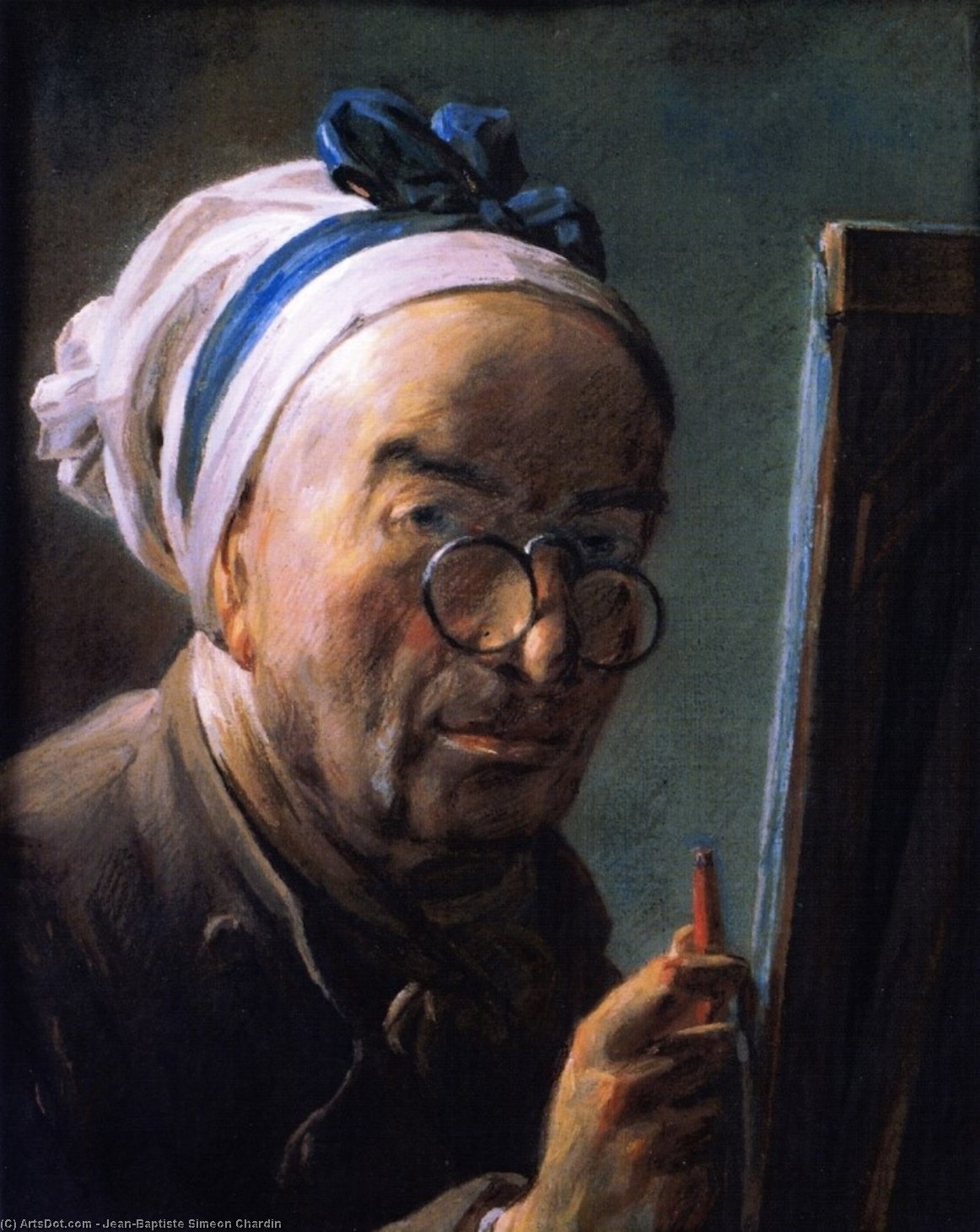
Jean-Baptiste Simeon Chardin's Self Portrait (also known as Portrait of Chardin at His Easel), created in 1779, stands apart from the grand narratives that dominated eighteenth-century French art. Rather than striving for heroic grandeur or mythological spectacle, Chardin captured a moment of profound introspection—a glimpse into the mind and soul of one of France’s most beloved artists. This pastel drawing isn't merely a depiction of a man; it’s an embodiment of his artistic philosophy: observing the beauty inherent in simplicity and conveying emotion with understated grace.
The Artist's Vision: Style and Technique
Cardin’s distinctive style—characterized by soft, muted colors and delicate brushstrokes—represents a significant departure from the prevailing trends of his time. He aligns closely with the burgeoning Post-Impressionism movement, albeit predating its formal articulation, prioritizing light and color not as decorative embellishments but as instruments for conveying psychological depth. The pastel medium itself is crucial to understanding Chardin’s artistic intent. Unlike oil paints which demand meticulous blending and layering, pastel allows for immediate tonal variation and a luminous quality that captures the fleeting nuances of emotion. Notice how Chardin skillfully utilizes hatching and cross-hatching to build up form and texture—techniques honed through years of experience depicting still lifes and genre scenes where capturing subtle gradations of light is paramount.
A Reflection of His Craft: Historical Context
Painted in his later years, the Self Portrait reflects a shift in Chardin’s artistic focus. While he had initially trained as a history painter, he ultimately found solace and inspiration in portraying everyday life—the quiet dignity of rural laborers, the tender moments between family members. This decision to turn inward is mirrored in his self-representation: seated at his easel, gazing intently at a canvas, Chardin presents himself not as a celebrated figure but as an honest craftsman grappling with the challenges and rewards of artistic creation. The portrait was created during a period marked by intellectual ferment—the Enlightenment championed reason and observation—and Chardin’s work embodies these values beautifully.
Symbolism Within Simplicity: Composition and Detail
The composition is deceptively simple, yet meticulously crafted. The inclusion of a chair and potted plant serves as grounding elements, anchoring the figure within his studio environment. However, it's the gaze itself—direct, thoughtful, and slightly melancholic—that commands attention. Chardin’s expression conveys a sense of focused concentration mingled with quiet contemplation. Even the subtle details—the spectacles perched on his nose, the blue headband—speak volumes about his character and artistic sensibilities. They are emblems of intellect and dedication, reinforcing the overarching theme of inner reflection.
An Enduring Legacy: Emotional Impact
Ultimately, Chardin’s Self Portrait transcends mere likeness; it communicates a profound emotional resonance. It invites viewers to contemplate the artist's inner world—his anxieties, his aspirations, his unwavering commitment to capturing beauty in its most unassuming forms. This enduring legacy stems from Chardin’s ability to distill complex psychological states into visual shorthand—a testament to his mastery of artistic technique and his deep understanding of human experience. It remains a poignant reminder that true artistry lies not in grand pronouncements but in quiet observation and heartfelt expression, qualities that continue to inspire artists and collectors alike.