A Window into the Soul: Jean-Baptiste Simeon Chardin's Introspective Masterpiece
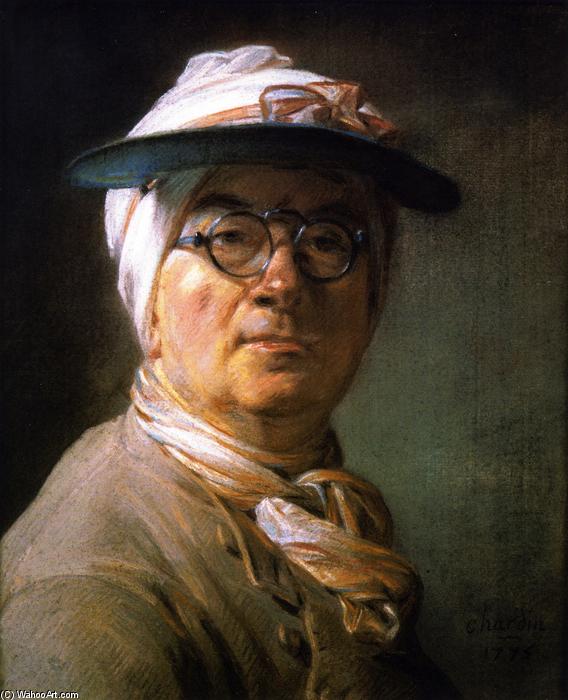
Jean-Baptiste Simeon Chardin’s “Self Portrait (also known as Portrait of Chardin Wearing an Eyeshade),” created in 1775, isn’t a grand declaration of artistic ambition or a flamboyant display of wealth. Instead, it offers something far more profound: a quiet and deeply personal glimpse into the mind and heart of one of France's most beloved artists. This unassuming drawing, housed within the hallowed halls of the Musée du Louvre in Paris, transcends mere portraiture; it’s an intimate meditation on observation, craft, and the subtle beauty found in everyday existence. Chardin, a master of capturing the essence of domesticity and still life, eschewed the dramatic narratives favored by many of his contemporaries, choosing instead to focus on the quiet dignity of ordinary subjects – a decision that profoundly shaped the character of his work.
The drawing itself is deceptively simple. Chardin, an older man with a thoughtful expression, sits before us, clad in a dark suit and adorned with a hat featuring a bandanna. His gaze is direct, almost challenging, inviting the viewer into this private moment. The most striking element, however, is undoubtedly his eyeshade – a small, unassuming accessory that speaks volumes about Chardin’s dedication to his craft. It's not merely a fashion statement; it’s a symbol of the artist’s meticulous process, suggesting the intense concentration and careful observation required to capture the nuances of light and shadow, the delicate textures of fabric, and the subtle expressions on his own face. The handkerchief in his hands further reinforces this sense of deliberate engagement with the act of creation.
The Language of Light and Shadow: Chardin’s Technique
Chardin's mastery lies not in elaborate detail or dramatic color, but in his masterful manipulation of light and shadow – a technique known as *chiaroscuro*. He employs this method with remarkable precision, creating a sense of depth and volume through subtle gradations of tone. The dark background serves to isolate the figure, drawing our attention entirely to his face and hands. Notice how the light catches the folds of his clothing, highlighting their texture and form, while simultaneously casting deep shadows that add weight and dimension. This careful orchestration of light and darkness isn’t simply a stylistic choice; it's integral to Chardin’s ability to convey both the physical presence and the inner character of his subject. The use of layered paint builds up rich textures, suggesting the tactile quality of fabric and skin.
A Portrait of Humility: Context and Symbolism
Considered within its historical context, “Self Portrait” offers a poignant reflection on the changing artistic landscape of 18th-century France. Chardin’s work stands in contrast to the grand, often ostentatious portraits commissioned by royalty and nobility. He prioritized observation over spectacle, capturing not outward appearances but the quiet dignity and inherent humanity of his subjects. The eyeshade itself carries a significant symbolic weight – it represents the artist's commitment to his craft, suggesting a willingness to endure discomfort in pursuit of artistic excellence. It’s a testament to Chardin’s belief that true beauty lies not in superficial grandeur, but in the honest portrayal of reality.
Capturing Essence: The Enduring Appeal
“Self Portrait” is more than just a likeness; it's an invitation. An invitation to slow down, to observe with care, and to appreciate the beauty that can be found in the simplest of things. Chardin’s work continues to resonate today because it speaks to our fundamental human need for connection and understanding. Its quiet introspection and understated elegance make it a timeless masterpiece – a poignant reminder of the power of art to reveal not just what we see, but who we are.