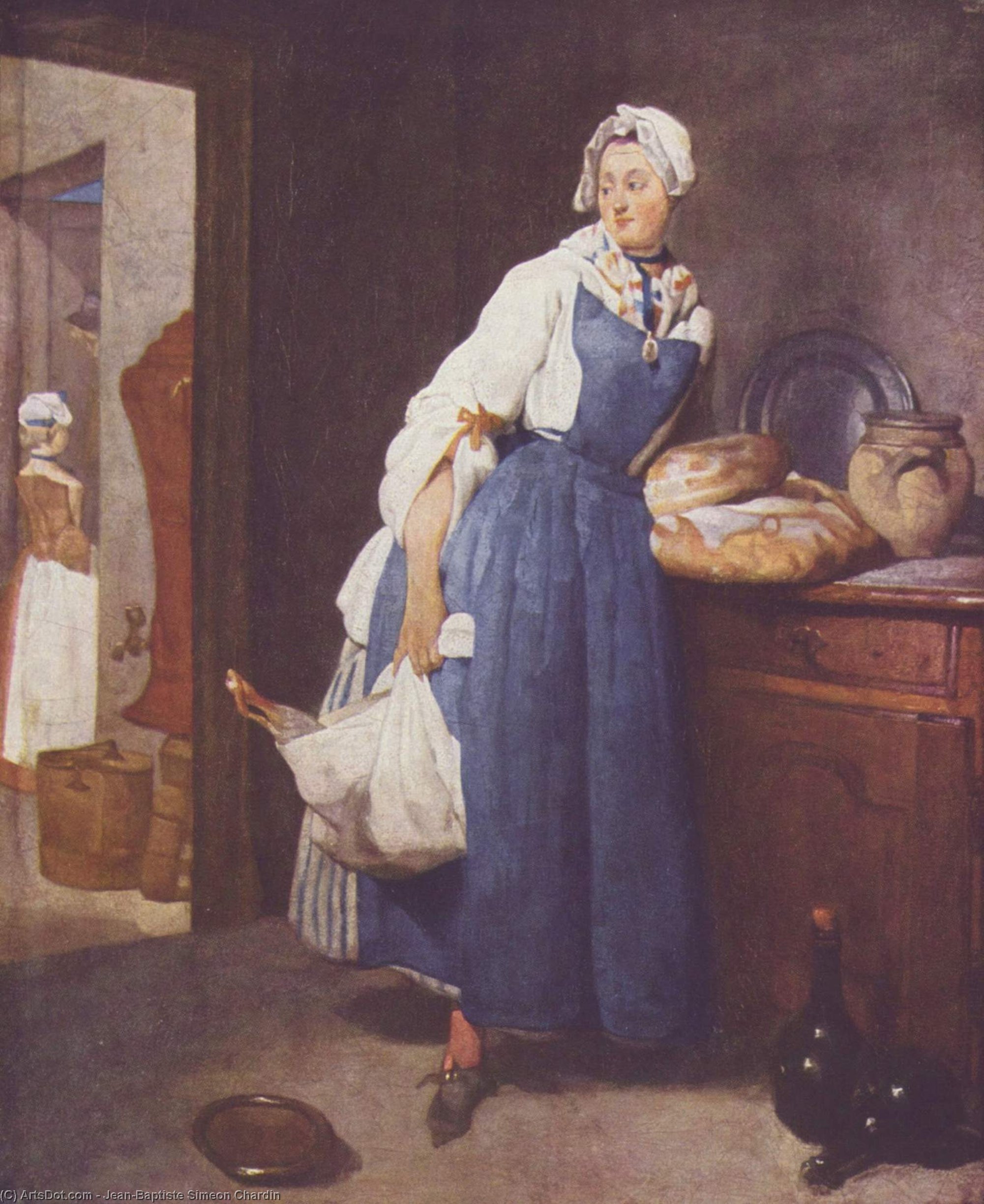
Experience the quiet intimacy of Chardin's Rococo masterpiece, The Besorgerin, capturing 18th-century domestic life with soft light and exquisite detail; bring this timeless elegance home.
The Quiet Poetry of Domestic Life
To gaze upon Jean-Baptiste-Siméon Chardin's "The Besorgerin" is to step through a veil into an era defined not by grand pronouncements, but by the quiet dignity of daily existence. This 1739 oil on canvas captures more than just a scene in a kitchen; it encapsulates a profound meditation on domesticity itself. The subject—a woman amidst her tools and bounty—is rendered with an almost palpable sense of stillness. Chardin eschews the drama of mythology or portraiture for something far more intimate: the beauty found in the mundane. Every object, from the stacked bowls to the gracefully curved vases, seems imbued with a quiet narrative, inviting the viewer to slow their own hurried pace and simply observe.
Mastery in Light and Texture
Technically, "The Besorgerin" is a masterclass in restraint. Chardin’s signature technique shines through in the way he handles light; it does not illuminate harshly but rather diffuses softly, wrapping the entire scene in a warm, amber glow. Observe the impasto on the bread basket or the subtle sheen catching the edge of a ceramic cup—these details are rendered with an almost tactile precision. His palette is one of muted tones, a sophisticated symphony of creams, soft browns, and gentle earth hues that speak to the natural materials surrounding us. This careful handling of light and texture gives the painting its remarkable sense of depth and enduring warmth.
A Glimpse into 18th-Century Intimacy
Historically, this work places us firmly within the Rococo period, yet it resists the era's typical flirtation with overt frivolity. Instead, Chardin grounds the viewer in a reality that feels both historical and timeless. The inclusion of other figures subtly populates the background, suggesting a community life unfolding around the central figure. It speaks to an 18th-century sensibility where domestic labor was not merely necessity but a source of quiet pride and artistry. For those who appreciate art that whispers rather than shouts, this piece offers a profound connection to human routine.
Symbolism of Sustenance and Grace
The arrangement of objects within the composition is deeply symbolic. The bread basket, overflowing with potential sustenance, speaks to provision and life's basic comforts. The vessels—the bottles, the cups—are containers for everything: water, flavor, memory. Chardin elevates these everyday items into symbols of human continuity. The woman herself embodies a gentle grace; her expression is one of quiet competence, suggesting that true beauty resides not in grand gestures, but in the steady, skilled performance of life itself. Owning a reproduction of this piece allows one to bring that same sense of tranquil order and understated elegance into a modern space.