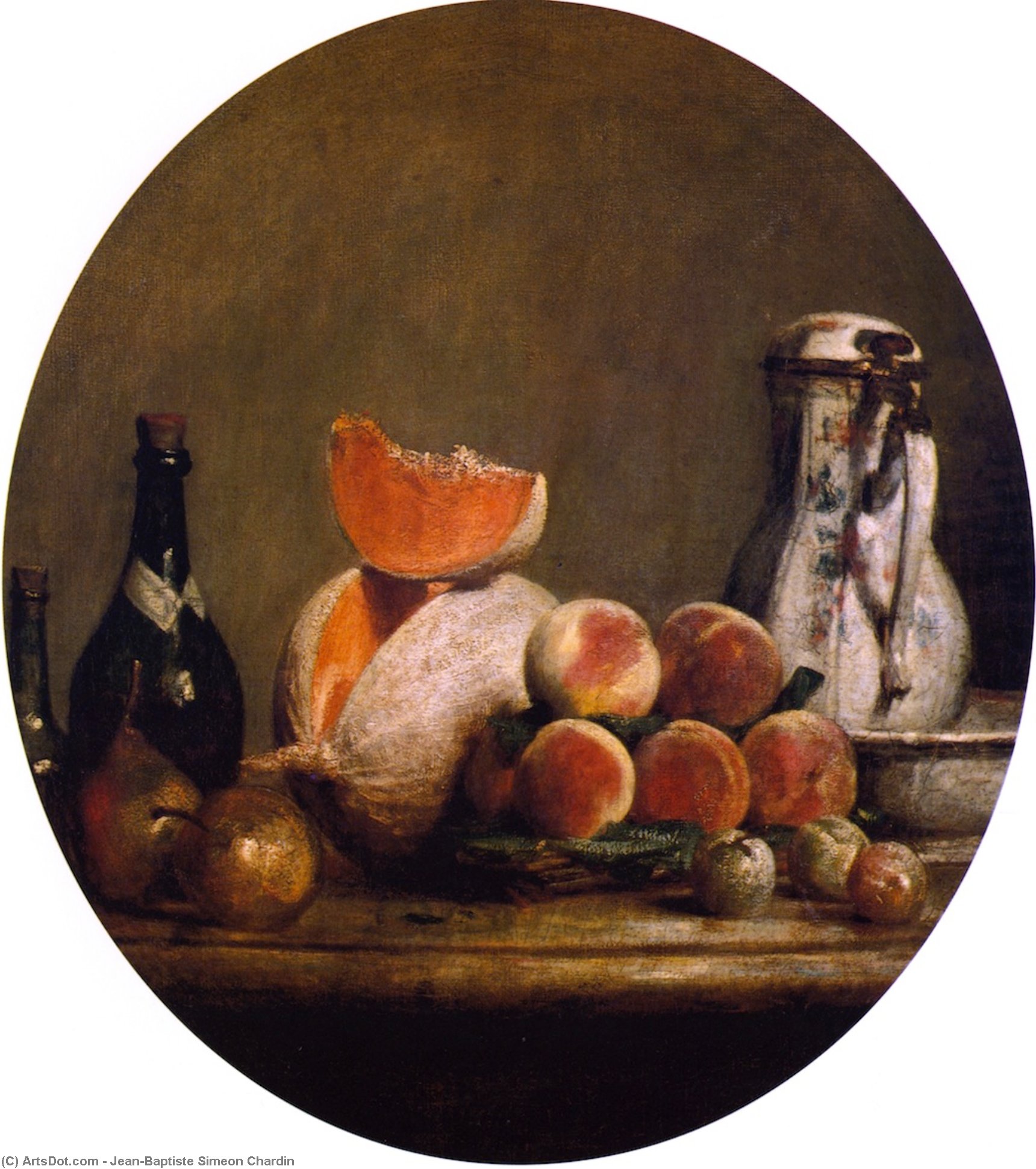
A Moment Frozen in Time: Exploring Jean-Baptiste Simeon Chardin’s ‘The Cut Melon’
- Subject Matter and Composition The painting “The Cut Melon” encapsulates the essence of Rococo still life, presenting a deceptively simple tableau—a halved melon resting upon a wooden table alongside apples, pears, and a bottle. Yet, within this apparent stillness lies a masterful orchestration of visual elements designed to convey profound emotion and observation. Chardin’s meticulous attention to detail captures not merely objects but also the subtle nuances of light and shadow, creating an atmosphere of quiet contemplation.
- Style and Technique Chardin's signature style is characterized by its understated elegance and psychological depth. He eschewed dramatic gestures or flamboyant colors, favoring instead a muted palette dominated by earthy tones—browns, creams, and pale yellows—that lend the scene an air of authenticity. The artist’s technique involved layering thin glazes of oil paint to achieve remarkable luminosity and textural subtlety. This painstaking process allowed him to render surfaces with astonishing realism, capturing the velvety skin of the melon and the delicate sheen of the fruit.
- Historical Context Created in 1760 during the reign of Louis XV, “The Cut Melon” reflects the prevailing artistic sensibilities of the Rococo period. This era prioritized refined taste and aristocratic leisure, celebrating beauty and sensual pleasure—themes subtly conveyed through Chardin’s depiction of domestic tranquility. The painting aligns with a broader trend toward portraying everyday life with sensitivity and psychological insight, marking a departure from the grand narratives favored by earlier Baroque artists.
- Symbolism Beyond its visual appeal, “The Cut Melon” carries symbolic weight. Fruit—particularly melons—were traditionally associated with fertility and abundance, representing prosperity and nourishment. The arrangement of objects on the table serves as a deliberate gesture toward creating harmony and balance, mirroring the ideals of Rococo aesthetics. Furthermore, Chardin’s focus on capturing a fleeting moment—the act of cutting into the melon—suggests an appreciation for the beauty inherent in transient experiences.
- Emotional Impact Ultimately, “The Cut Melon” transcends mere representation; it evokes a powerful emotional response in the viewer. The painting's serene stillness invites contemplation and prompts reflection on themes of domesticity, simplicity, and the passage of time. Chardin’s masterful use of light and shadow imbues the scene with an ethereal quality, conveying a sense of melancholy beauty—a characteristic hallmark of his oeuvre.
This exquisite reproduction captures the spirit of Chardin's masterpiece, allowing you to bring its timeless elegance into your home or studio. Explore similar works by Heda and Gillis at ArtsDot.com for inspiration.