The Quiet Sanctity of the Everyday
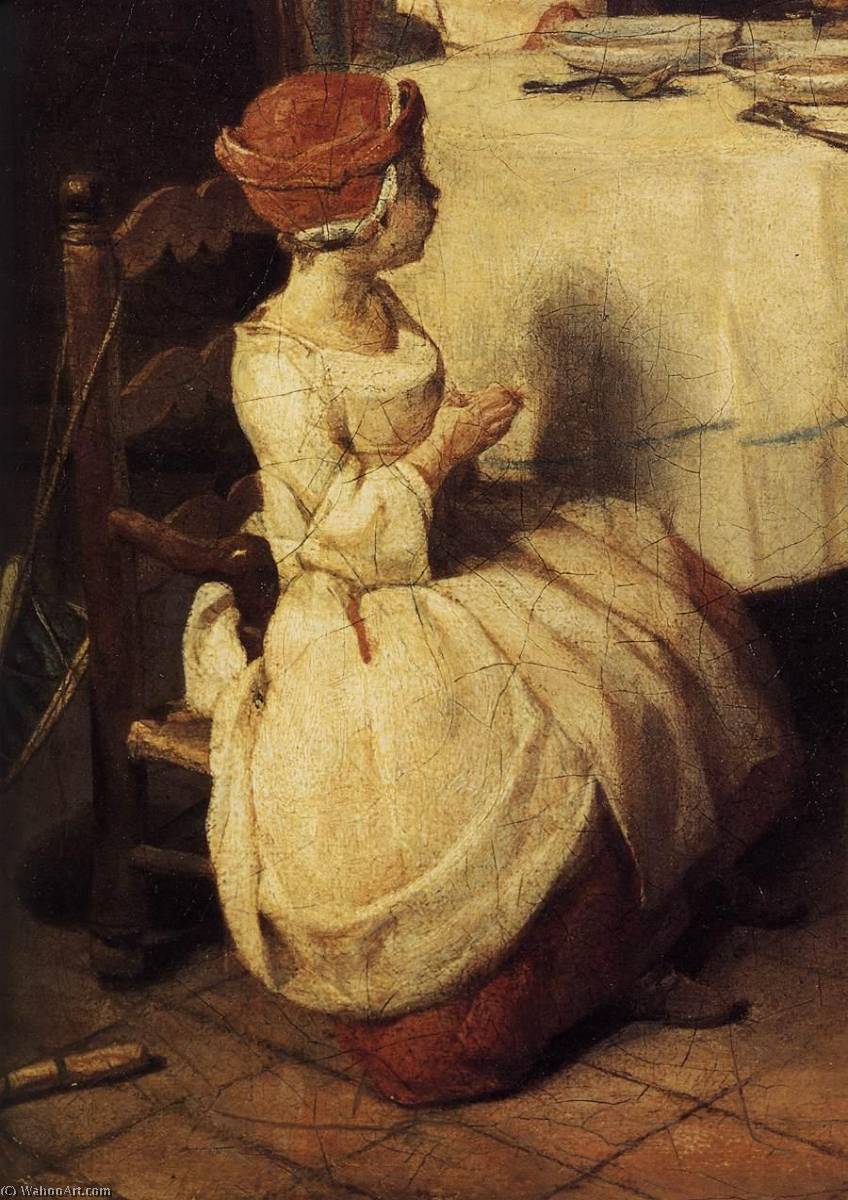
In the soft, amber glow of an eighteenth-century interior, Jean-Baptiste-Siméon Chardin captures a moment of profound stillness that transcends the boundaries of time. The Prayer before Meal (detail) is not merely a depiction of a domestic ritual; it is an invitation into a world where the mundane is elevated to the level of the sacred. The scene centers on a woman, her figure draped in the modest, heavy fabrics characteristic of the 1740s, her hands clasped in a gesture of quiet devotion. There is a palpable sense of hush surrounding her, as if the very air in the room has stilled to respect her communion. Through Chardin’s masterful lens, the simple act of pausing before nourishment becomes a meditative study on gratitude and the dignity of the human spirit.
Chardin, a master of the French Rococo era who famously eschewed the flamboyant for the fundamental, utilizes a technique that breathes life into inanimate objects. In this detail, one can almost feel the weight of the ceramic bowl and the cool touch of the metal spoon resting upon the table. His brushwork is far from superficial; it is a tactile exploration of texture and light. He employs subtle gradations of shadow to create volume, allowing the light to catch the edge of a rim or the fold of a sleeve with breathtaking realism. This mastery of chiaroscuro—the interplay of light and dark—serves to anchor the subject within a tangible, three-dimensional space, making the viewer feel less like an observer and more like a silent guest at the table.
A Symphony of Texture and Light
For the discerning collector or interior designer, this piece offers a sophisticated interplay of tonal harmony and historical depth. The composition is anchored by a muted palette of earth tones, creams, and deep shadows, which lends itself beautifully to a variety of high-end decor styles, from classical French elegance to modern minimalist sanctuaries. The presence of the clock on the wall serves as a poignant memento mori, a subtle reminder of the fleeting nature of time, contrasting sharply with the eternal quality of the woman's prayer. This tension between the temporal and the timeless is what gives Chardin’s work its enduring emotional resonance.
Integrating a high-quality reproduction of this masterpiece into a living space provides more than just visual beauty; it introduces a sense of contemplative calm. The painting acts as an anchor for a room, drawing the eye toward its intricate details and inviting long periods of reflection. Whether placed in a sunlit dining room to echo the themes of the artwork or in a quiet study to enhance a mood of scholarly focus, Chardin’s work brings a layer of historical soul and artistic prestige to any environment. It is a celebration of the beauty found in the small, the silent, and the sincere.