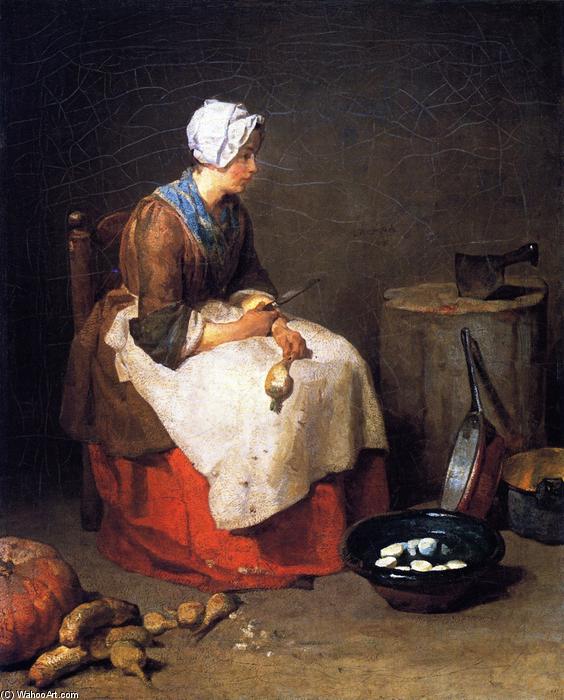
Explore 'The Turnip Peeler' by Jean-Baptiste Chardin – a realistic 1738 masterpiece! Discover its detailed style, quiet dignity & glimpse into everyday life.
Discover Jean-Baptiste-Siméon Chardin’s serene still lifes & genre scenes capturing everyday life with quiet elegance and masterful detail. Explore his timeless art.
Explore the National Gallery of Art in Washington D.C.! Discover masterpieces from Renaissance to modern art, including works by Raphael, Van Gogh & more. Free admission!
A Quiet Revelation: Jean-Baptiste Chardin’s ‘The Turnip Peeler’
Jean-Baptiste-Siméon Chardin's “The Turnip Peeler,” painted in 1738, transcends mere depiction; it embodies a profound philosophical statement about the beauty inherent in simplicity and observation. More than just capturing a domestic scene—a woman diligently peeling onions—the painting speaks to an enduring fascination with human experience rendered with breathtaking precision and understated grace. This artwork stands as a cornerstone of Baroque realism, marking a pivotal moment in Chardin’s artistic trajectory and securing his place among the most revered figures of French art history.
The Essence of Baroque Realism
Chardin's approach to painting distinguishes itself dramatically from the grand narratives favored by many contemporaries. He eschewed theatrical grandeur for an intimate portrayal of everyday life, prioritizing meticulous detail over dramatic embellishment. This stylistic choice aligns perfectly with the broader Baroque movement’s preoccupation with capturing fleeting moments and conveying emotional depth—albeit achieved through restraint rather than overt sentimentality. Unlike artists striving to impress audiences with opulent displays of wealth or power, Chardin focused on portraying the quiet dignity of ordinary individuals engaged in commonplace activities.
A Symphony of Texture and Light
The painting's remarkable quality lies not only in its subject matter but also in its masterful execution. Chardin’s technique—characterized by visible brushstrokes—creates a palpable sense of texture, mirroring the rough surface of the wooden table and the glistening skin of the onions. The subdued lighting casts delicate shadows, illuminating the woman’s face and hands with an ethereal glow. This careful manipulation of light contributes significantly to the painting's mood – conveying serenity and contemplation without resorting to melodrama. It exemplifies Baroque artistry's commitment to capturing naturalism while simultaneously elevating it to a level of artistic sophistication.
Symbolic Resonance: Beyond the Onion Peel
While seemingly unremarkable on the surface, “The Turnip Peeler” is laden with symbolic significance. The woman herself represents resilience and perseverance—a quiet strength found in fulfilling daily responsibilities. The onions symbolize nourishment and sustenance, reflecting the importance of labor and practicality within Chardin’s worldview. Furthermore, the stillness of the scene invites reflection on themes of solitude, contemplation, and the beauty of unassuming existence. These subtle layers of meaning underscore Chardin's genius for transforming ordinary subjects into vehicles for profound philosophical inquiry.
Legacy and Enduring Appeal
“The Turnip Peeler” continues to captivate viewers centuries after its creation. Its timeless elegance stems from Chardin’s unwavering commitment to capturing the essence of human experience with honesty and sensitivity. Reproductions of this masterpiece offer a unique opportunity to appreciate the artistry of Baroque realism—a style that prioritizes observation, detail, and emotional resonance above all else. Consider incorporating it into your interior design scheme; its muted palette and serene composition will undoubtedly infuse any space with an air of quiet contemplation and understated beauty.