Jean de la Barre: A Portrait of Renaissance Dignity
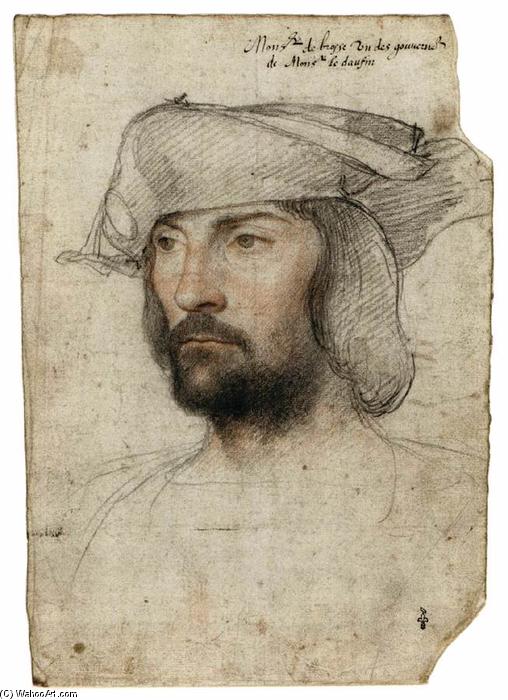
The portrait of Jean de la Barre, executed by Jean Clouet in 1520, stands as a testament to the artistic fervor and humanist ideals that characterized the French Renaissance. More than just a depiction of an individual, it embodies a broader cultural preoccupation with portraying human character—a fascination born from the rediscovery of classical texts and fueled by burgeoning intellectual curiosity. This artwork isn’t merely aesthetically pleasing; it's imbued with layers of meaning reflecting the anxieties and aspirations of its time.
- Subject Matter: Jean de la Barre was a prominent diplomat and humanist scholar, serving as ambassador to England during Francis I’s reign. Clouet skillfully captured his dignified countenance—a man of considerable intellect and influence—reflecting the values championed by the humanist movement. The sitter's gaze directs outwards, suggesting contemplation and engagement with the wider world beyond the confines of the court.
- Style: Clouet’s style exemplifies the Flemish tradition brought to France during this period. He eschewed flamboyant ornamentation in favor of a restrained elegance that prioritized accuracy and subtlety. The artist meticulously rendered every detail, from the folds of Barre's clothing to the texture of his beard—a hallmark of Renaissance portraiture.
Technique: Clouet employed chalk on paper, a technique favored by Flemish artists for its ability to achieve remarkable tonal gradations and textural nuances. The artist skillfully blended shades of grey and ochre to create a luminous surface that captures the subtleties of light and shadow—a masterful demonstration of observational skill. Careful layering of chalk ensured that every brushstroke contributed to the overall impression of realism.
Historical Context: The portrait emerged during a period of significant cultural transformation in France. Francis I’s patronage fostered an environment where artistic innovation flourished alongside humanist scholarship and philosophical debate. Clouet's work reflects this intellectual climate, aligning with the humanist emphasis on portraying human dignity and virtue—values central to Renaissance ideals.
- Symbolism: The pose of Jean de la Barre—seated upright, hands clasped in contemplation—communicates a sense of inner strength and moral integrity. The hat he wears symbolizes status and authority, reflecting his position as ambassador and scholar. Furthermore, the artist’s meticulous attention to detail serves as a visual metaphor for humanist scholarship itself: every element contributes to a comprehensive understanding of the subject.
Emotional Impact: Viewing Jean de la Barre evokes a feeling of quiet contemplation—a connection to an era defined by intellectual curiosity and moral seriousness. Clouet’s portrait transcends mere likeness, conveying something deeper about human character—the dignity of intellect and the pursuit of virtue. It remains a powerful reminder of the Renaissance's commitment to portraying humanity in its fullest complexity.
Size: 284 x 200 cm